
Juiced RipCurrent S vs Himiway Zebra
High-power fat tire e-bikes compared — Juiced 52V speed vs Himiway range.
This comparison includes older models.
- Juiced Bikes RipCurrent S (2025): no longer sold new. Juiced closed in 2025; the brand relaunched in 2026 with a new lineup.
What the specs say
Leads 6 of 10 ranked rows
Peak power · Nominal power · Top speed · Battery · Charge time · Weight
Leads 4 of 10 ranked rows
Torque · Claimed range · MSRP · Price per Wh of battery
On maker-quoted figures, the Juiced Bikes RipCurrent S has more peak power, more continuous power, a higher top speed, a bigger battery, a shorter charge time and less weight. The Himiway Zebra D5 has more torque, a longer claimed range, a lower price and more battery for the money.
At MSRP the Himiway Zebra D5 is $200 less ($1,999 against $2,199).
The Juiced Bikes RipCurrent S is sold as a Class 3 e-bike and the Himiway Zebra D5 as Class 2. In many states the class decides which paths and trails are open to it; see e-bike classes explained.
This is a count of published figures, not a ride test. A spec sheet does not show ride feel, build quality or parts support, so use it to shortlist, then talk to a dealer and read owner reports.
| Spec | 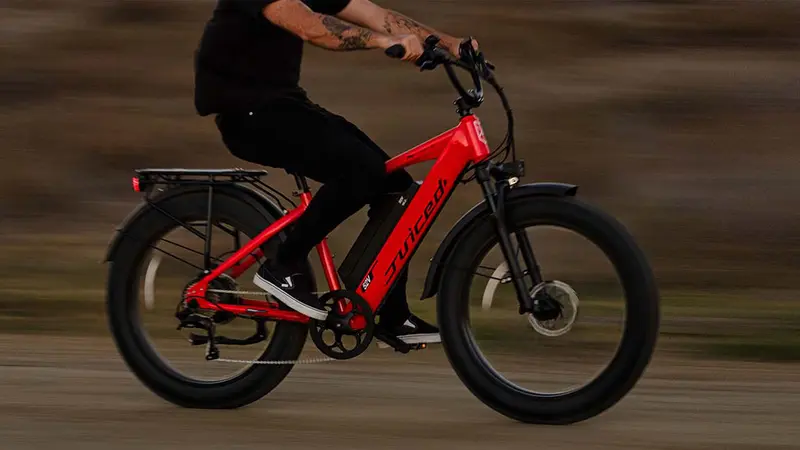 Juiced Bikes RipCurrent S | 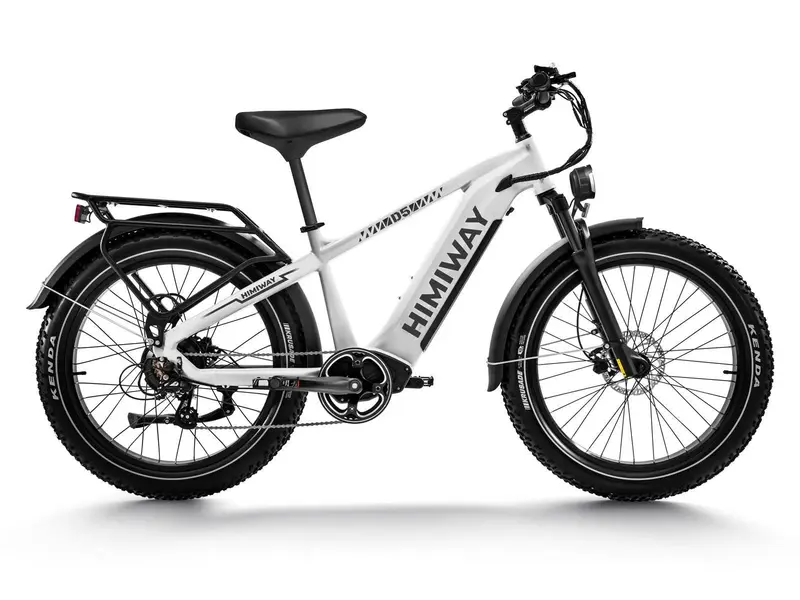 Himiway Zebra D5 |
|---|---|---|
| Overview | ||
| Category | Fat Tire | Fat Tire |
| Class | Class 3 | Class 2 |
| Power and speed | ||
| Motor type | Hub rear | Hub rear |
| Peak power | 1,300W (best in row) | 1,000W |
| Nominal power | 1,000W (best in row) | 750W |
| Torque | 80 Nm | 86 Nm (best in row) |
| Pedal assist levels | 5 | 5 |
| Top speed | 28 mph (best in row) | 20 mph |
| Battery and range | ||
| Battery | 998 Wh (best in row) | 960 Wh |
| Voltage | 52V | 48V |
| Claimed range | 35–70 mi | 35–80 mi (best in row) |
| Charge time | 6 hrs (best in row) | 7 hrs |
| Size and chassis | ||
| Weight | 75 lbs (best in row) | 79 lbs |
| Frame style | Step-Over | Step-Over |
| Wheel size | 26" | 26" |
| Price and value | ||
| MSRP | $2,199 | $1,999 (best in row) |
| Price per Wh of battery | $2.20 | $2.08 (best in row) |
| Next step | ||
A green check marks the best maker-quoted figure in a row; figures within 2% of each other are treated as a tie. The bar under a figure shows its size against the largest in that row, so a shorter bar is the better one for charge time, weight and price. A dash means the maker has not published that figure. Price per Wh is MSRP divided by battery size. Voltage is not ranked because it is a design choice, not a score.
Beyond the spec sheet
More Comparisons
Ride1Up Prodigy V2 vs Aventon Soltera 3 ADV
Lightweight mid-drive commuters: Brose motor vs belt drive — which is smoother?
Lectric XP 4 vs Heybike Mars 2.0
Budget folding fat tire e-bikes — which sub-$1,200 folder is the better buy?
Himiway Cobra D7 Pro vs Velotric Summit 1
Electric mountain bike battle — mid-drive full suspension vs hardtail hub motor.
Trek Verve+ 4 vs Specialized Turbo Como 5.0
Premium commuter e-bikes from the big names — Bosch vs Specialized motor systems.
ENGWE Engine Pro 2.0 vs Heybike Mars 2.0
Budget fat tire folders compared — which gives you the most bike for the money?
Velotric Thunder 2 vs Ride1Up Revv 1 FS
Full-suspension moped-style e-bikes head to head — range vs price.