Zero FX vs KTM Freeride E-XC
Two full-size electric dirt bikes from established brands compared.
This comparison includes older models.
- Zero FX (2024): no longer sold new. Zero lists the FX only under Past Editions.
- KTM Freeride E-XC (2024): replaced by a newer model. KTM has announced the 2027 Freeride E, per trade press.
What the specs say
Leads 6 of 10 ranked rows
Peak power · Top speed · Claimed range · MSRP · Price per Wh of battery · Peak power per lb
Leads 4 of 10 ranked rows
Nominal power · Battery · Charge time · Weight
On maker-quoted figures, the Zero FX has more peak power, a higher top speed, a longer claimed range, a lower price, more battery for the money and more power for its weight. The KTM Freeride E-XC has more continuous power, a bigger battery, a shorter charge time and less weight.
At MSRP the Zero FX is $2,504 less ($8,995 against $11,499). They sit in different categories: the Zero FX is listed as Dual Sport, the KTM Freeride E-XC as Enduro.
This is a count of published figures, not a ride test. A spec sheet does not show ride feel, build quality or parts support, so use it to shortlist, then talk to a dealer and read owner reports.
| Spec | 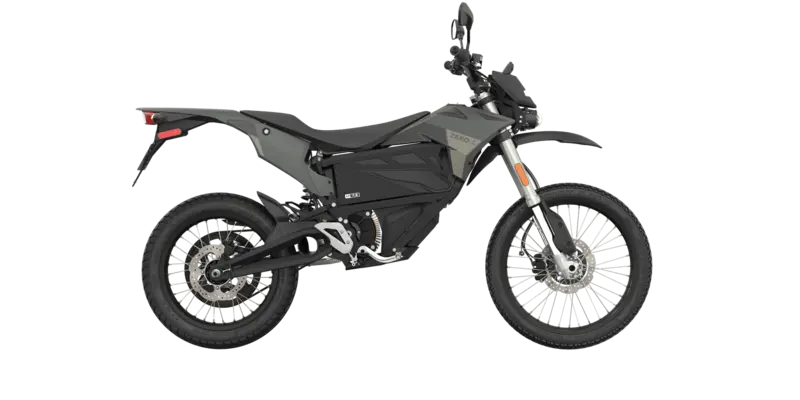 Zero FX | 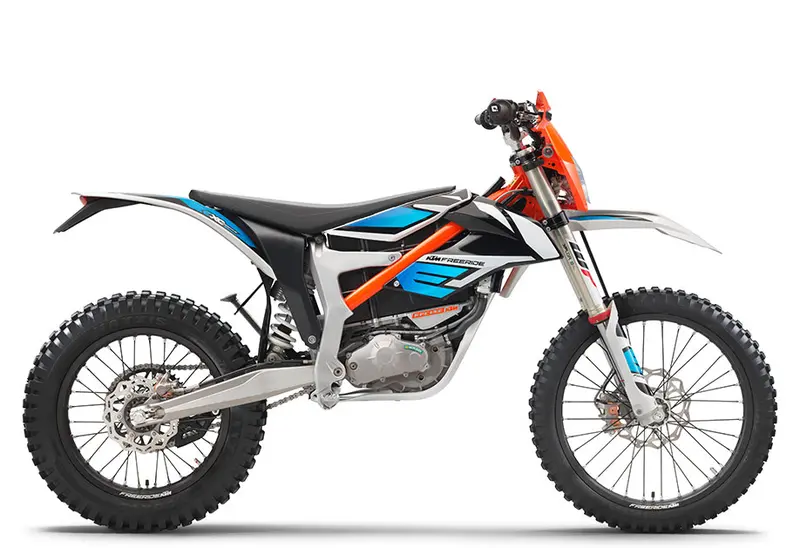 KTM Freeride E-XC |
|---|---|---|
| Overview | ||
| Category | Dual Sport | Enduro |
| Power and speed | ||
| Motor type | Hub-mounted | Mid-drive |
| Peak power | 34.0 kW (best in row) | 18.0 kW |
| Nominal power | 3.6 kW | 9.0 kW (best in row) |
| Torque (as quoted) | 106 Nm | 42 Nm |
| Top speed | 85 mph (best in row) | 50 mph |
| Battery and range | ||
| Battery | 3,600 Wh | 3,900 Wh (best in row) |
| Voltage | 52V | 260V |
| Claimed range | 30–91 mi (best in row) | 20–45 mi |
| Charge time | 8.7 hrs | 1.5 hrs (best in row) |
| Size and chassis | ||
| Weight | 289 lbs | 244 lbs (best in row) |
| Seat height | 33.4" | 35.8" |
| Front wheel | 21" | 21" |
| Rear wheel | 18" | 18" |
| Front suspension | Showa USD fork | WP XPLOR USD fork, fully adjustable |
| Rear suspension | Showa mono-shock | WP XPLOR PDS shock, fully adjustable |
| Price and value | ||
| MSRP | $8,995 (best in row) | $11,499 |
| Price per Wh of battery | $2.50 (best in row) | $2.95 |
| Peak power per lb | 118 W/lb (best in row) | 74 W/lb |
| Next step | ||
A green check marks the best maker-quoted figure in a row; figures within 2% of each other are treated as a tie. The bar under a figure shows its size against the largest in that row, so a shorter bar is the better one for charge time, weight and price. A dash means the maker has not published that figure. Price per Wh and peak power per lb are worked out from MSRP, battery size, peak power and weight. Torque and voltage are not ranked: makers quote torque either at the motor or at the rear wheel, so the numbers are not like for like.
Beyond the spec sheet
More Comparisons
Talaria Sting vs Sting R
Is the Talaria Sting R worth the upgrade? Compare specs side by side.
Zero SR/F vs LiveWire S2 Del Mar
Premium electric sport bikes head to head — Zero vs Harley-Davidson's electric brand.
KTM SX-E 5 vs Husqvarna EE 5
Same platform, different brands — which youth electric MX bike is the better pick?
Segway Xaber 300 vs Sur-Ron Ultra Bee X HP
Segway's new Dakar-inspired electric dirt bike against Sur-Ron's high-power Ultra Bee X HP.
Sur-Ron Hyper Bee vs Light Bee 2026
Sur-Ron's two newest light e-motos side by side: the 8 kW Hyper Bee and the 10 kW Light Bee.
Sur-Ron Light Bee 2026 vs E Ride Pro-SS 3.0
The 72V Sur-Ron Light Bee against the E Ride Pro-SS 3.0, a popular Light Bee alternative.