
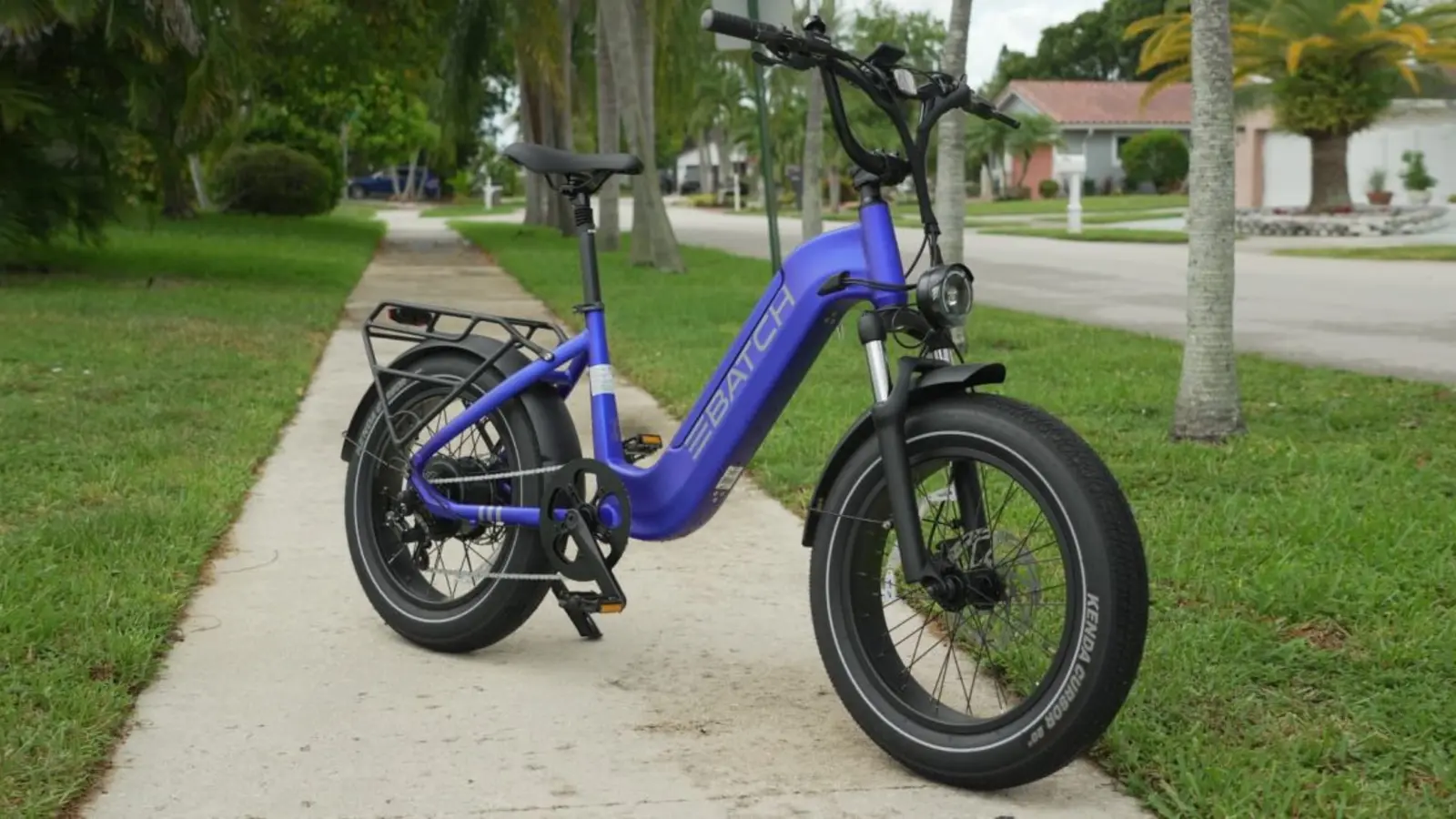
Plenty of fat tire e-bikes are marketed on an off-road image their owners may never use. The interesting thing about the Batch Bicycles eFT.3 is that it drops the pretense. Electrek’s Micah Toll, who reviewed the bike on August 7, 2026, presents it as a pavement-focused commuter that happens to run 20x4-inch fat tires: smoother commuter tread instead of knobs, full-coverage fenders, integrated front and rear LED lights, and a rear rack from the factory.
That honesty makes the eFT.3 easier to evaluate than most bikes in this category, because you can judge it against what it actually claims to be. It also sharpens the tradeoffs. A street commuter wearing four-inch rubber, a Shimano Tourney drivetrain under a 28 mph assist ceiling, and a motor the reviewer calls noticeably loud is a specific set of compromises, and whether they are the right ones depends on your commute, not the spec sheet.
One thing to be clear about up front: RoostMode has not ridden, tested, or measured this bike. Every ride impression below belongs to Toll and comes from Electrek’s review. What follows is a read of what that coverage establishes, what it presents as one reviewer’s judgment, and the list of questions it leaves open for anyone about to spend around two thousand dollars.
What Electrek’s Review Establishes
The powertrain is a 750W rear hub motor paired with a torque sensor. The sensor is the detail worth pausing on. A torque sensor meters power against how hard you pedal rather than simply switching on when the cranks turn, and it is the single spec that most changes how natural a hub motor bike feels. Plenty of bikes near this price still ship cadence sensors, so its presence here is a genuine point in the eFT.3’s favor, at least on paper.
Speed limits split the usual way for a fast commuter: pedal assist up to 28 mph, throttle capped at 20 mph. Toll reports confident acceleration, and he also reports that the motor is noticeably loud under acceleration. Both of those are his impressions from riding the bike, and the second one deserves more weight than review caveats usually get, because motor noise is not a launch-day quirk. It is the soundtrack of every commute you will ever take on the bike.
The battery is a 48V 15Ah pack that Electrek reports is built on LG cells, which works out to 720 Wh. That is a healthy capacity for a commuter. What the review does not publish is a tested range figure, so there is no verified miles number to anchor expectations to, and we are not going to invent one.
The rest of the build is where the commuter positioning shows. Full-coverage fenders, integrated front and rear LED lights, and a rear rack are all included, alongside a suspension fork and a suspension seatpost. Braking comes from Tektro hydraulic discs with 180 mm rotors. Shifting runs through a Shimano Tourney 7-speed drivetrain, and the frame does not fold.
Batch eFT.3: what is reported, and by whom
data| Item | What Electrek reports | Attribution |
|---|---|---|
| Motor | 750W rear hub with torque sensor. Noticeably loud under acceleration per the reviewer. | Electrek / Micah Toll |
| Speed | Pedal assist to 28 mph, throttle limited to 20 mph | Electrek |
| Battery | 48V 15Ah LG cells, 720 Wh. No tested range figure published. | Electrek |
| Tires | 20x4-inch fat tires with smoother commuter tread, positioned for pavement rather than off-road | Electrek |
| Drivetrain | Shimano Tourney 7-speed | Electrek |
| Brakes | Tektro hydraulic disc, 180 mm rotors | Electrek |
| Suspension | Suspension fork plus suspension seatpost | Electrek |
| Commuter equipment | Full-coverage fenders, integrated front and rear LED lights, rear rack, all included | Electrek |
| Frame | Non-folding | Electrek |
| Price | $1,999 MSRP, with a discount around $1,799 through September. Figures as of August 7, 2026; verify current pricing with Batch. | Electrek |
| Not published | Complete weight, payload limit, tested range, battery certification, warranty terms, replacement battery price | Absent from the review body |
Fat Tires on Pavement Is a Comfort Trade, Not a Free One
The case for a fat tire commuter is simple: four inches of air at street pressures soaks up potholes, cracked asphalt, and curb transitions in a way skinny tires cannot, and the eFT.3 stacks a suspension fork and suspension seatpost on top of that. For a rider whose route runs over rough city pavement, that is a real comfort argument, and the smoother commuter tread Electrek describes avoids the buzzing, squirming feel of knobby rubber on tarmac.
The cost side of the trade is effort and energy. All else being equal, a wider tire at lower pressure tends to roll with more resistance than narrower commuter rubber, which the motor spends battery to overcome, though tread, pressure, and casing all move that number. Fat tire bikes as a category also tend toward the heavy end. Whether the eFT.3 specifically is heavy is exactly the kind of thing we cannot tell you, because the review publishes no weight. That number matters twice here: once for how the bike rides above the assist cutoff, and once for the storage question below.
If you are weighing the fat tire format against conventional commuters, our fat tire adventure bike comparison shows what established bikes in the category publish for weight and battery, which is a useful sanity check on any newcomer.
The Class 3 Access Check Comes First
The speed configuration Electrek reports, assist to 28 mph with a throttle held to 20 mph, matches how most brands build bikes aimed at Class 3 rules. What no review can tell you is whether that configuration is welcome where you ride, because this is a check that depends entirely on your local jurisdiction. Depending on your city and state, Class 3 bikes may be barred from multi-use paths and some bike trails, several states treat throttles on 28 mph bikes differently, and a few regulate them in ways that do not map onto the three-class system at all.
That makes this a check to run before you get attached to the bike. Our guide to Class 1, 2, and 3 covers what the tiers legally mean, and the state-by-state law guide covers how much the rules move between jurisdictions. If your commute depends on a path that excludes Class 3, a 28 mph ceiling is not a feature for you, it is a liability.
A Non-Folding Frame Is a Storage Decision You Make Once
The eFT.3 does not fold, and on a commuter that is a bigger fork in the road than it looks. Folding fat tire bikes dominate this price bracket partly because so many commutes end in an apartment, an office corner, a train car, or a hatchback. A rigid frame rules out some of those endings and complicates others.
The honest way to evaluate this is physical, not theoretical. Measure where the bike will actually live and how it gets there: the doorway, the elevator, the stair count, the rack on your car. Do it with the unknown weight in mind, because a fat tire commuter with a 720 Wh battery, a rack, fenders, and a suspension fork is unlikely to be light, and Batch should be able to tell you the real number even though the review does not. A rigid frame is stiffer and simpler than a folder, with no hinge to inspect, but only if your storage situation lets you own one.
Tourney Shifting Under a 28 mph Bike Is the Spec to Test
The equipment list splits into two stories. The commuter kit is generous: fenders, lights, and a rack included at $1,999 means the bike is street-ready without an accessory order, which is a real cost difference against bikes that ship bare. Hydraulic brakes with 180 mm rotors are an appropriate spec for a fast, presumably heavy bike, though the review offers no braking measurements and we will not pretend it does.
The drivetrain is the other story. Shimano Tourney is the entry point of Shimano’s derailleur range, and seven speeds is a narrow spread for a bike that assists to 28 mph. The practical question is not durability snobbery, it is gearing: whether the top gear lets you contribute meaningful pedaling near the assist ceiling, or whether you spin out and let the motor do the work above 20 mph. That is a question to settle on a test ride if you can get one, or with a gearing question to Batch if you cannot, and it interacts with the noise caveat, because the faster the motor works, the more you will hear it.
The Price Is a Snapshot, and So Is the Discount
Electrek lists the eFT.3 at a $1,999 MSRP with a discount around $1,799 running through September. Both figures are what the source reported on August 7, 2026, and nothing more. Launch-window discounts move, and a September deadline reported in August is exactly the kind of detail to reconfirm on Batch’s own site before it factors into your decision.
One disclosure note: Electrek uses affiliate links in its coverage, as many outlets do. RoostMode links only to the editorial article itself and uses none of its affiliate redirects, so nothing about this analysis changes based on where you buy the bike, or whether you buy it at all.
The Questions to Ask Batch Before Paying
This is where the buying decision actually lives, and where the review stops. None of the following appears in Electrek’s article body, so get answers from Batch directly, in writing, before ordering:
- Complete bike weight. It decides the storage question, the stairs question, and part of the ride-feel question. Fat tire commuters vary widely, and no figure is published here.
- Payload limit. A rack invites cargo. What the frame and wheels are rated to carry, rider included, is unstated.
- Real-world range. The review publishes no tested range figure. 720 Wh is a solid capacity, but capacity is not miles. Our battery lifespan guide covers realistic range expectations and why claimed figures mislead.
- Battery certification. LG cells are named, but no UL or equivalent certification listing appears in the review. Ask which standard the battery and electrical system are certified to and under what listing, especially if your building or insurer cares.
- Warranty and service terms. Length, coverage, and who does the work are all unstated. A local shop willing to service the bike is worth confirming before purchase, not after.
- Replacement battery price and availability. Packs wear out. The cost of the second battery is part of the cost of the bike, and it is not published.
None of this is a strike against the eFT.3, and none of it is a criticism of the review. These are simply reasonable pre-purchase questions, the ordinary diligence a four-figure purchase deserves.
FAQ
FAQ
+Is the Batch eFT.3 an off-road fat tire e-bike?
+How fast does the Batch eFT.3 go?
+How much does the Batch eFT.3 cost?
+What is the real range of the eFT.3's battery?
+Is the eFT.3's motor really loud?
+Is the Shimano Tourney drivetrain good enough for a 28 mph commuter?
+What does the eFT.3 include that other commuters charge extra for?
Sources
- Batch eFT.3 review: a 28 mph fat tire e-bike built for the streets (Electrek, Micah Toll, August 7, 2026), the source for every factual claim and ride impression in this article: the positioning of the eFT.3 as a pavement-focused 20x4-inch fat tire commuter rather than an off-road bike; the smoother commuter tread, suspension fork, and suspension seatpost; the included full-coverage fenders, integrated front and rear LED lights, and rear rack; the 750W rear hub motor with torque sensor; pedal assist to 28 mph and the throttle limited to 20 mph; Toll’s impressions that acceleration is confident and that the motor is noticeably loud under acceleration; the 48V 15Ah LG battery at 720 Wh; the Shimano Tourney 7-speed drivetrain; the Tektro hydraulic disc brakes with 180 mm rotors; the non-folding frame; and the $1,999 MSRP with a discount around $1,799 through September, both of which are time-sensitive figures as reported on August 7, 2026 rather than verified current pricing. The review body publishes no complete bike weight, payload limit, tested range figure, battery certification listing, warranty or service terms, or replacement battery price, which is why those appear above as open buyer questions rather than answers. Electrek discloses affiliate links in its coverage; RoostMode links only to the editorial article and uses none of its affiliate redirects. The source was loaded directly and verified on August 8, 2026. RoostMode has not ridden, tested, or measured the eFT.3, and all ride impressions are attributed to Micah Toll.
- Hero image: batch-bicycles-eft-3-e-bike-header-1.jpg, published as the header photograph with Micah Toll’s Electrek review of the Batch eFT.3. It is source editorial photography from that review showing the blue eFT.3, not AI-generated art and not a photo of a bike RoostMode has seen. The review does not name a separate staff photographer for the image, so no individual photo credit is claimed here beyond Electrek and Micah Toll. Modifications by RoostMode: cropped and optimized for web delivery as WebP.

Read next
The E-Bike Commuter Setup Checklist
What a daily commuter actually needs beyond the bike, from locks to lights to layers.
E-Bike Classes 1, 2, and 3 Explained
What a 28 mph assist ceiling legally means for throttle use, helmets, and path access.
Fat Tire E-Bike Comparison: Aventure 3 vs Cruiser vs RadRover 6 Plus
What established fat tire bikes publish for weight, battery, and equipment, a fair yardstick for any newcomer.