
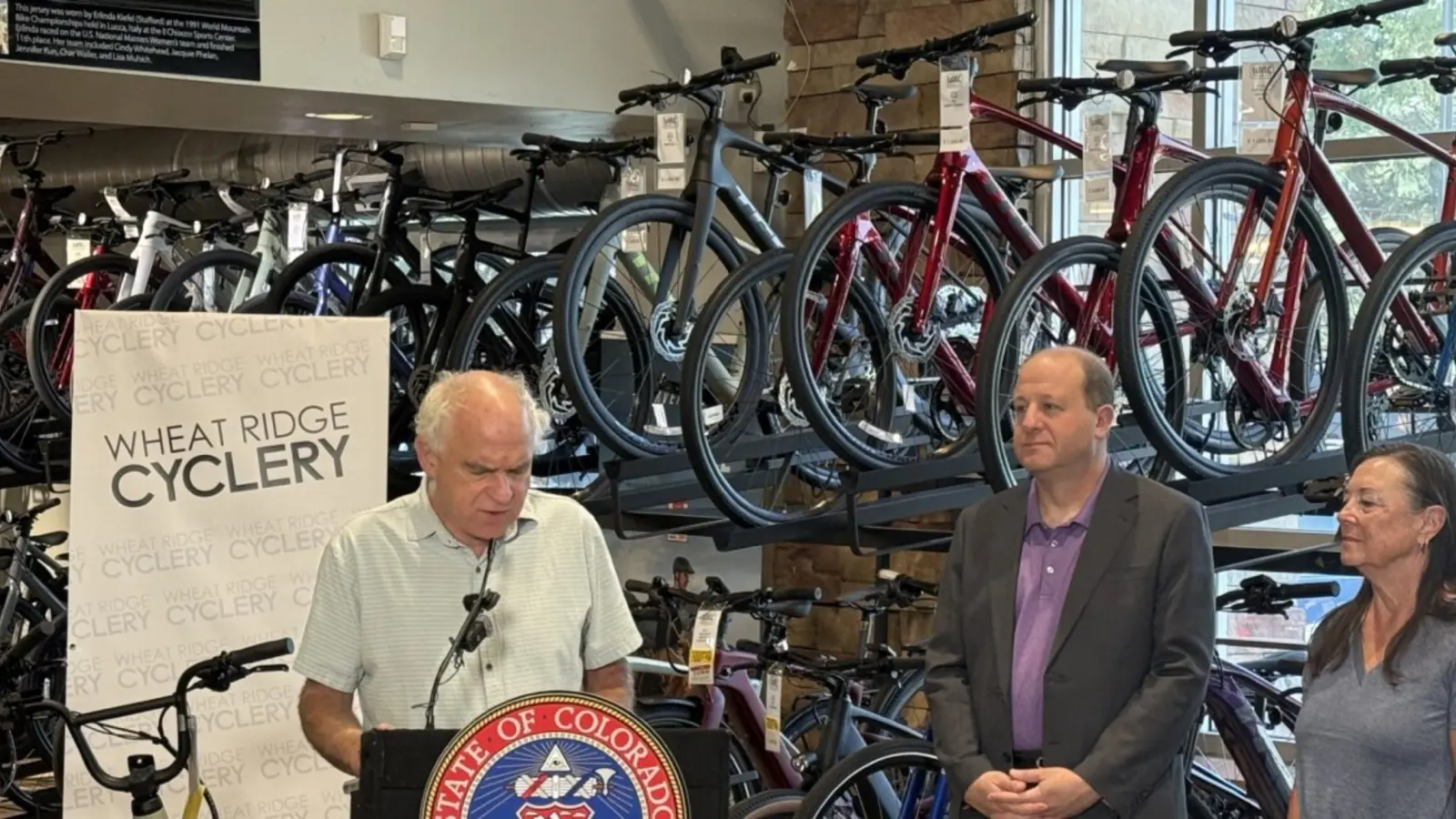
Colorado is bringing back its statewide e-bike rebate program, and the first registration window opens August 24, 2026. Denver7 reported on August 6 that the relaunched program is funded with $3 million from the Community Access Enterprise and will cover rebates for 2,800 eligible Colorado residents. The standard rebate is $1,000, with an additional $300 available for e-cargo bike buyers and an additional $300 for adaptive e-bike buyers.
If you live in Colorado and have been putting off an e-bike purchase, this announcement changes your timeline. A $1,000 discount is a meaningful share of the purchase price on most commuter e-bikes, and the program’s history suggests far more people will want a rebate than will get one. The smart move between now and August 24 is preparation, not purchase.
What the program offers, according to Denver7
Here are the reported facts of the relaunched program:
- Standard rebate: $1,000 toward an e-bike purchase.
- E-cargo add-on: an additional $300 for e-cargo bike buyers.
- Adaptive add-on: an additional $300 for adaptive e-bike buyers.
- Eligibility: Colorado residents with household income at or below 80 percent of the area median income in the county where they live.
- Funding and capacity: $3 million from the Community Access Enterprise, covering rebates for 2,800 residents.
- Timing: registration opens quarterly over the next year, with the first round opening August 24, 2026.
One detail the Denver7 report does not settle: whether a single purchase can combine both $300 add-ons, for example an adaptive cargo bike. We are not going to guess. If that applies to you, confirm it with the Colorado Energy Office before you count on the larger number.
| Program detail | Reported value |
|---|---|
| Standard rebate | $1,000 |
| E-cargo bike add-on | Additional $300 |
| Adaptive e-bike add-on | Additional $300 |
| Income test | Household income at or below 80% of county area median income |
| First registration opening | August 24, 2026 |
| Program capacity | 2,800 residents, funded by $3 million |
Denver7 also reported that recipients may combine this rebate with Colorado’s separate E-Bike Tax Credit discount if they buy from a retailer participating in both programs. The report did not specify the tax credit amount, so treat the combined savings as something to confirm at the retailer, not a number to assume.
Why this is unusually strong buyer value
For many commuter e-bikes, $1,000 is a large share of the displayed purchase price. That alone sets this rebate apart, and it can potentially pair with a separate state tax credit discount at participating retailers, applied to a bike you actually choose. On a hypothetical bike priced between $1,500 and $2,500, that shifts the purchase from a stretch to a straightforward decision for many households. If you are shopping in that range, our roundup of the best commuter e-bikes under $1,500 is a reasonable starting point for what the rebate could realistically cover.
The cargo add-on matters too. Cargo and longtail bikes are the models most likely to replace actual car trips, and they are also the models where an extra $300 on top of $1,000 makes a visible dent. Our cargo and longtail shortlist for 2026 covers the category if the add-on puts one of those bikes in reach.
Why demand will likely exceed supply
The prior version of this program ran from summer 2023 through spring 2025. Per Denver7’s reporting, more than 34,000 people applied and nearly 8,000 received rebates. That is roughly four applicants for every rebate awarded, and the relaunched program has capacity for 2,800 recipients in its first year.
We do not know how the state will select among applicants this time, and Denver7’s report does not describe the selection mechanics, so we will not speculate about lotteries, queues, or timing tricks. What the history does tell you is simple: interest has consistently outrun funding, and registering does not guarantee a rebate. Plan accordingly, and do not build your budget around money you have not been awarded.
The state’s case for the program, as reported, rests on usage data from the earlier rounds. Recipients saved more than $9.75 million on e-bike purchases, and state surveys reported that recipients replaced an average of 2.85 private vehicle trips per week. The Colorado Energy Office estimated the avoided annual emissions were equivalent to 8.85 million miles driven in a gasoline car. Governor Jared Polis framed the rebate as lowering costs and expanding how people get around, and Colorado Energy Office Executive Director Will Toor pointed to transportation as a pollution source the program helps address. Those are the state’s numbers and the state’s framing; they tell you why the program exists, not whether you will be approved.
How to prepare before August 24
None of this is a reason to buy a bike today. It is a reason to do homework now so you can act quickly when registration opens. Between now and August 24:
- Check your county’s income test. Look up 80 percent of area median income for your county and the household income documentation the program requires. Use the official Colorado Energy Office rebate page, not a summary like this one, as your source of record.
- Check for participating-retailer requirements. Use the official Colorado Energy Office rebate page to identify any participating-retailer requirements, and ask local shops directly whether they participate before you fall in love with a bike they do not carry.
- Confirm your chosen bike is eligible. Do not assume every e-bike qualifies. Verify the specific model against current program rules.
- Ask retailers about both programs. The rebate can combine with Colorado’s E-Bike Tax Credit discount only at retailers participating in both. Ask that question directly and get the answer before purchase.
- Compare final out-the-door costs. Two shops selling similar bikes can produce different final prices once rebates, tax credit participation, and accessories are counted. Compare the number you would actually pay.
- Do not buy prematurely. If the program rules require approval before purchase, buying early could forfeit the rebate. Confirm the required order of operations on the official page before spending anything.
- Save everything. Screenshots of your registration, confirmation emails, and receipts. If a question comes up later, documentation is what resolves it.
If the rebate does come through and you end up commuting on the new bike, our commuter setup checklist covers the unglamorous parts (locks, lights, fenders, racks) that turn a purchase into a daily driver.
FAQ
FAQ
+Who appears to be eligible for the 2026 Colorado e-bike rebate?
+How much is the rebate worth?
+When does registration open?
+Can the cargo and adaptive add-ons stack on one purchase?
+Can I combine the rebate with Colorado's e-bike tax credit?
Sources
- Denver7: Colorado’s e-bike rebate program returns with $3 million for 2,800 residents (August 6, 2026). Source for all program figures in this article: funding, capacity, rebate amounts, income eligibility, registration timing, prior-program application and recipient counts, savings and usage statistics, and the tax credit combination detail.
- Colorado Energy Office: E-Bike Rebates. Official program and application page; check here for current eligibility rules, participating retailers, and registration details.
- Colorado Energy Office: Polis administration announces return of Colorado e-bike rebates. Official announcement page.
- Hero image: Denver7 story image, used for editorial coverage of the story.
