
Connecticut changed its e-bike rules twice in twelve months. The newest change took effect on October 1, 2026, and it is narrow but useful for shoppers. Under Public Act 26-24, a bike with a motor of exactly 750 watts now counts as an electric bicycle. The old wording required “fewer than” 750 watts. The bigger change came a year earlier with Public Act 25-159, which required a helmet for every e-bike rider and passenger of any age and took the faster Class 3 bikes off bike and multiuse paths.
What Public Act 26-24 changed on October 1, 2026
Public Act 26-24 began as Substitute Senate Bill 413, a broad motor vehicle bill based on Department of Motor Vehicles recommendations. It was approved on May 27, 2026. Three sections matter to riders:
- The e-bike motor limit now includes 750 W. Section 26 rewrites the definition so an electric bicycle has operable pedals and a motor of “not more than” 750 watts, and is a Class 1, 2 or 3 bicycle. Many mainstream e-bikes are rated at exactly 750 W, so this closes a small gap. The definition still excludes dirt bikes and all-terrain vehicles.
- Motor-driven cycles lose the horsepower test. Section 27 drops the “five brake horsepower or less” alternative from the motor-driven cycle definition. The cylinder and wattage limits stay: under 50 cc for a gas engine, or 3,700 watts or less for an electric motor, with a seat height of at least 26 inches. The Office of Legislative Research notes that two- and three-wheelers above these limits are generally treated as motorcycles.
- E-scooters can weigh more. Section 4 raises the electric scooter weight limit from 100 to 110 pounds.
None of this changes where or who can ride.
The 2025 rules that still apply
Public Act 25-159, Substitute House Bill 7160, took effect on October 1, 2025. Its e-bike sections are still the core of Connecticut’s rider rules.
Helmets for everyone
Nobody may ride, or sit as a passenger on, an electric bicycle without a helmet that meets a recognized bicycle helmet standard (ANSI, CPSC, ASTM or Snell). The rule covers every class and every age.
Classes, speeds and age
Connecticut uses the standard three classes. Class 1 is pedal-assist only and the motor stops helping at 20 mph. Class 2 can use a throttle and also stops at 20 mph. Class 3 is pedal-assist up to 28 mph and must have a speedometer. Our e-bike classes guide explains the differences in plain terms.
Riders under 16 may not ride a Class 3 e-bike. They may ride as a passenger on one only if the bike is built to carry a passenger.
Where you can ride
E-bikes may go where bicycles may go, unless a local ordinance says otherwise. Two state limits apply:
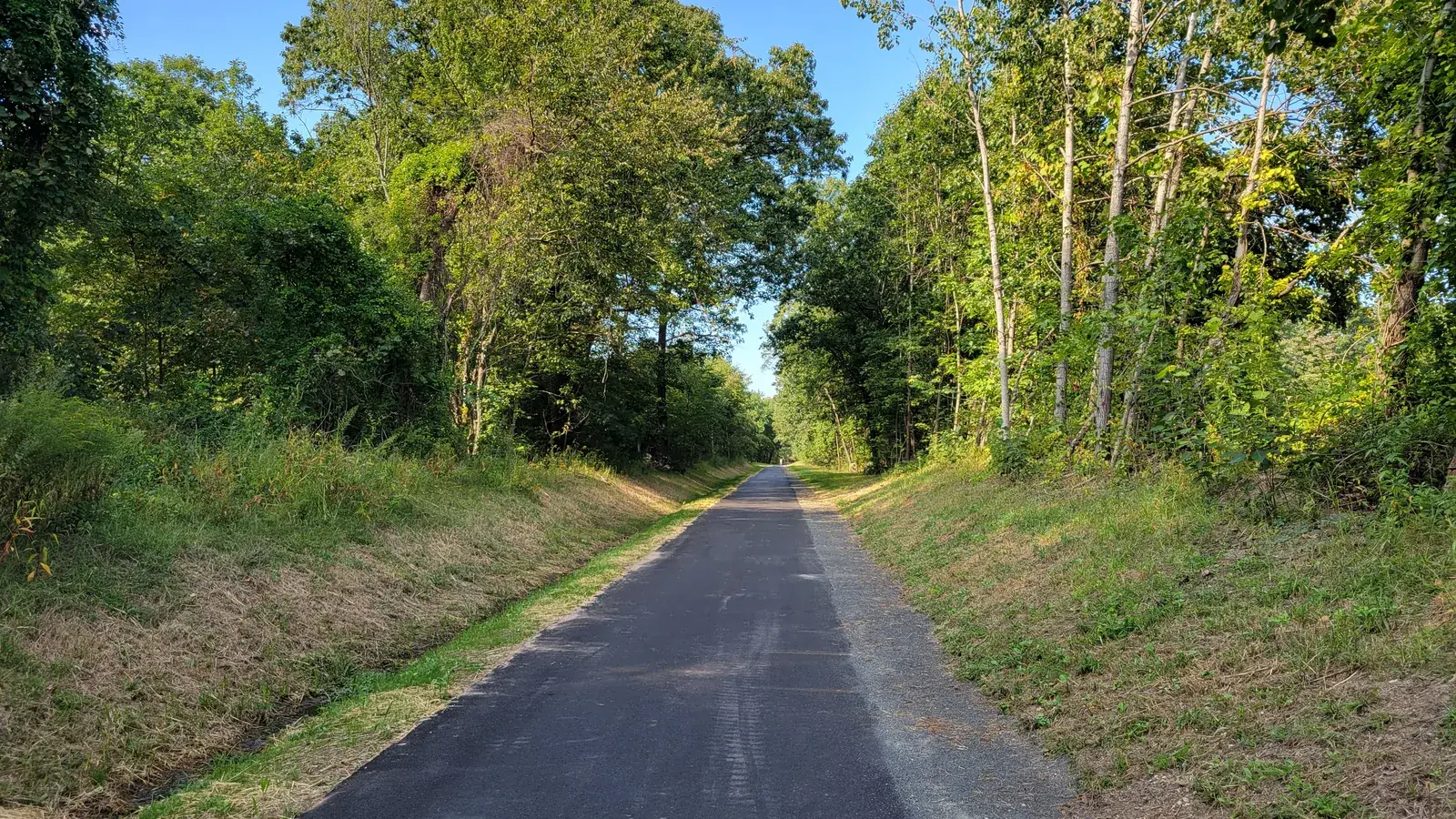
- Class 3 is barred from bicycle trails and paths and from multiuse trails and paths. The statute does not make an exception for this.
- Class 2 stays off natural-surface trails meant for nonmotorized use, meaning trails made by clearing and grading the soil with no added surface, unless a local ordinance allows it. The 2025 act took Class 1 out of this restriction. Before October 2025 it applied to Class 1 as well.
Breaking any of these riding rules is an infraction. The path and trail limits do not apply to police, firefighters or EMTs on duty.
When a bike is not an e-bike
Electric dirt bikes and e-motos are the reason the 2025 act runs so long. Section 36 says a vehicle is not an electric bicycle if it is sold outside the legal definition, if its throttle can push it past 20 mph on motor power in any mode, or if it is designed or meant to be unlocked with a switch, a software change or an app.
Sellers may not put a Class 1, 2 or 3 label on those machines. If a seller calls one an “e-bike” anyway, the buyer must get a written statement before the sale. The statement says the vehicle is a motor vehicle, that motor vehicle laws apply on public roads and public lands, and that the buyer’s insurance may not cover it. Manufacturers must label every real e-bike with its class, top assisted speed and motor wattage. Anyone who modifies a bike past its class has to remove or replace that label. A first offense carries a fine of up to $100, and later offenses $100 to $300.
If you are shopping for something in our electric dirt bikes hub, read the listing with this in mind. In Connecticut, a throttle bike that can go 30 mph on motor power alone is not an e-bike.
What riders and parents should check
- Find the label. Look for the class, top assisted speed and wattage. A 750 W Class 1 or Class 2 bike is now inside the definition.
- Match the class to the trail. A Class 3 commuter is legal on the road, but it may not use the Farmington Canal Heritage Trail or any other multiuse path.
- Pack a helmet for everyone, including passengers and adults.
- Watch for “unlockable” speed modes. Under Section 36, a bike designed to be unlocked past its class is not an e-bike, even before anyone unlocks it.
What’s next
Watch the state park trails. On November 2, 2026, the Department of Energy and Environmental Protection asked for public comment on possible bicycle rental offerings along four linear state park trails: the Air Line, Hop River, Moosup Valley and Farmington River trails. Comments are due November 20, 2026. The notice talks about bicycles and does not mention e-bikes. For other states, see our state-by-state e-bike law guide, and to find a shop near you, see our Connecticut dealer page.
Sources
- Connecticut Public Act 26-24 (Substitute SB 413), enacted text
- Office of Legislative Research, 2026 Acts Affecting Transportation
- Connecticut Public Act 25-159 (Substitute HB 7160), enacted text
- CT DEEP: public comment on bicycle rentals along four state park trails (Nov. 2, 2026)