
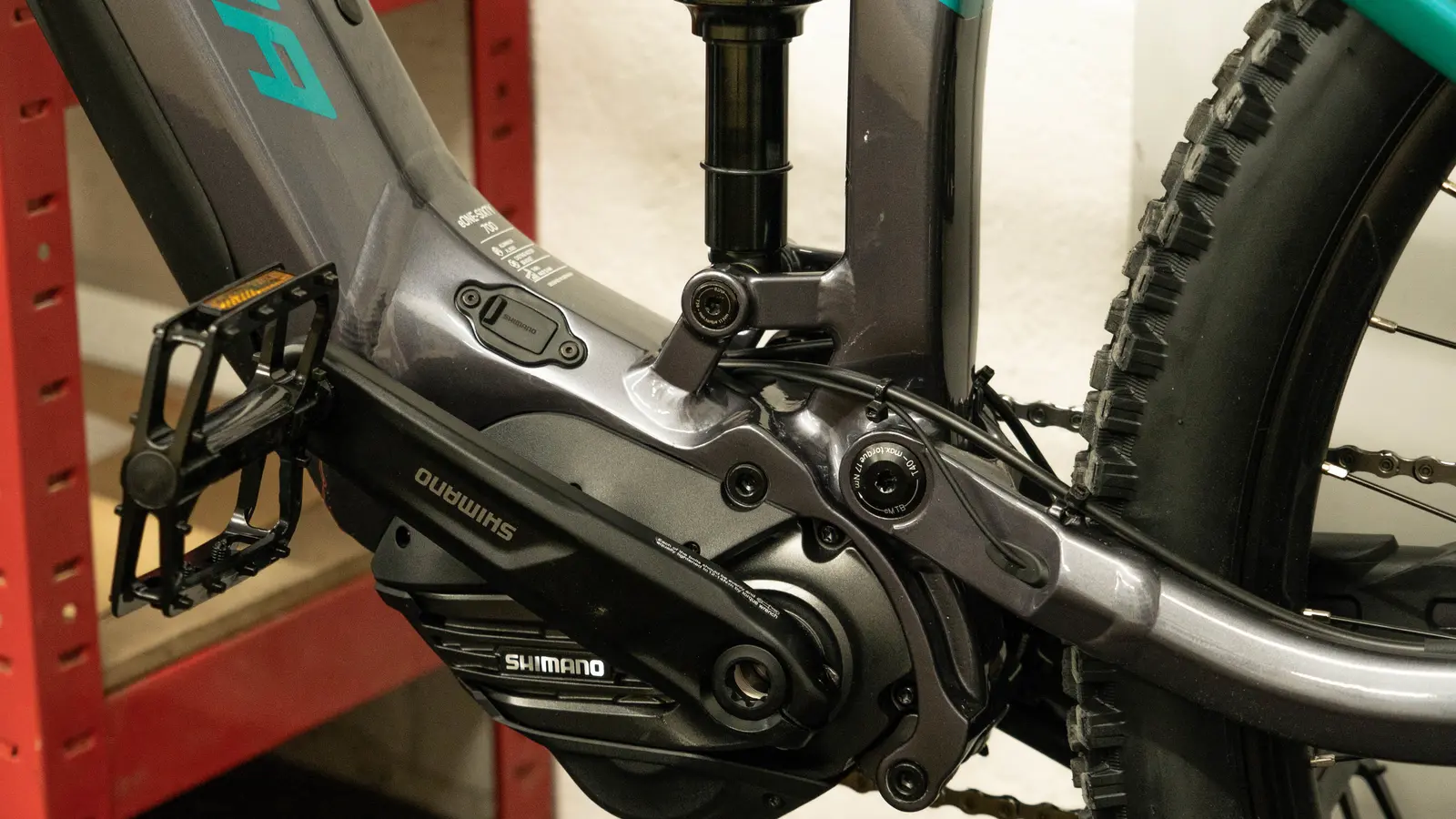
The quiet assumption behind most e-bike purchases is that the motor is a sealed box you never open. It works, then one day it does not, and the answer is a new drive unit. A July 24, 2026 report by Colin Field for Canadian Cycling Magazine describes a shop operating on the opposite premise, and the numbers in that report are the reason every e-bike owner should care.
According to Field’s reporting, photographer Grant Gunderson has opened Alpine Edge in downtown Bellingham, Washington, doing suspension service and e-bike motor rebuilds. The report says the shop rebuilds units from Shimano, Bosch, Brose and Avinox, that roughly 80 per cent of its work now arrives by mail from riders, bike shops and manufacturers across North America, and that Gunderson believes it may be the only place in North America rebuilding Shimano motors while also servicing multiple brands.
Set the personalities aside. The part that changes how you should think about owning an e-bike is the cost gap Field reports, and the fact that this choice tends to arrive after the warranty window has closed. The report says the majority of motors reaching the shop are already outside coverage.
Warranty First. Always.
The single most useful line in the report is also the least glamorous. Field quotes Gunderson advising riders “to try to go through the warranty first,” and reports that the majority of motors arriving at the shop are already outside warranty coverage.
That is the advice as reported, and it is worth taking at face value: check what you are already entitled to before you pay anyone. What the report does not do, and what we are not going to invent, is describe how any particular brand’s warranty works. Coverage terms differ by manufacturer, by model year and by market, and the only version that governs your bike is the one printed in your own warranty document.
The practical problem is that riders often do not know which side of the line they are on. So the useful move is not to assume anything about the ordering, it is to get the answer in writing from the party that owes you the coverage. Ask the motor manufacturer or the selling dealer what the stated coverage period is for your exact motor and model year, when the clock starts, whether coverage transfers to a second owner, what a claim actually pays for, and what the brand’s own position is on service performed by a third party. That last one matters precisely because the report’s advice is warranty first: if you are still inside a coverage window, you want the brand’s written answer before you ship hardware anywhere, not a rule of thumb.
The Cost Gap Is Bigger Than the Repair
Here is where the economics stop being abstract. Field reports Gunderson’s account of the replacement path: when a motor model is discontinued, the new drive unit can force a new battery, which can force new controls. The report quotes the resulting total reaching around $2,000 on a bike that may not be worth $3,000. Against that, the report says rebuilds usually run between $300 and $400 depending on what the unit needs.
Those figures are the shop’s, as given to Canadian Cycling Magazine, not a survey of the market and not a quote for your bike. The cascade behind them is equally specific. What Field reports is Gunderson’s account of the bikes his shop sees: on those units, a discontinued drive unit pulled a new battery with it, and the new battery pulled new controls. That is a described scenario from one shop, not a property of every e-bike.
Whether your own bike carries that dependency is a separate question, and it is one you have to answer for your specific hardware. Ask the dealer or the motor manufacturer whether the drive unit can be sourced and fitted on its own, or whether replacing it also forces the battery, the controls or a firmware change. Where that dependency does exist, it is what can turn a five-year-old e-bike into a write-off, because the surrounding parts, rather than the failure itself, are what push the total past the bike’s value.
Two paths after a motor failure, per the Canadian Cycling Magazine report
data| Path | What the report describes | What to pin down yourself |
|---|---|---|
| Warranty claim | Gunderson's stated advice is to try warranty first. Most motors the shop sees are already out of warranty. | Coverage length for your motor and model year, whether it transfers on a used bike, and what documentation the brand requires. |
| Specialist rebuild | Disassembly, upgraded bearings, custom seals, fresh grease, and repair of damaged internal components. Reported cost of roughly $300 to $400 depending on need. | Whether your exact motor model is supported, shipping and turnaround, and what warranty the rebuild itself carries. |
| New drive unit | A discontinued model can require a new battery and new controls, with the report citing a total near $2,000 on a bike worth under $3,000. | Whether your motor is still in production, and whether your dealer can source it as a standalone part. |
| Replace the bike | Not addressed in the report. | The honest comparison is rebuild cost versus the bike's actual resale value today, not its original price. |
Moisture and Heat Leave Different Fingerprints
One detail in the report is genuinely useful diagnostic context. Gunderson tells Canadian Cycling Magazine that heat and moisture account for most failures, and that he can often guess a motor’s home region on opening it: units from the Pacific Northwest usually show water intrusion, while units from the Rockies and the Southwest usually show heat damage.
That is a shop-floor observation from one person, not a controlled study, and it is worth treating as such. It is also the limit of what the reporting supports. The report describes what Gunderson sees when he opens motors up. It does not establish which rider behaviours cause those two patterns, and we are not going to fill that gap with guesses dressed up as mechanics.
The one adjacent detail the report does give is that the rebuild process includes custom seals, not just new bearings. Read that as a signal about where these units are vulnerable over time, and nothing more.
If you want to act on any of this, the answers worth having are the ones your motor’s manufacturer publishes for your specific model rather than anything general. Ask what the official cleaning and washing procedure is, whether the documentation sets any limits on how the motor may be washed, what ingress protection rating the unit carries, what storage conditions the manual specifies, and whether the brand documents any thermal or continuous-output limits for sustained climbing. Those are per model, they are written down, and they beat folklore. Our mid-drive versus hub motor breakdown covers how the two designs differ, and e-bike maintenance basics covers routine care.
A new noise is still worth acting on early, for the same reason any unfamiliar noise from a machine is. Just do not price the outcome in your head first. The $300 to $400 figure in the report is Alpine Edge’s stated rebuild range, not a diagnosis of your noise, and only a provider with the unit in front of them can tell you what you are dealing with.
What to Ask a Dealer Before You Buy
The service model in this report only helps you if the motor in the bike you are buying is one somebody can actually service. That makes a few questions worth asking at the point of sale, when you still have the option to walk.
Questions to put to a dealer before you buy
quick pick| If you… | Pick | Why |
|---|---|---|
| you want to know your real exposure | Ask for the motor warranty term and start date in writing | Get the number rather than assuming it matches the frame. Ask whether the clock starts at manufacture, at first retail sale or at your purchase, and whether it transfers. |
| you are buying a bike with an in-house or unbranded motor | Ask who supplies parts in year four, and get a name | Ask how long parts stay available after a model is discontinued, and whether any service provider is authorised to open that motor. A dealer who cannot answer either is the answer. |
| the model is being closed out or discontinued | Ask whether the drive unit is still in production | The report describes discontinued units forcing a new battery and new controls, which is where the cost jumps. |
| you plan to keep the bike past five years | Ask whether the shop sends motors out for service | A dealer that already has a relationship with a service centre is telling you something useful about the next repair. |
| you are buying used | Ask for service history and storage conditions in writing | Per the report, moisture and heat account for most of what this shop sees, and it describes those signs as things Gunderson identifies once a motor is opened up. |
A dealer who answers those cleanly is worth paying a little more to buy from. If you do not have one yet, our dealer search is a starting point, and our first e-bike guide covers the tradeoffs that matter before the motor ever becomes the issue.
The Questions That Answer This for Your Bike
Everything above this line that is stated as fact comes from Field’s report, and it describes one shop. None of it tells you what your own motor’s repair path looks like. These are the questions that do, split by who can actually answer them.
Put these to the motor manufacturer (Shimano, Bosch, Brose or whoever built the unit, not just the bike brand):
- What is the warranty term for this exact motor and model year, and when does the clock start?
- Does coverage transfer if I bought the bike used?
- What does a claim cover: parts, labour, shipping, or some combination?
- What is your position on service performed by anyone outside your network?
- Is this drive unit still in production, and how long do you supply parts after a model ends?
- What are the published cleaning, washing, storage and thermal guidelines for this unit?
Put these to the dealer, before you buy:
- Can you source this drive unit as a standalone part, or does replacement pull in the battery and controls?
- Do you service motors in-house, or do you send them out, and to whom?
- What did the last motor job you handled cost the customer, start to finish?
Put these to any repair provider before you ship anything:
- Do you support my exact motor model, not just the brand?
- What is the current turnaround, and who pays shipping each way?
- What warranty does the rebuild itself carry, and what does it exclude?
- What happens, and what does it cost, if you open the unit and it turns out not to be repairable?
Those answers are specific to you. The report is context. Do not confuse the two.
Why a Send-It-Out Model Is the Interesting Part
The most consequential thing in Field’s report is not the price list. It is the structure.
Gunderson tells the magazine that modern motors are complex enough to sit beyond what a typical bike shop can do in-house, and that the sensible arrangement resembles suspension service: dedicated centres that units get shipped to, rather than every local mechanic attempting a teardown. The report backs that with demand data, describing 30 motors arriving within three days of a single social media post and roughly 80 per cent of current business coming in by mail.
Field also reports something that should interest anyone buying a bike in the next few years. Some manufacturers have reportedly entered consulting arrangements with the shop, with Gunderson saying they now hold failure-rate data on out-of-warranty motors that exceeds what some manufacturers themselves have, and that a few have asked about making future motors easier to repair.
That is the part that could actually move things for riders, if it holds. It is also the part we cannot check. Field reports Gunderson’s belief that his shop holds more failure-rate data on out-of-warranty motors than some manufacturers do. That is his assessment of his own dataset, relayed by the reporting. RoostMode did not validate it, and the report does not establish what any manufacturer tracks after coverage ends.
The caution is equally structural. A model built on a small number of specialists is fragile: one shop, one person’s tooling, one backlog. It is a promising development, not a guarantee, and it does not yet mean the motor on your bike has a repair path. Verify before you assume, and verify before you ship.
FAQ
FAQ
+Should I try a rebuild or a warranty claim first?
+How much does an e-bike motor rebuild cost?
+Which motor brands can actually be rebuilt?
+What actually causes most motor failures?
+Why does replacing a drive unit cost so much more than fixing one?
+Can my local bike shop rebuild my motor instead?
Sources
- Why riders across North America are shipping e-bike motors to one shop (Canadian Cycling Magazine, July 24, 2026, by Colin Field): primary and sole source for all shop-specific details, including the brands serviced, the custom tooling requirement, the warranty-first advice, the $300 to $400 rebuild range, the roughly $2,000 replacement scenario, the moisture and heat failure patterns by region, the mail-in share of business, the manufacturer consulting arrangements, and all quoted material.
- Hero image provenance: “E-bike electric motor shimano ep 8.jpg”, by Wikimedia Commons user Alextredz, CC BY-SA 4.0 (Wikimedia Commons): cropped, resized and optimized by RoostMode. It shows a Shimano mid-drive on a workshop rack during service and is not a photo of Alpine Edge or of any motor described in this report.
- Alpine Edge’s own service page returned an HTTP 429 response when we attempted to verify current services, compatibility, pricing, shipping and turnaround. Those details are unverified here and should be confirmed with the shop directly.
