
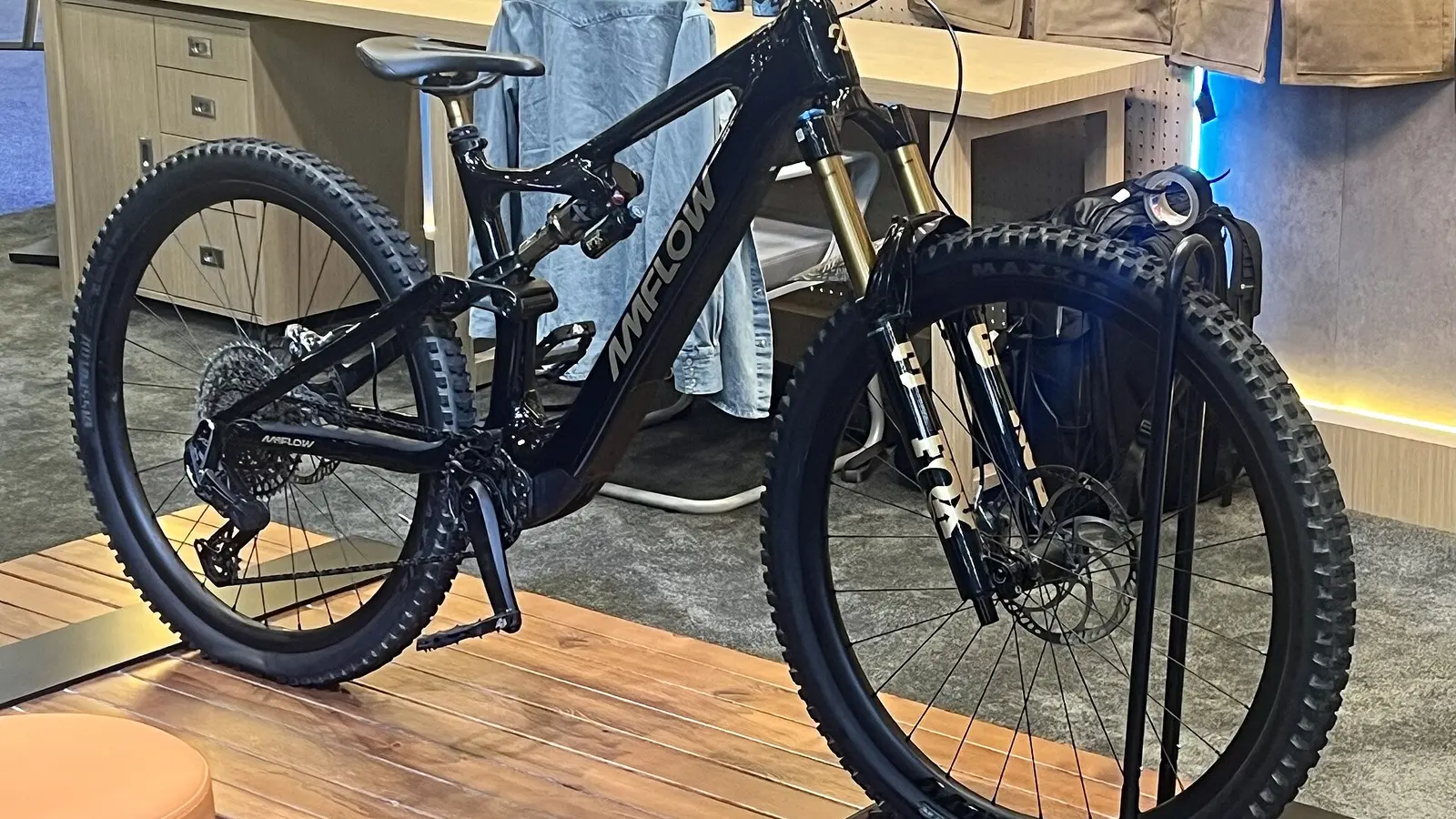
For years, Thomas Ricker admits, he muttered “cheater” at every electric mountain bike rider who cruised past him on a climb. Then he rode one. In a first-person piece for The Verge published July 18, 2026, the deputy editor describes how a few weeks on an Amflow PX Carbon Pro, powered by the compact Avinox M2S motor from a DJI offshoot, dismantled a purist attitude he had carried since he took up mountain biking during the pandemic.
Conversion stories like this one are common in eMTB coverage, and they are genuinely useful, but not in the way they first appear. They tell you a lot about why people enjoy these bikes. They tell you much less about whether a specific eMTB belongs in your garage.
So here is what Ricker’s account actually establishes, what stays subjective, and the questions his article should prompt you to ask before you spend real money.
What Actually Changed His Mind
Ricker’s core discovery was not speed. It was the removal of the specific kind of suffering that was cutting his rides short. He writes that long, steep, technical climbs stopped being a cardio tax and became engaging, flowy challenges, and that he still chooses how hard to work: turbo assist on the rough days, eco when he wants his heart rate pinned.
The backstory matters for reading his impressions honestly. By his own description, Ricker is a pandemic-era novice who learned technique from YouTube and suffered a crash that dislocated his shoulder. He had not felt confident on a mountain bike since. The motor, he says, compensates when poor technique kills his momentum: a bolt of torque when a technical section stalls him, quick acceleration out of turns he braked too cautiously into, enough support that stronger friends no longer drop him in the first ten minutes.
The result he reports is more laps, more repetitions, and more fun on the same trails. He also describes a deliberate etiquette: announcing passes early, staying humble around fitter riders, and skipping Strava leaderboard grabs. That detail is worth copying whatever you ride.
The Gatekeeping Argument, and Its Limits
Ricker frames motors as the next chapter in a long pattern. Mountain bike purists once dismissed full-suspension frames, disc brakes, dropper posts, and 29-inch wheels as making the sport too easy. All of that is now standard equipment, including on the bike he was testing.
It is a persuasive frame, and history is on his side. But notice what the argument does and does not do. It answers the social question, whether assist is legitimate, convincingly: riding what makes you ride more is not cheating. It does not answer the buyer’s question, whether an eMTB is the right tool for your trails, your budget, and your fitness goals. Plenty of riders who would never call assist cheating still conclude that an analog bike suits how and where they ride. Those are separate decisions, and conversion essays tend to blur them.
His Experience Comes With European Rules Attached
This is the part US shoppers most need to slow down on. Ricker rides in Europe, and he is explicit that his bike has no throttle, cuts assist at 25 km/h (15.5 mph), and carries a 250W maximum continuous power rating. He points out that strong trail riders can exceed 30 km/h on straightaways, leaving him behind on a heavier bike, which is why he calls the idea that eMTBs make you faster a misconception, at least where he rides.
None of those numbers transfer automatically to the US market. American e-bikes follow the three-class system, where even Class 1 assists to higher speeds than the European trail cap, and motors are commonly rated well above 250W continuous. A US Class 1 eMTB is a different experience from the bike in Ricker’s account, and a throttle-equipped Class 2 or a 28 mph Class 3 is a different machine entirely. Our e-bike classes guide breaks down what each class means before you shop.
The rules behind Ricker's ride versus the US picture
data| Rule | European eMTB (per Ricker's article) | United States |
|---|---|---|
| Throttle | None; pedal assist only | Class 1 and 3 have no throttle; Class 2 allows one |
| Assist cutoff | 25 km/h (15.5 mph) | 20 mph for Class 1 and 2; 28 mph for Class 3 |
| Motor rating | 250W maximum continuous | Commonly 750W nominal, with state-level variation |
| Trail access | Varies by country and trail network | Set by each land manager; many trails allow Class 1 only, or no motors at all |
Trail access is the sharpest edge. In the US there is no single answer to where an eMTB can go: federal agencies, state parks, counties, and private trail networks each set their own policies, sometimes route by route on the same mountain. Before an eMTB purchase makes sense, you need to know what the land managers of the trails you actually ride permit. Our state-by-state e-bike law guide is the starting point, but the trailhead sign and the land manager’s current policy are the final word.
Feeling Safer Is a Feeling, Not a Finding
Ricker writes that adding a motor made him feel safer, with a greater sense of control, and given his shoulder history that feeling clearly matters to him. His examples are concrete: assist lets him brake conservatively into corners and still carry pace out, and it rescues him when momentum dies mid-feature so he does not have to dismount or tip over.
Treat that as exactly what it is: one rider’s subjective experience, honestly reported. It is not evidence that eMTBs are safer than analog mountain bikes, and no such data appears in his article. Assist also adds weight and makes it easier for a developing rider to reach terrain and speeds ahead of their skills. Confidence and control are real benefits worth test riding for. They are not a safety rating, and nobody should buy an eMTB as protective equipment.
What This Tells a Buyer, and What It Cannot
The genuinely transferable lesson in Ricker’s piece is about motor character. What won him over was not raw power but delivery he describes as intuitive and predictable: power that arrives in proportion to his effort, exactly when momentum fades. When you test ride any eMTB, that quality, how the motor engages, modulates, and cuts off, is worth more attention than the peak numbers on the spec sheet.
The second useful point is that his epiphany bike is not the entry price. He is upfront that the $10,000 Amflow PX Carbon Pro, with its reported 150Nm of torque, temporary 1,500W boost, and 20.6 kg (45 lb) total weight, made the experience easier to love. But he also notes Avinox now lists over 60 bike brand partners, that the cheapest bike he found with the same M2S motor is a roughly $4,000 CRUSSIS hardtail, and that budget brands like Ride1Up and Aventon offer eMTBs with less capable motors that are still fun. His own conclusion is that a five-figure carbon bike is not required for the shift he felt.
What one first-person essay cannot tell you: how the motor and battery hold up over years, what service and parts support look like where you live, real-world range on your terrain, or how the Avinox system compares to Bosch, Shimano, and other established drive systems in a controlled test. Ricker says the incumbents are on edge; that is an observation about the industry, not a comparison you can shop from.
If you are earlier in the process than this, our guide to choosing your first e-bike covers motor types, battery sizing, and budget tiers that apply to eMTBs as much as commuters.
The Honest Takeaway
Ricker’s closing line is the most useful sentence in the piece for a shopper: the motor will not suddenly make you a better mountain biker, but it might make you want to become one. That is the right-sized claim. An eMTB reliably buys more laps and less suffering. Whether that is worth the price, the weight, the charging routine, and the access homework depends on your trails and your goals, and no conversion story, however charming, can answer that for you.
We will keep covering eMTB reviews and US access rules as they develop, and we will flag when independent, instrumented testing of the Avinox system appears.
FAQ
FAQ
+Is riding an electric mountain bike cheating?
+Do electric mountain bikes make you faster on the trail?
+Are eMTBs safer than regular mountain bikes?
+Can I ride an eMTB on any mountain bike trail in the US?
+How much do you need to spend to get a good eMTB?
+What should I test on an eMTB test ride?
Sources
- Fine, electric mountain bikes don’t suck (The Verge, Thomas Ricker, July 18, 2026)
- Amflow PL Carbon Pro Electric Mountain Bike, hero image provenance (TaurusEmerald, Wikimedia Commons, CC BY-SA 4.0)
