
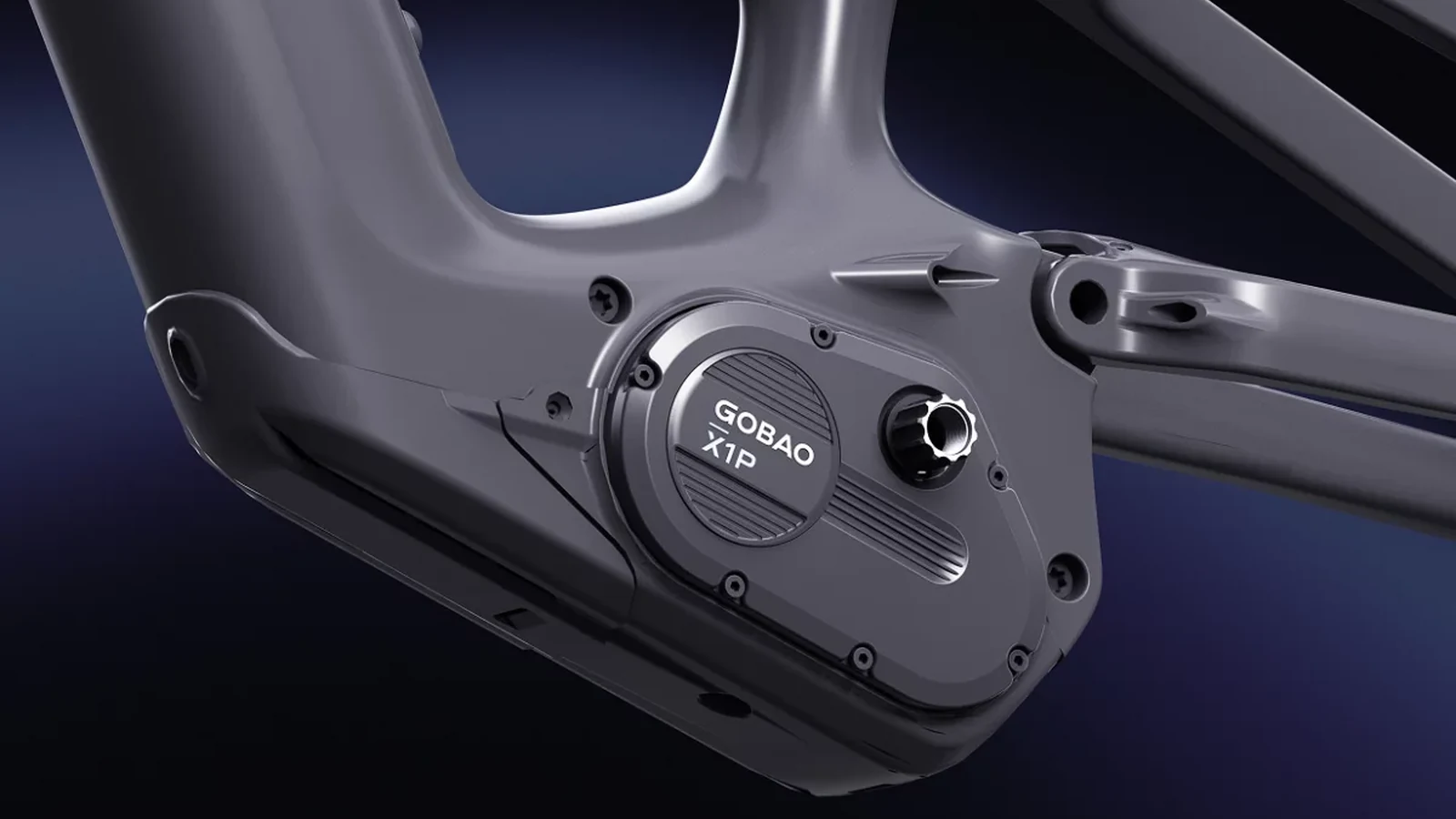
The derailleur has survived a century of bicycle design because nothing has managed to beat it on weight, efficiency, and cost all at once. Components manufacturer Gobao is making a run at it anyway. According to New Atlas, Gobao’s X1P motor builds an eCVT, an electronic continuously variable transmission, directly into the drive unit. The result is an e-bike drivetrain with no derailleur, no cassette, and no shifter on the handlebar.
New Atlas frames this as the opening of a real fight in e-bike drivetrains. Avinox, the drive system subsidiary of DJI, showed an MG Concept Motor at Eurobike in Frankfurt, developed with Canyon, that also carries an integrated eCVT. Two companies bringing motor-integrated automatic gearboxes to market at the same time is not a coincidence. It is a signal about where drive unit makers think e-bikes are headed.
How an eCVT changes the ride
A conventional drivetrain jumps between fixed gears. You feel each shift, and you are responsible for making it happen at the right moment. An eCVT works differently. As New Atlas explains, it can move through effectively infinite gear ratios within its specified range, adjusting continuously based on your preferred cadence rather than stepping through cogs.
In practice, that means the bike does the shifting for you. You pick the pedaling rhythm you like, and the transmission keeps you there whether you are climbing, cruising, or pulling away from a stop. The X1P’s ratio range is wide too: Gobao specs it at 500 percent, which is the spread between its lowest and highest effective gearing.
The maintenance argument may matter even more than the ride feel. New Atlas notes that the system means riders do not need a shifter and may avoid derailleur service, breakage, and replacement entirely. Anyone who has bent a derailleur hanger in a bike rack, or paid a shop to chase a skipping cassette, understands the appeal. The derailleur is the most exposed, most frequently adjusted, and most easily damaged component on a typical bike. Removing it removes a whole category of ownership headaches.
The numbers Gobao is claiming
The spec sheet, as reported by New Atlas, is aggressive. The X1P delivers 250 W of continuous power, peaks at 1,500 W, and maxes out at 111 lb-ft, or 150 Nm, of torque. That 250 W continuous figure is the number that matters for regulatory purposes in many markets, while the peak output is what you would feel on a steep climb.
That torque figure deserves a pause. 150 Nm is a very large number for an e-bike drive unit, and it arrives through a transmission that is also handling automatic ratio changes. How that power delivery feels under real riders is exactly the kind of thing a spec sheet cannot tell you.
Weight is the other claim worth noting. Gobao says two upcoming models weigh about 8.5 lb, or 3.85 kg. That covers the motor and gearbox together, which is the fair way to compare it against a conventional setup, since the eCVT replaces components a standard drivetrain still has to carry.
On the battery side, Gobao claims its 500 Wh and 750 Wh packs can charge to 80 percent in about half an hour with the company’s 30 A charger. Fast charging is genuinely useful for commuters who can top up at work, though as always the claim comes from the manufacturer and has not been independently tested. Range figures have not been announced at all, which is a meaningful gap when evaluating any e-bike system.
What this costs and when it arrives
New Atlas reports the X1P is set to go into production sometime next year, and cites Pinkbike as reporting that Gobao expects bikes using the drive to start around US $3,750. That positions eCVT bikes above the budget tier but within reach of the mid-market, if the figure holds.
Treat all of that as provisional. Production timing slips, launch pricing is a projection rather than a shelf price, and nothing in the source establishes US availability, dealer support, or real-world durability. Gobao makes e-bike motors, batteries, controls, displays, and software, so it has the pieces to deliver a complete system, but a complete system on paper is not the same as one you can buy and get serviced.
Should this change your buying plans?
If you need an e-bike now, no. The X1P is not in production, range is unannounced, and pricing is a secondhand projection. A well-chosen conventional e-bike remains the safe purchase, and our guide on how to choose your first e-bike walks through the decisions that actually determine whether you will be happy with it.
The drivetrain question most buyers face today is still the established one: mid-drive or hub motor. That choice affects ride feel, maintenance, and cost far more than any technology that has not shipped yet, and our mid-drive vs hub motor guide covers the tradeoffs.
Power figures like a 1,500 W peak also raise the classification question. In the US, where a bike falls among Class 1, 2, and 3 determines where you can legally ride it, so it is worth understanding the e-bike class system before getting excited about any high-output drive.
If eCVT bikes do reach shops, one piece of advice from the source is worth taking seriously: test ride before you buy. Power delivery and shift feel on an eCVT may differ from a conventional cassette and derailleur setup, and no review can substitute for feeling that difference yourself. A local shop is the place to do that, and to get an unfamiliar drivetrain serviced afterward. Our dealer directory can help you find one.
The bigger story is the direction. When two well-resourced drive makers converge on the same idea, motor-integrated automatic shifting stops being a curiosity and starts being a roadmap. Whether Gobao’s X1P specifically delivers is unproven. That the industry wants to retire the derailleur from e-bikes looks increasingly clear.