
Kansas City’s council just passed written speed limits for electric bikes, and the lowest one is not 20. It is 15, and it applies to sidewalks. The city’s legislation record shows File 260508, an ordinance, with a status of Passed and a final action date of July 30, 2026.
Here is the part that matters before you change how you ride: the operating sections do not start the day the council voted. The committee substitute states that sections 70-706 through 70-710 take effect 120 days after the ordinance’s passage and approval, tying the delay to distributing safety education material and setting up the diversion procedures the enforcement section depends on. Passage happened on July 30. Approval is a separate step, and we could not establish its timing from the record we read, so we are not publishing a countdown or a calendar date. Ask the City Clerk for the approval date, then count from there.
The ordinance also does not treat every electric machine as one thing. It repeals and replaces the Chapter 70 definitions section, drops the old “electric-assisted bicycle” definition in favor of “electric bicycle” with three classes, and adds separate categories for micro-mobility devices and electric motorcycles. The rules diverge sharply at those lines.
The Definitions Are the Load-Bearing Part
Every rule below hangs off which of three definitions your machine falls under, so start there rather than with the speed table.
Electric bicycle. A bicycle with fully operable pedals, a saddle or seat for the rider, and an electric motor of less than 750 watts that meets one of three classes. Class 1 assists only while you pedal and stops assisting at 20 mph. Class 2 has a motor that can propel the bike on its own and cannot assist past 20 mph. Class 3 assists only while you pedal and stops assisting at 28 mph. A motor at or above 750 watts, or a machine that does not fit one of those three profiles, is not an electric bicycle here.
Micro-mobility device. A compact electric-assisted device commonly designed for one person and not to exceed two, including electric scooters, motorized skateboards, and electric unicycles, whether privately owned or part of a shared system. The exclusions matter: the definition expressly does not cover electric bicycles, all-terrain vehicles, golf carts, motorized bicycles, mopeds, motorized scooters, motorcycles, electric motorcycles, coasters, roller skates, or skateboards, and it does not cover motorized wheelchairs, power scooters, or similar devices used as a mobility aid by a person with a disability.
Electric motorcycle. A motorcycle powered solely or primarily by an electric motor that either exceeds the motor wattage or speed thresholds of a Class 3 electric bicycle, or does not have fully operable pedals for human propulsion. Either condition is enough. A throttle-only machine with no pedals lands here even if its motor is small.
One more line worth knowing: the e-bike section states that an electric bicycle is governed exclusively by that section and not by the micro-mobility provisions. The categories do not stack.
The Speed Rules Depend on the Surface You Are On
For e-bikes, the ordinance sets three ceilings, and which one applies depends on what you are riding on. On a sidewalk, the cap is 15 mph. In a bike lane, on a multi-use path, or on a trail, the cap is 20 mph. On a street or roadway, the limit is the posted speed limit.
Micro-mobility devices get the same numbers with one piece of wording attached. The path and lane cap is 20 mph. The sidewalk provision reads “where riding on sidewalks is permissible, micro-mobility devices shall not be operated on sidewalks at a speed of greater than 15 miles per hour.” That is a speed limit conditioned on sidewalk riding being allowed in the first place, not a grant of sidewalk access.
These are behavior rules, not hardware rules. A Class 3 e-bike that assists to 28 mph is not banned from a bike lane by these caps; it is capped at 20 mph while it is in one. Both categories also carry a yield duty: yield to pedestrians on a sidewalk or in a marked or unmarked crosswalk, and yield to slower users of bike lanes, multi-use paths, and trails.
Path and Sidewalk Access Is Conditional, Not Guaranteed
This is the part most summaries flatten. The ordinance says an electric bicycle may be ridden where bicycles are permitted to travel, including on bicycle and multi-use paths. Then it attaches three qualifiers.
- A municipality or local authority with jurisdiction over a bicycle or multi-use path may prohibit Class 1 and Class 2 e-bikes on that path, but only following notice and a public hearing, and only if it finds the restriction is needed for safety or for compliance with other laws or legal obligations.
- A municipality or local authority with jurisdiction over a path may prohibit Class 3 e-bikes on that path. No notice-and-hearing precondition is attached to that one.
- The access subsection does not apply to a trail specifically designated as nonmotorized with a natural surface tread made by clearing and grading native soil with no added surfacing materials. On those trails, the local authority may regulate e-bike use on its own terms.
So “20 mph on paths” is the ceiling once you are allowed on the path. Whether you are allowed on a given path is a separate decision belonging to whoever has jurisdiction over it, and Class 3 is the easiest class to exclude.
Three Categories, Three Different Sets of Rules
Kansas City File 260508: how the three device categories are treated
data| Rule | E-bike | Micro-mobility device | Electric motorcycle |
|---|---|---|---|
| Sidewalks | 15 mph cap, where bicycles are permitted | 15 mph cap, where sidewalk riding is permissible | Not allowed |
| Bike lanes, multi-use paths, trails | 20 mph cap, and the path authority may bar class 3, or class 1 and 2 after notice and hearing | 20 mph cap | Not allowed |
| Streets and roadways | Posted speed limit | Posted speed limit per the reference table in the ordinance | Posted speed limit, under motorcycle rules |
| Interstate highways | Unlawful to operate | Unlawful to operate | Not addressed in these sections |
| Minimum age to operate | 16 for class 3 | 16 if the device can exceed 20 mph | 16, plus a motorcycle-authorizing license or permit |
| Helmet | Required under 18, operators and passengers | Required under 18 | No age rule here; motorcycle duties apply instead |
| Alcohol | Not addressed in this section | Unlawful to operate under the influence of alcohol | Motorcycle duties apply |
| Equipment | Class 3 speedometer, permanent class label, and CPSC 16 CFR 1512 compliance | Passenger only if the device is designed for one | Motorcycle duties apply |
| Licensing and registration | Exempt from registration, title, driver license, and financial responsibility rules | Not addressed in these sections | Valid driver license or motorcycle-authorizing license or permit required |
E-bikes
Two rules key specifically to Class 3. A person under 16 cannot operate a Class 3 e-bike, and every Class 3 e-bike must have a speedometer capable of displaying speed in miles per hour. The under-16 rule is about operating, not about being aboard: a person under 16 may ride as a passenger on a Class 3 bike designed to accommodate passengers.
Helmets are age-based rather than class-based. Anyone under 18 who operates or rides upon an e-bike must wear an approved bicycle helmet, properly fitted and fastened securely by a neck or chin strap, while the bike is in motion. Approved, fitted, and fastened are three separate conditions.
Three more requirements aim at the machine rather than the rider. An e-bike must comply with the federal bicycle equipment and manufacturing requirements at 16 CFR 1512, its motor must disengage or cease to function when the rider stops pedaling or when the brakes are applied, and it is unlawful to operate one on any interstate highway. On the other side of the ledger, an e-bike and its operator are not subject to provisions of law applicable to motor vehicles, all-terrain vehicles, off-road and off-highway vehicles, motor vehicle rentals, or motor vehicle and motorcycle dealers or franchises, including vehicle registration, certificates of title, driver licenses, and financial responsibility.
If you are unsure which class you own, our guide to e-bike classes 1, 2, and 3 walks through what separates them and where labeling tends to be unreliable.
The Label Rule, and the Presumption That Comes With It
This is the sleeper provision, and it decides which category an officer treats you as being in.
Manufacturers and distributors must apply a permanent label to each electric bicycle, affixed in a prominent location, showing the classification number, the top assisted speed, and the motor wattage. The ordinance even specifies the typography: Arial, at least nine-point. Then it locks the label to the machine. No person may tamper with or modify an e-bike so as to change its motor-powered speed capability or engagement unless they replace the label with a new one indicating the new classification, and an e-bike modified so that it no longer meets any of the three classes is an electric motorcycle.
The enforcement mechanics follow from that. A police officer may request that the operator display the label. Operating without a legible label, or with a label inconsistent with the device’s actual performance, creates a presumption that the device is not an electric bicycle under the chapter, and it may be treated as an electric motorcycle for enforcement purposes.
Read that in the direction it points: the presumption runs against the rider. A peeled-off sticker on a machine that is otherwise a perfectly legal Class 2 is enough to shift the starting position at a stop toward the category with the license requirement and no path access.
Micro-mobility devices
This category covers standing scooters, motorized skateboards, and electric unicycles, and the age rule is written around capability rather than a class label. A person under 16 cannot operate a micro-mobility device capable of going faster than 20 mph, and cannot ride one as a passenger either. Carrying a passenger at all is unlawful unless the device is specifically designed to carry one.
Two prohibitions sit only in this section: it is unlawful to operate a micro-mobility device while under the influence of alcohol, and it is unlawful to operate one on any interstate highway. The helmet rule tracks the e-bike side, with the same under-18 requirement.
One nuance on status: a micro-mobility device is a vehicle to the same extent as a bicycle only where its maximum operating speed capability is 20 mph or less. Operators are otherwise granted the rights and subjected to the duties of a bicycle operator.
Electric motorcycles
These provisions are the sharpest break, and they are most likely to catch someone who bought a machine marketed as an electric bike.
To operate an electric motorcycle on a street, highway, or other public right of way in Kansas City, a rider must be at least 16 and must hold a valid driver’s license, or another license or permit issued under Chapter 302 of the Missouri Revised Statutes authorizing motorcycle operation. Electric motorcycles are barred from sidewalks, bike lanes, multi-use paths, and trails. They may be operated only on a street or roadway, at the posted speed limit.
The provision doing the most work comes first. An electric motorcycle and its rider are afforded all the rights and privileges of, and are subject to all of the duties of, a motorcycle and a motorcycle rider. That imports the whole body of motorcycle obligations in the city code and in state law, which is where registration, titling, insurance, equipment, and Missouri’s motorcycle helmet requirements live. So the absence of an under-18 helmet clause here does not mean helmets are unaddressed for e-motos. It means the motorcycle rules apply instead, and you need to look those up rather than assume the e-bike rule carries over.
Shops Have a Job Too, and It Is Specific
The ordinance does not stop at riders. Any business engaged in the retail sale, rental, or advertisement of e-bikes in Kansas City must conspicuously post, at each point of sale or rental location, at least one flyer or poster carrying four things: the definitions of all three device categories, the age and speed restrictions under the three device sections, a summary of operators’ rights and responsibilities, and a summary of the enforcement provisions and penalties. The City Manager must make a standardized version available, which a business may use without modification to comply. A business found out of compliance is first issued a written notice and gets 30 days to fix it before a citation may be issued.
That is quietly useful for buyers: once it is in place, the shop counter becomes a place where the current rules are physically on the wall. If you are shopping locally, our dealer directory is a place to start.
Enforcement Runs Through the Responsible Person, Not the Kid
The graduated ladder is the headline enforcement scheme, and the crucial detail is who is on the receiving end of it. The ordinance defines a responsible person as a parent, guardian, or other person having charge, control, or custody of a person under 16, and makes them accountable for ensuring the under-16 rider in their charge complies with the age, class, and location restrictions across all three device sections. Every rung lands on that person:
- First violation. A police officer or code enforcement officer issues a warning to the responsible person, together with educational material. No fine and no citation.
- Second violation. The responsible person is issued a citation. That citation and any associated fine may be waived, but only upon the responsible person’s successful completion of a city-approved educational or safety program. It is not the rider’s completion that clears it.
- Third and subsequent violations. The responsible person is issued a citation and is subject to a fine of up to $500, with no waiver option.
The guardrails people quote apply to that third rung specifically, not to the ladder as a whole: there, the responsible person is not subject to custodial arrest and is instead issued a summons to appear in municipal court.
A second liability rule is easy to conflate with the ladder, and it uses a different age. Both the e-bike and micro-mobility sections state that citations incurred through violations by persons under 18 shall be charged to the respective parents or guardians, and that a parent or guardian shall not authorize or knowingly permit a child or ward to violate those sections. So the education-first ladder is keyed to under 16, while the charge-the-parent rule reaches under 18. Which one governs a 16-year-old’s citation is worth asking the city rather than inferring.
That ladder also explains the 120 day delay. A warning-then-education model does not work until there is education to send people to, and the ordinance directs the City Manager to work with the city prosecutor and the municipal court on procedures for administering the diversion programs. It also bars enforcement under those sections for conduct occurring before the effective date.
One caution if you plan to cite these rules: the ordinance enacts two different sections numbered 70-708, one for electric motorcycles and one for the business notification requirements, and the delayed effective date provision refers to a section 70-709 that the ordinance never enacts. None of that changes what the rules require, but codification will have to resolve it, and citing “70-708” without saying which one is ambiguous today.
What the Council Said
KSHB 41 reports the measure passed 12-0 and describes a 120 day education period before the rules take effect. It quotes Mayor Quinton Lucas, who sponsored the ordinance, saying “E-bikes and scooters are here to stay. They give Kansas Citians, especially our young people, more freedom to get around. We are focused on safety, making sure a 12-year-old isn’t going 28 miles an hour down a sidewalk, and that every family knows the rules before someone gets hurt.” KCTV5 reported the same framework independently, including the three-step ladder and the 120 day timeline.
The open question is enforcement in practice, and the ordinance’s answer is the label. An officer at a trailhead is not expected to measure wattage, but can ask to see the label, and a missing or inconsistent one shifts the presumption. Whether that works on machines that look nearly identical from ten feet away is not something an ordinance can settle in advance.
The Pre-Ride Checklist for Kansas City
Run this before the operating sections take effect, not after.
- Identify your category from the definitions, not the listing. Pedals plus a motor under 750 watts plus one of the three class profiles is an e-bike. No functional pedals, or past the Class 3 thresholds, is an electric motorcycle.
- Check your label, and do not change assist speed without a new one. A bike modified out of all three classes becomes an electric motorcycle by definition.
- Get the approval date. Passage was July 30, 2026, but the 120 day clock runs from passage and approval. Ask the City Clerk when approval landed.
- Buy helmets for every rider under 18, on e-bikes and micro-mobility devices alike, operators and passengers.
- Check the age fit. No Class 3 operation under 16, and no micro-mobility device capable of more than 20 mph under 16, as operator or passenger.
- If you own an electric motorcycle, confirm licensing and remap any route that uses a trail or path. That access is gone under this ordinance.
For the wider picture, our e-bike laws by state guide is a starting point, though a state summary never substitutes for a city’s own code. Kansas City shows why: the state framework does not tell you the sidewalk cap is 15, or that a missing label shifts the presumption.
FAQ
+When do Kansas City's new e-bike rules actually start?
+Can I still ride my e-bike on the sidewalk in Kansas City?
+Can a city or park authority still ban my e-bike from a path?
+What does the label on my e-bike have to say, and what happens if it is missing?
+Does my teenager need a helmet, and does that depend on the class of bike?
+Who gets the ticket if a kid breaks these rules?
+How do I know whether my machine counts as an electric motorcycle instead of an e-bike?
Sources
- File 260508 legislation detail (Kansas City, Missouri City Clerk), the source for the file number, the type Ordinance, the status Passed, and the final action date of July 30, 2026. The legislative history records the July 30, 2026 council action as “Passed as Substituted,” and the July 28, 2026 committee action as “Adv and Do Pass as Cmte Sub.”
- Committee substitute document attached to File 260508 (Kansas City, Missouri City Clerk), the source for every legal provision described above. This is the attachment listed as “260508 CS to ORG ORD - COM updated,” a compared version of the committee substitute against the original ordinance, and it carries visible redline artifacts. We read its extracted text. Specifically, it is the source for: the repeal and replacement of the Chapter 70 definitions section and the substitution of “electric bicycle” for “electric-assisted bicycle”; the electric bicycle, micro-mobility device, electric motorcycle, and responsible person definitions; the label requirement, anti-tampering rule, and enforcement presumption; the 16 CFR 1512 and motor disengagement requirements; the conditional path access scheme and the natural-surface trail carve-out; the 15 mph sidewalk and 20 mph bike lane, path, and trail caps in both the e-bike and micro-mobility sections; the interstate highway prohibitions; the alcohol and passenger rules for micro-mobility devices; the Class 3 age and speedometer provisions; the under-18 helmet requirements; the yield duties; the electric motorcycle age, licensing, and location provisions and the importation of motorcycle duties; the business posting requirement and its 30 day compliance period; the graduated enforcement ladder and the $500 third-violation cap; the 120 day delayed effect of sections 70-706 through 70-710 and the bar on enforcement before the effective date; and the numbering conflicts, namely the two separately enacted sections numbered 70-708 and the reference to a section 70-709 that the ordinance never enacts. We did not review the codified city code, and section numbering may differ once codified. No calendar effective date is asserted here because the approval date was not established.
- Kansas City, Missouri council approves regulations for e-bikes Thursday (KSHB 41), the source for the 12-0 vote, the 120 day education period, Mayor Lucas’s sponsorship, and the quote attributed to him above.
- Kansas City Council approves new rules for electric scooters, bikes (KCTV5, July 30, 2026), an independent report corroborating the age and speed framework, the three-step enforcement ladder, and the 120 day timeline.
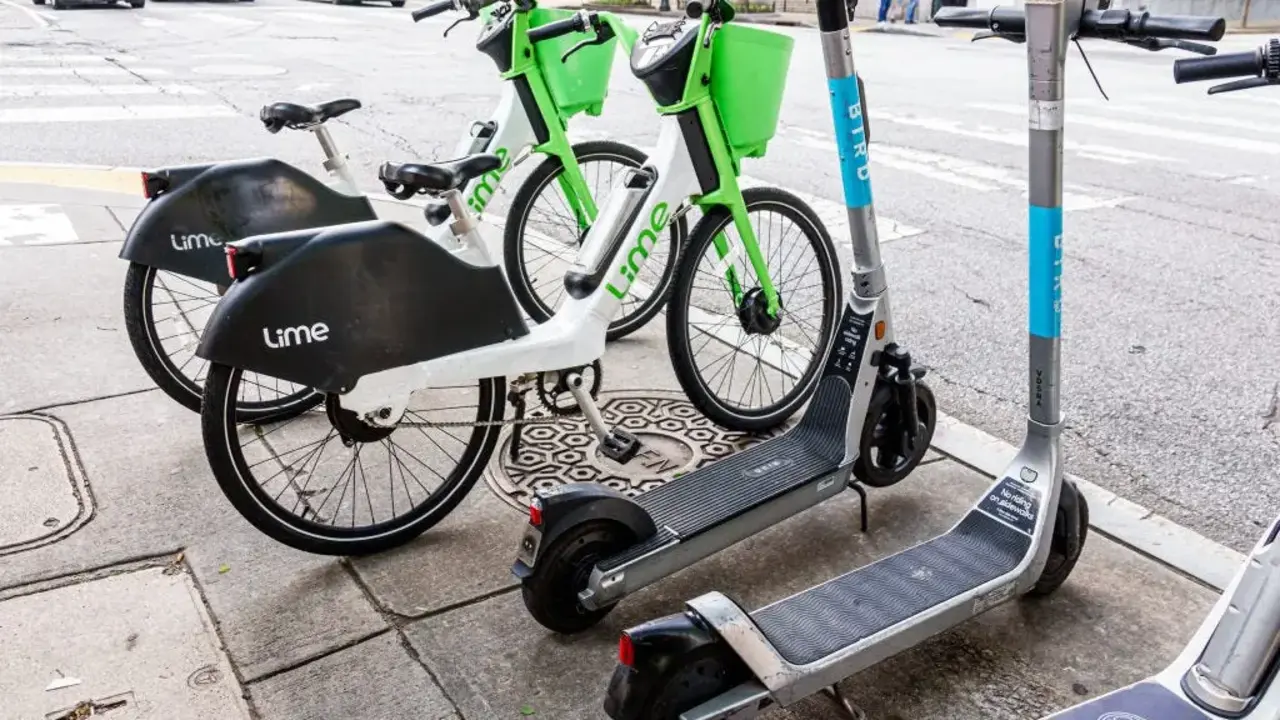
- Hero image: KMBC editorial image, published as the article image in the Google News sitemap entry and article JSON-LD for KMBC’s July 30, 2026 report on the ordinance. Original 1024x683 JPEG. RoostMode modifications: center-cropped to 16:9 and optimized to WebP. The photograph shows shared Lime electric bikes and Bird and Lime standing electric scooters parked on a city sidewalk. We are not identifying the photographer, the location, or any depicted person, because none of those are established by the image or by the text accompanying it. It is general micro-mobility imagery and does not depict Kansas City, the council vote, any enforcement action, or any person named in this article. Brand logos visible in the frame are incidental, and neither Lime nor Bird is a subject of this story. No factual claim in this article rests on the KMBC report, which we were unable to retrieve at the time of this review.

Read next
The E-Moto Problem: When an Electric Bike Is Not an E-Bike
Why the machine in your garage may fall outside every e-bike category a city writes rules around.
E-Bike Classes 1, 2, and 3 Explained
What Class 3 actually means, and why Kansas City singles it out for an age floor and a speedometer.
E-Bike Laws by State (2026)
The state-level framework that sits underneath city ordinances like this one.
Are Electric Dirt Bikes Street Legal?
The licensing and registration side of owning a machine that is not legally a bicycle.