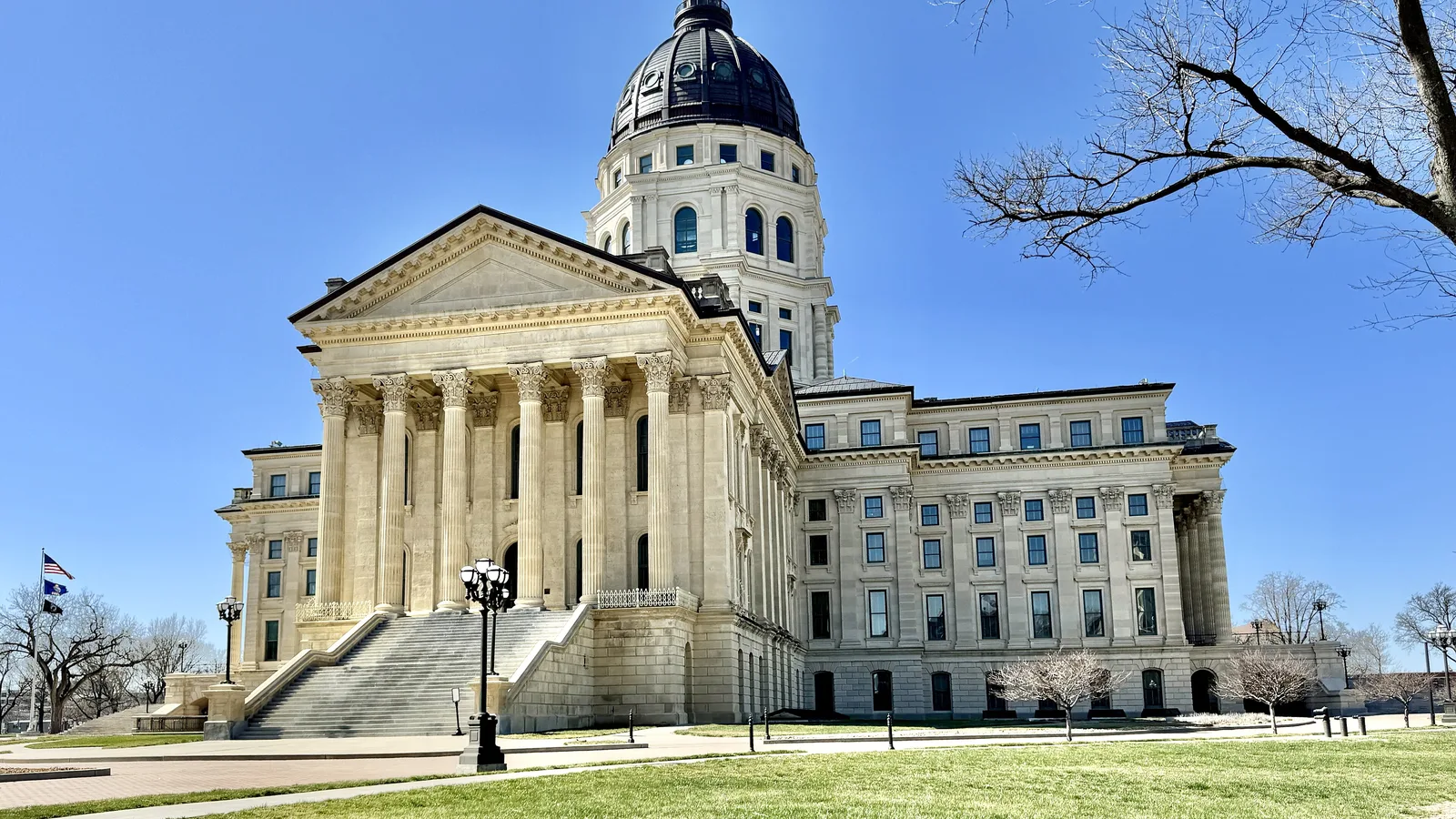
Kansas still has no statewide helmet rule for e-bike riders of any age. A bill to change that, House Bill 2459, was introduced by the House Committee on Transportation on January 15, 2026, at the request of Ryan and Monica Ommert. It would have been cited as “Duke’s law.” The Legislature’s bill page now lists it as died, and its progress tracker shows it never got past the committee stage.
So for 2026 the rules are the ones Kansas adopted in 2022, plus whatever your city or park district adds. Here is what HB 2459 proposed, and what the law says today.
What HB 2459 Would Have Done
As introduced, the bill would have:
- Made it unlawful for anyone 17 or younger to operate an e-bike or e-scooter without a helmet meeting the federal bicycle helmet standard (16 C.F.R. part 1203).
- Told officers to issue a warning citation to violators and hand out helmet education materials.
- Directed the Kansas Department of Transportation to create a public education program on helmet use by children.
- For e-scooters, barred riders 13 and under, set a 15 mph maximum speed and tightened the scooter definition.
The bill did not change e-bike classes, ages or trail access. Its e-bike piece was the helmet rule.
Kansas E-Bike Law Today
Kansas calls them “electric-assisted bicycles.” Under K.S.A. 8-1489, that means a bicycle with two or three wheels, a saddle, fully operative pedals and an electric motor of less than 750 watts, in one of three classes:
- Class 1: pedal assist, stops assisting at 20 mph.
- Class 2: can propel the bike without pedaling, no assistance above 20 mph.
- Class 3: pedal assist, stops assisting at 28 mph.
Our e-bike classes guide explains how to tell them apart on a spec sheet.
Under K.S.A. 8-1592b, an e-bike is a vehicle in the same way a bicycle is, but not a motor vehicle. Riders need no insurance, driver’s license, registration, title or license plate. Since January 1, 2023, manufacturers and distributors must attach a permanent label showing class, top assisted speed and motor wattage, and nobody may modify a bike’s speed capability or motor engagement unless the label is replaced to match. E-bikes must meet federal bicycle equipment rules.
Age and Helmets
- Age: No one under 16 may operate a Class 3 e-bike, though a younger child may ride as a passenger on a Class 3 bike built for passengers. There is no state minimum age for Class 1 or Class 2.
- Helmets: None of the e-bike statutes require a helmet. That is exactly the gap HB 2459 tried to close.
Where You Can Ride
State law is permissive: an e-bike may be ridden wherever bicycles are allowed, including streets, highways, bike lanes, bike or multi-use paths, and trails. Local control is the catch. A city can regulate e-bikes on its streets and sidewalks, and any city, county or state agency running a path or trail can restrict e-bikes, or a single class, there. On natural-surface trails designated as nonmotorized, the land manager sets the rules.
The Kansas Legislative Research Department’s January 2026 memo gives examples. Johnson County Park and Recreation District allows Class 1 and Class 3 e-bikes, but not Class 2, on its paved shared-use trails. Lenexa allows Class 1 e-bikes on streets, sidewalks, park property and trails. Overland Park caps e-bike speed at 20 mph and keeps riders on streets posted 35 mph or less. In state parks, the memo says e-bikes that stop assisting at 20 mph may use trails approved for bicycles.
The memo also notes two general rules that apply to e-bikes: drivers must give at least 3 feet when passing, and when a usable path runs next to a roadway, riders must use the path.
What Riders and Parents Should Check
- Your city code. Local rules on age, helmets and speed are where most of the action is in Kansas right now.
- The class label. A machine without a class, or with more than 750 watts, is not an e-bike under Kansas law. Many bikes in our electric dirt bikes hub fall in that category.
- Class 3 and teens. Under 16 cannot operate one.
- Helmets anyway. No state law requires one, but there is no good reason for a kid to ride without one.
What’s Next
The 2025-2026 session is over, so HB 2459 cannot move again. A new bill would have to be filed when the Legislature returns in January 2027. Public radio station KCUR reported in August that the Ommert family plans to seek reintroduction. Until then, Kansas riders should follow city and park rules on top of the state law above.
Compare other states in our e-bike law guide, or find local shops on our Kansas dealer page.
Sources
- Kansas Legislature, HB 2459 bill page (status: died)
- HB 2459, as introduced (PDF)
- K.S.A. 8-1489, electric-assisted bicycle defined
- K.S.A. 8-1592b, electric-assisted bicycles
- Kansas Legislative Research Department, “Kansas Laws on Bicycle, E-Bike, and E-Scooter Operation,” Jan. 8, 2026