
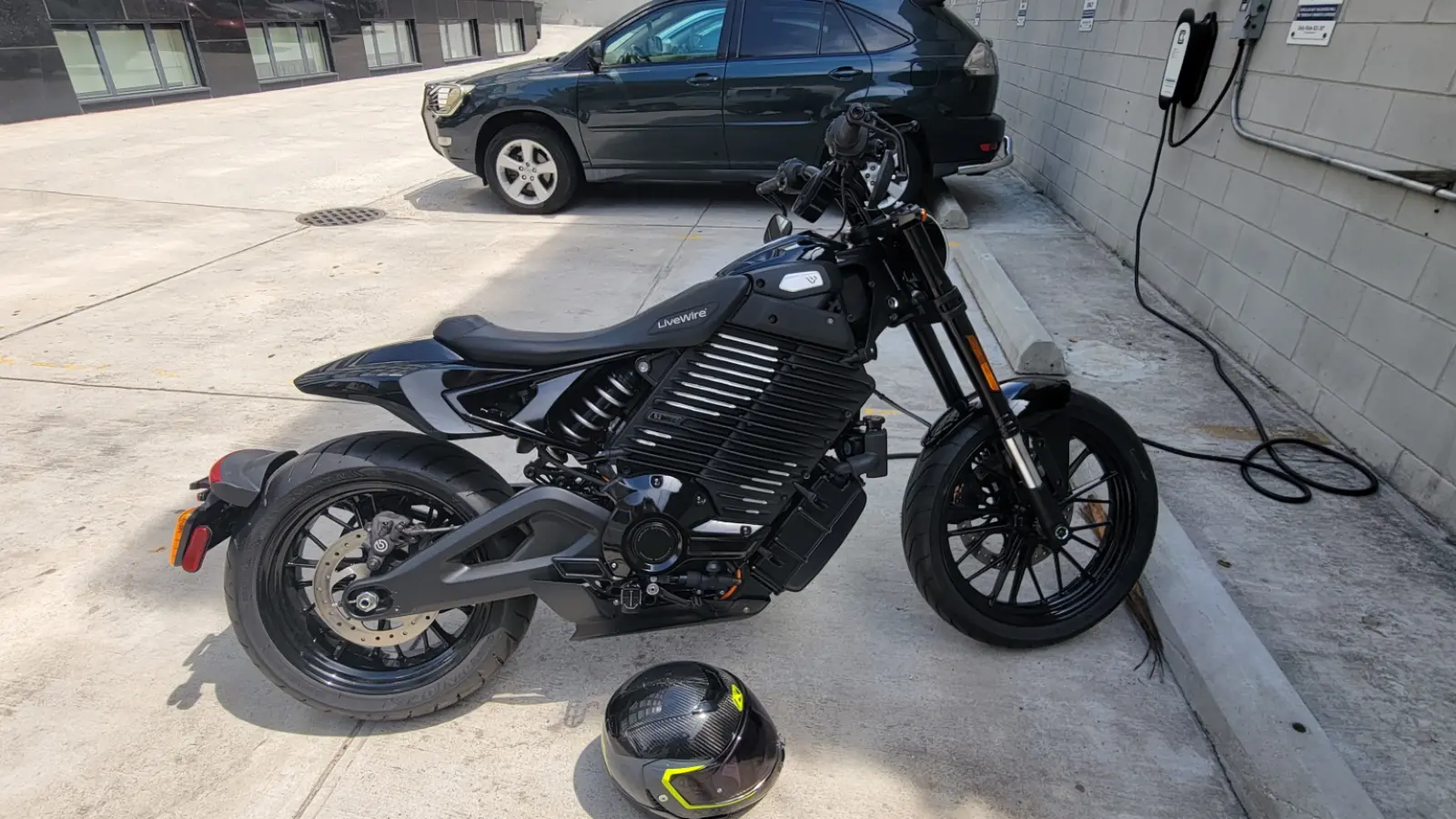
A 386% jump in motorcycle sales sounds like a turnaround. LiveWire’s second quarter results, filed with the SEC on July 23, report exactly that: 267 electric motorcycles sold versus 55 in the same quarter last year. The same filing reports an $18.0 million operating loss in the motorcycle segment, unchanged from a year ago, and a cash pile that shrank by about $30 million in six months.
Both of those things are true at once, and that tension is the whole story for anyone thinking about putting a LiveWire in their garage. This is not investment analysis, and we have no opinion on the stock. The question we care about is narrower and more practical: if you are considering a LiveWire motorcycle, what do these numbers actually tell you about the company standing behind it, and what should you check before you buy?
What LiveWire Reported for Q2 2026
The headline GAAP numbers: consolidated revenue of $9.1 million, up 55% from $5.9 million in Q2 2025. Total company net loss of $18.2 million, slightly better than the $18.8 million loss a year ago. Consolidated units of 5,490 across both business segments, up 11% from 4,927.
That consolidated unit number needs unpacking, because most of it is not motorcycles. LiveWire runs two segments. STACYC sells electric balance bikes for kids and related products, and it moved 5,223 units in the quarter for $5.5 million in revenue, up 7% on units. The Electric Motorcycles segment, the part that matters if you are shopping for a bike, sold 267 units for $3.6 million, up from 55 units and $0.8 million a year ago.
LiveWire Q2 2026 results, per the SEC-filed earnings release
data| Metric | 2026 | 2025 | Change |
|---|---|---|---|
| Consolidated revenue (Q2) | $9.1M | $5.9M | Up 55% |
| Consolidated units, both segments (Q2) | 5,490 | 4,927 | Up 11% |
| Electric motorcycle units (Q2) | 267 | 55 | Up 386% |
| Electric motorcycle revenue (Q2) | $3.6M | $0.8M | Up 333% |
| Electric motorcycle operating loss (Q2) | ($18.0M) | ($18.0M) | Flat |
| Total company net loss (Q2) | ($18.2M) | ($18.8M) | Improved 3% |
| STACYC units (Q2) | 5,223 | 4,872 | Up 7% |
| Cash and equivalents (June 30, 2026 vs Dec. 31, 2025) | $52.9M | $82.8M | Down $29.9M |
| Net cash used by operating activities (year to date) | ($26.4M) | ($32.4M) | Improved 18% |
The 386% Number Is Real. It Is Also Small.
Selling 267 motorcycles instead of 55 is genuine progress, and it would be unfair to wave it away. Motorcycle revenue more than quadrupled. Something changed in LiveWire’s ability to move bikes this quarter compared to a very weak quarter a year ago.
Here is the context that percentage hides: 267 units is still a tiny number for a motorcycle manufacturer. Growth percentages off a base of 55 units can look spectacular while the absolute volume remains far below what a sustainable motorcycle business typically needs. The filing itself notes that the revenue gain came with a rise in cost of goods sold, partly from net realizable value adjustments on S2 inventory purchased during the quarter. In plain terms, that is an accounting acknowledgment that some inventory is worth less than what was paid for it.
Our analysis: treat the sales jump as a positive signal about demand direction, not proof of a fixed business. One strong comparison against a bad quarter does not establish a trend. The next two quarters will show whether 267 was a step or a spike.
The $18 Million Question
The motorcycle segment lost $18.0 million in the quarter. It lost $18.0 million in the same quarter last year. Selling nearly five times as many bikes did not move the segment’s operating loss at all, because the gains were offset by higher cost of goods sold, per the filing.
Cash tells the sharper version of the story. LiveWire ended June with $52.869 million in cash and equivalents, down from $82.777 million at the end of December. That is roughly $30 million gone in six months. The company is right that the burn is slowing: year-to-date net cash used by operating activities was $26.4 million versus $32.4 million in the first half of 2025, an 18% improvement, and management highlights a 19% improvement in free cash flow. Both directions are true. The fire is smaller than last year, and it is still burning.
Two more facts from the filing belong in this picture. LiveWire is majority-owned by Harley-Davidson, and the balance sheet shows a related-party term loan of about $76.8 million, with related-party interest expense appearing this year. A deep-pocketed majority owner that is actively lending is a meaningful difference between LiveWire and a standalone startup burning cash alone.
What the 76% Market Share Claim Actually Means
LiveWire says it holds 76% year-to-date share of the U.S. street-legal electric motorcycle segment above 50 kilowatts, citing Motorcycle Industry Council data. That sounds dominant, and within its definition it is. Read the definition carefully, though.
This is not 76% of U.S. motorcycles, not 76% of electric two-wheelers, and not 76% of anything a typical e-bike or e-moto rider shops in. It is share of a narrow slice: road-legal electric motorcycles with 50 kW or more of power sold in the U.S. That is a category with very few players and, as LiveWire’s own 267-unit quarter shows, low absolute volume. Leading a small segment is still leading, but a big share of a small market is a different claim than a big market presence. Company claim, accurately narrow; our framing.
S4 Honcho and Dust: What Is Coming, Carefully Stated
The most buyer-relevant news in the release may be the product pipeline. LiveWire says it has commenced production of the S4 Honcho, a new platform the company describes as expanding its lineup into a more accessible segment of the electric motorcycle market, with first units expected at authorized LiveWire retail locations later this summer. That timing is company guidance, not a delivery you can count on. Production ramps slip often enough in this industry that “expected later this summer” should be read as a plan, not a date.
LiveWire also completed its acquisition of Dust Motorcycles in May 2026 and says it is continuing to advance that platform toward production. Note the phrasing: toward production. No Dust bike is in production, and the filing gives no availability date. If the off-road direction interests you, this is a development to follow, not a product to wait on with money in hand. For background on how off-road electrics are regulated differently from e-bikes, our guide to the e-moto classification problem covers the distinctions that will apply to machines like this.
Competition is also arriving from established players. Honda’s first full-size electric motorcycle, the WN7, reached European dealers earlier this month, a reminder that LiveWire’s early-mover position in bigger electric bikes will not stay uncontested.
The Buyer Watchlist
If you are considering a LiveWire in the next year, these are the specific things worth checking, in roughly this order.
- Cash trajectory in the next two filings. The June 30 cash figure of $52.9 million and the pace of operating cash use are the clearest viability signals available. Watch whether the improvement trend holds.
- Whether S4 Honcho units actually arrive this summer. Company guidance says first units at retail locations later in summer 2026. Delivery on that timeline, or slippage, will say more than any press release.
- Your local dealer situation. Ask the specific retail location you would buy from how long they have carried LiveWire, how they handle warranty work, and how parts turnaround has been. The filing lists retail partner participation among its risk factors, so dealer commitment is worth probing directly rather than assuming.
- Harley-Davidson’s continued backing. The filing shows Harley-Davidson as majority owner and related-party lender. Any public change in that relationship would change the support picture for owners.
- S2 pricing and inventory signals. The filing’s mention of net realizable value adjustments on S2 inventory means the current lineup’s value is under pressure. Watch pricing on the bike you want, and factor resale expectations accordingly.
- Dust progress, if off-road matters to you. Acquisition closed, platform not in production. Follow it; do not plan around it.
Bottom Line
LiveWire’s Q2 is best read as a company moving in the right direction from a difficult starting point. Sales growth is real, cash burn is slowing, a new model that LiveWire says targets a more accessible segment of the market is entering production, and the majority owner is still lending. None of that erases a flat $18 million segment loss and a cash balance that fell by nearly $30 million in six months.
Our recommendation: a LiveWire purchase today is reasonable for a buyer who likes the current bikes, has a committed local dealer, and goes in understanding that the company’s long-term shape is not settled. Buyers who need certainty about a decade of factory support, or who are stretching financially to buy, are better served waiting a couple of quarters to see whether the S4 Honcho ships on schedule and the cash trend holds. And if the S4 Honcho’s more accessible positioning is what interests you, waiting is the only option anyway, since units are only expected at retail later this summer.
FAQ
+How many motorcycles did LiveWire sell in Q2 2026?
+Is LiveWire losing money?
+Does LiveWire really have 76% market share?
+What is the S4 Honcho and when can I buy one?
+What is the Dust Motorcycles acquisition about?
+Should I worry about parts and service support if I buy a LiveWire now?
Sources
- LiveWire Group Q2 2026 earnings release filed with the SEC
- LiveWire Group investor relations announcement of Q2 2026 results (this page may present an anti-bot challenge to some readers)