
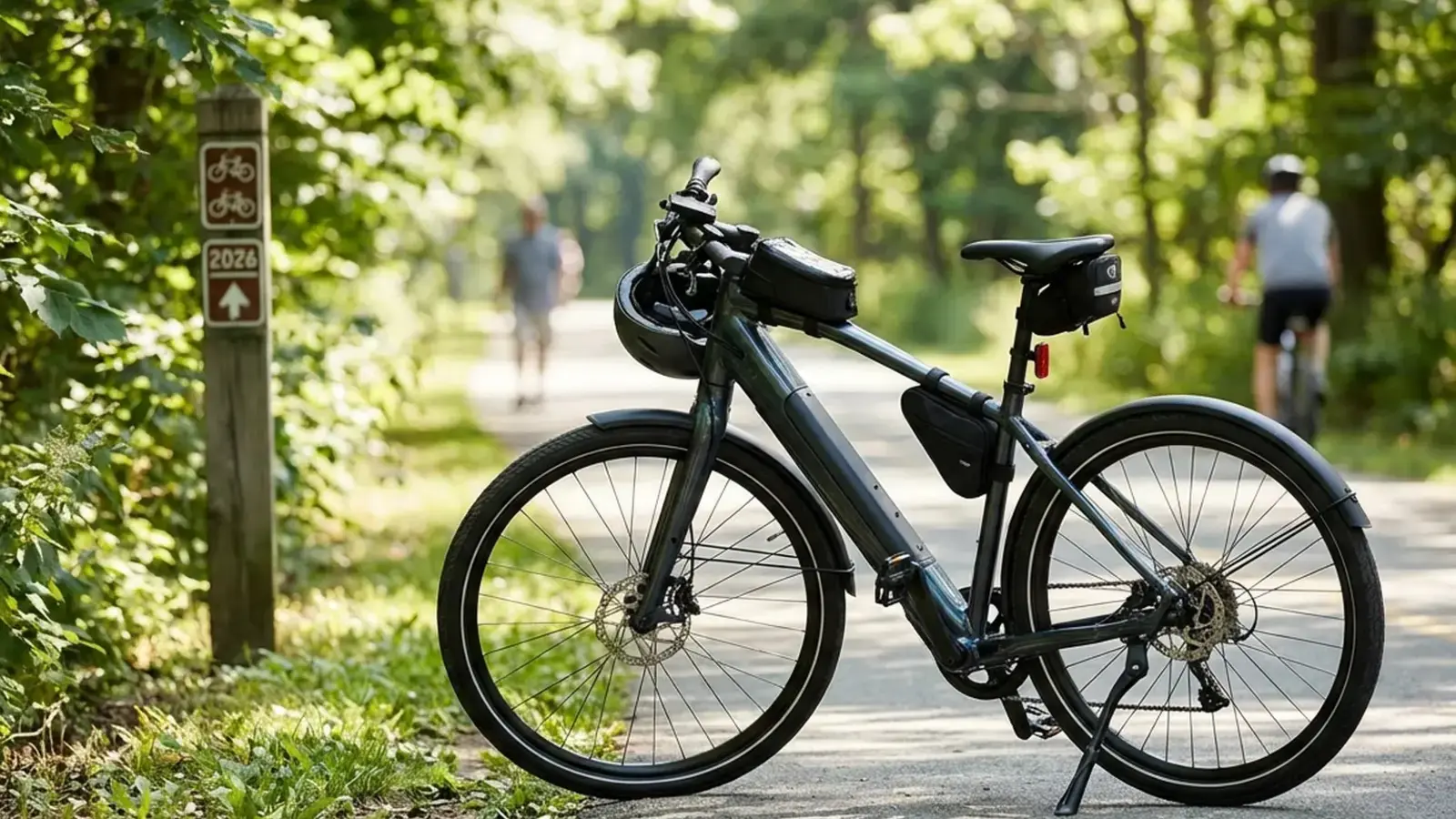
Maryland has officially opened many of its state trails to Class 1 pedal-assist e-bikes, according to the Maryland Department of Natural Resources. The approved regulation was published in the Maryland Register in May 2026 and is now in effect. If you ride an e-bike in Maryland, or you are shopping for one with state trails in mind, the details matter, because not every e-bike qualifies.
The short version: bikes that assist only while you pedal and cut assistance at 20 mph are now welcome on many multi-use trails on state public lands. Throttle bikes, bikes with motors that run without pedaling, and bikes that keep assisting past 20 mph are not, with a specific carve-out for adaptive e-bikes.
What Changed
Maryland DNR approved regulations allowing Class 1 pedal-assist e-bikes on many multi-use trails on state public lands. To qualify, an e-bike must provide assistance only while the rider pedals and must stop assisting at 20 mph. That is the standard Class 1 definition, and it is now the ticket to Maryland’s state trail network.
The rule did not arrive in its final form on the first draft. DNR’s Office of Outdoor Recreation adjusted the proposal after public comments raised concerns that throttle bikes and 28 mph e-bikes could create conflicts with more vulnerable trail users, including walkers, families, and equestrians. The department received more than 60 public comments, and roughly 87 percent supported the operational rules. That level of support suggests the pedal-assist-only compromise landed about where most trail users wanted it.
There is an economic backdrop too. Maryland cited Bureau of Economic Analysis data showing that biking contributed $36.5 million to the state’s economy in 2024. Opening trails to the fastest-growing segment of cycling is a straightforward way to grow that number.
What Bikes Qualify
The qualifying test has two parts, and your bike needs to pass both:
- The motor assists only while you are pedaling. If your bike has a throttle that moves it without pedal input, it does not qualify, even if the throttle tops out at 20 mph.
- Assistance cuts off at 20 mph. You can pedal faster than that under your own power, but the motor has to stop helping at 20.
In practice, that means Class 1 e-bikes are in. Most commuter, trail, and hardtail pedal-assist bikes sold as Class 1 fit this description out of the box.
What Stays Off Limits
Bikes with motors that operate without pedaling, and bikes that provide assistance beyond 20 mph, are not allowed on state trails. Per DNR, those bikes are generally limited to roads, parking lots, motor-vehicle areas, and specially designated ORV, dirt bike, and ATV areas.
That draws a clear line for two popular categories. Class 2 bikes, which use a throttle, are out on state trails even though they share the 20 mph ceiling. Class 3 bikes, which assist up to 28 mph, are also out. And the growing crop of e-motos and off-road electric bikes with no functional pedals were never in the conversation; those belong in designated ORV areas, not on multi-use trails.
The Adaptive E-Bike Exception
There is one important exception, and it is a sensible one. Adaptive e-bikes used by people with physical disabilities or mobility challenges are permitted on state trails under the same 20 mph assistance restriction, and they may have motors that do not require pedaling. If a throttle or motor-on-demand setup is what makes trail riding possible for a rider, Maryland’s rule accommodates it.
Trail Etiquette Still Applies
Access comes with expectations. Riders must ride safely, follow posted speed limits and right-of-way rules, and stick to trails where e-bikes are actually permitted. DNR is pairing the new access with a trail etiquette campaign built around a simple motto: “Say Hey, Give Way, and Enjoy the Day.”
That is worth taking seriously. The public comments that shaped this rule were driven by concerns about faster bikes around vulnerable trail users. E-bike riders who announce themselves, yield to pedestrians and horses, and keep speeds reasonable around others are the best argument for keeping this access in place, and for expanding it later.
Buyer Checklist Before You Assume Trail Access
We are not offering legal advice, but if Maryland state trails are part of your riding plans, run through this before you buy or ride:
- Confirm the class. Look for a Class 1 designation on the frame sticker or spec sheet. If the seller cannot tell you the class, keep asking until someone can.
- Check for a throttle. Any control that moves the bike without pedaling disqualifies it from state trails, regardless of speed.
- Verify the assistance cutoff. The motor must stop assisting at 20 mph. A bike marketed as 28 mph capable is a Class 3 and stays off these trails.
- Watch for switchable modes. Some bikes ship with settings that change class behavior. What matters is how the bike operates on the trail.
- Read the trail signage. The rule covers many state trails, not all of them. Posted rules at the trailhead are the final word on where you can ride.
- Adaptive riders have options. If you need a motor that works without pedaling for mobility reasons, you are covered under the 20 mph restriction.
The Bottom Line
Maryland’s move is a win for pedal-assist riders and a clear signal to buyers: the class sticker on your e-bike is not a formality, it is the difference between legal trail access and being limited to roads and parking areas. With strong public support behind the pedal-assist-only approach, expect other states to watch how this plays out. If trail riding is the goal, buy a true Class 1 and enjoy the new mileage.