New Mexico has not changed its e-bike law since 2023. The bills introduced in the 2025 and 2026 sessions that mention “electric-assisted bicycle” only reprint the existing definition while changing unrelated motor vehicle rules, and none of them rewrote how e-bikes are classified or ridden. So the rulebook is still Senate Bill 69, which Gov. Michelle Lujan Grisham signed on April 4, 2023 as Chapter 93 and which took effect July 1, 2023.
That law is worth knowing in detail, because it is stricter about shared paths than many riders expect, and it ties e-bikes into the state’s child helmet law.
The Three Classes
SB 69 added the three-class system to the definitions section of the Motor Vehicle Code (Section 66-1-4.5 NMSA 1978). An electric-assisted bicycle has two or three wheels, fully operable pedals and an electric motor, and every class is capped at 750 watts:
- Class 1: assists only while you pedal, stops at 20 mph.
- Class 2: can assist whether or not you pedal, stops at 20 mph.
- Class 3: assists only while you pedal, stops at 28 mph.
Equipment rules came with the classes. A Class 2 motor must cut out when the brakes are applied. Class 1 and Class 3 bikes need a circuit that cannot be bypassed and that stops the motor when the rider stops pedaling. A Class 3 needs a speedometer showing miles per hour. Manufacturers and distributors must label each new e-bike with its class, top assisted speed and motor wattage, and anyone who modifies a bike’s speed or motor engagement has to replace the label to match. Our e-bike classes guide explains the differences in plain terms.
E-Bikes Are Not Motor Vehicles; Faster Machines Are
The same law draws a firm line between e-bikes and anything faster. E-bikes are excluded from the definition of “motor vehicle,” and they are on the list of vehicles that do not need registration and a certificate of title.
SB 69 also created a separate term, “electric mobility device,” for a two- or three-wheeled electric vehicle that does not meet the e-bike definition and can go faster than 20 mph on motor power alone. That kind of machine is included in the definition of “motor vehicle.” In other words, a high-power electric “bike” that exceeds the class limits is treated as a motor vehicle in New Mexico, not as a bicycle. If you are shopping in that category, start with our electric dirt bikes hub.
Age and Helmets
Class 3 age limit. Under Section 66-3-709, no one under 16 may operate a Class 3 e-bike on any street, highway, or bicycle or pedestrian path. A younger rider may ride as a passenger on a Class 3 built to carry passengers.
Helmets for minors. SB 69 amended the Child Helmet Safety Act so that its definition of “bicycle” includes an electric-assisted bicycle. The Legislative Finance Committee’s analysis of the bill says this effectively requires helmet use for minors riding e-bikes. Under that Act, a minor is anyone under 18.
There is no state minimum age for Class 1 or Class 2.
Where You Can Ride
This is where New Mexico differs most from its neighbors.
- Class 1 may use a bicycle or pedestrian path where bicycles are allowed, unless a city or county bans it there.
- Class 2 and Class 3 may not use a bicycle or pedestrian path unless the path is within a street or highway, or the local government in charge permits it.
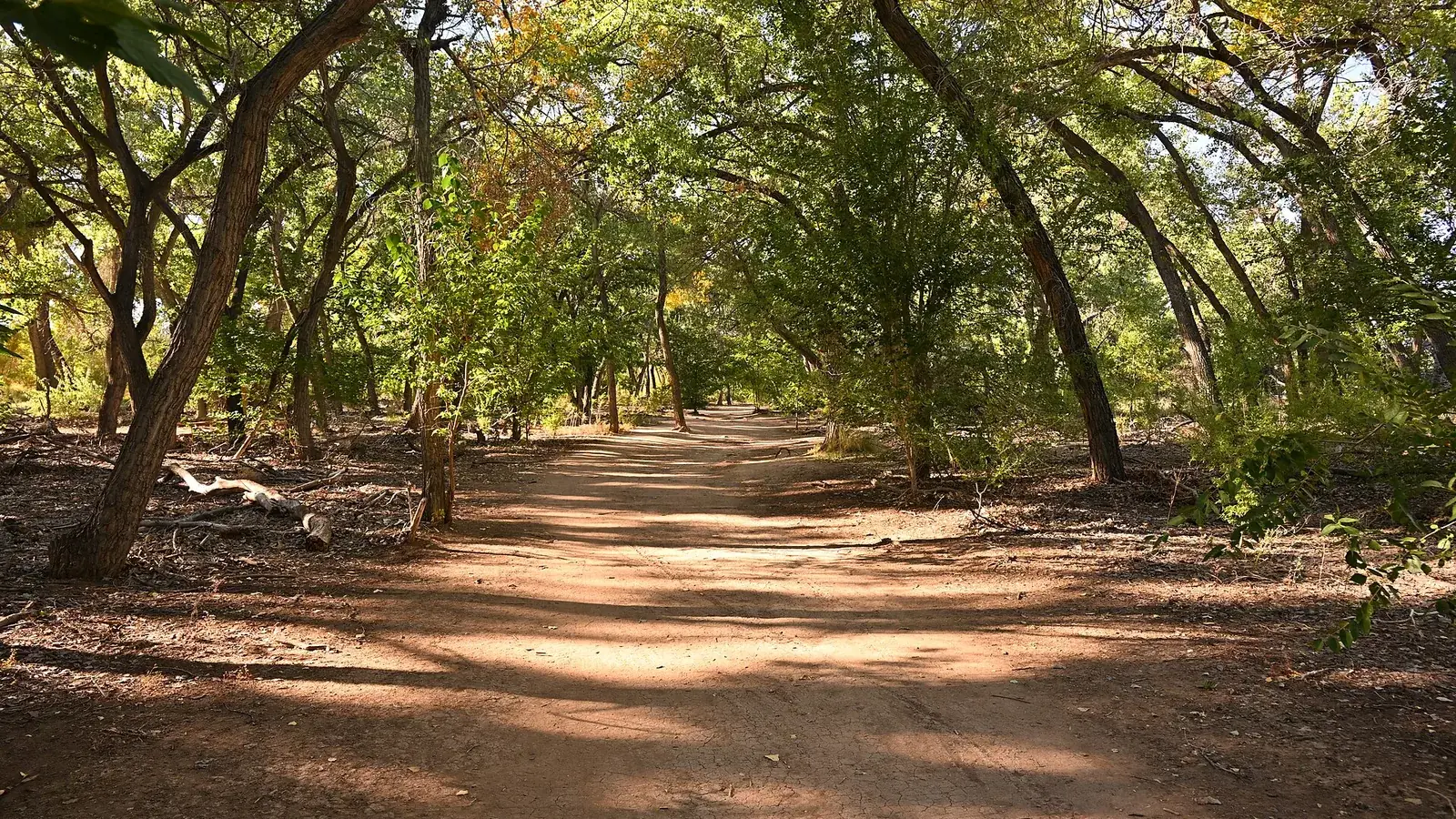
- Natural-surface trails designated non-motorized are outside these path rules entirely. The agency with jurisdiction over such a trail decides whether e-bikes are allowed.
Local governments have used that authority. Albuquerque’s ordinance O-24-14, described on the city’s parks website, allows Class 1, 2 and 3 e-bikes on all paved city trails unless a sign prohibits them, allows them on paved and unpaved trails in city Open Space unless prohibited, and sets a 20 mph maximum speed on city trails. Areas co-managed with other agencies need posted permission. Other cities may be stricter, so do not assume Albuquerque’s rules travel with you.
What Riders and Parents Should Check
- Helmet for every rider under 18, on any class.
- No Class 3 for riders under 16, even on quiet paths.
- Class 2 or 3 on a path? Look for local permission or signs. Without them, the default answer is no.
- On dirt trails, ask the land manager first.
For other states, see our state-by-state e-bike law guide. For local shops, visit the New Mexico dealer page.
Sources
- SB 69 (2023), bill page and actions, New Mexico Legislature
- SB 69 (2023), final enacted text
- SB 69 fiscal impact report, Legislative Finance Committee
- City of Albuquerque, E-bike Rules and FAQs