
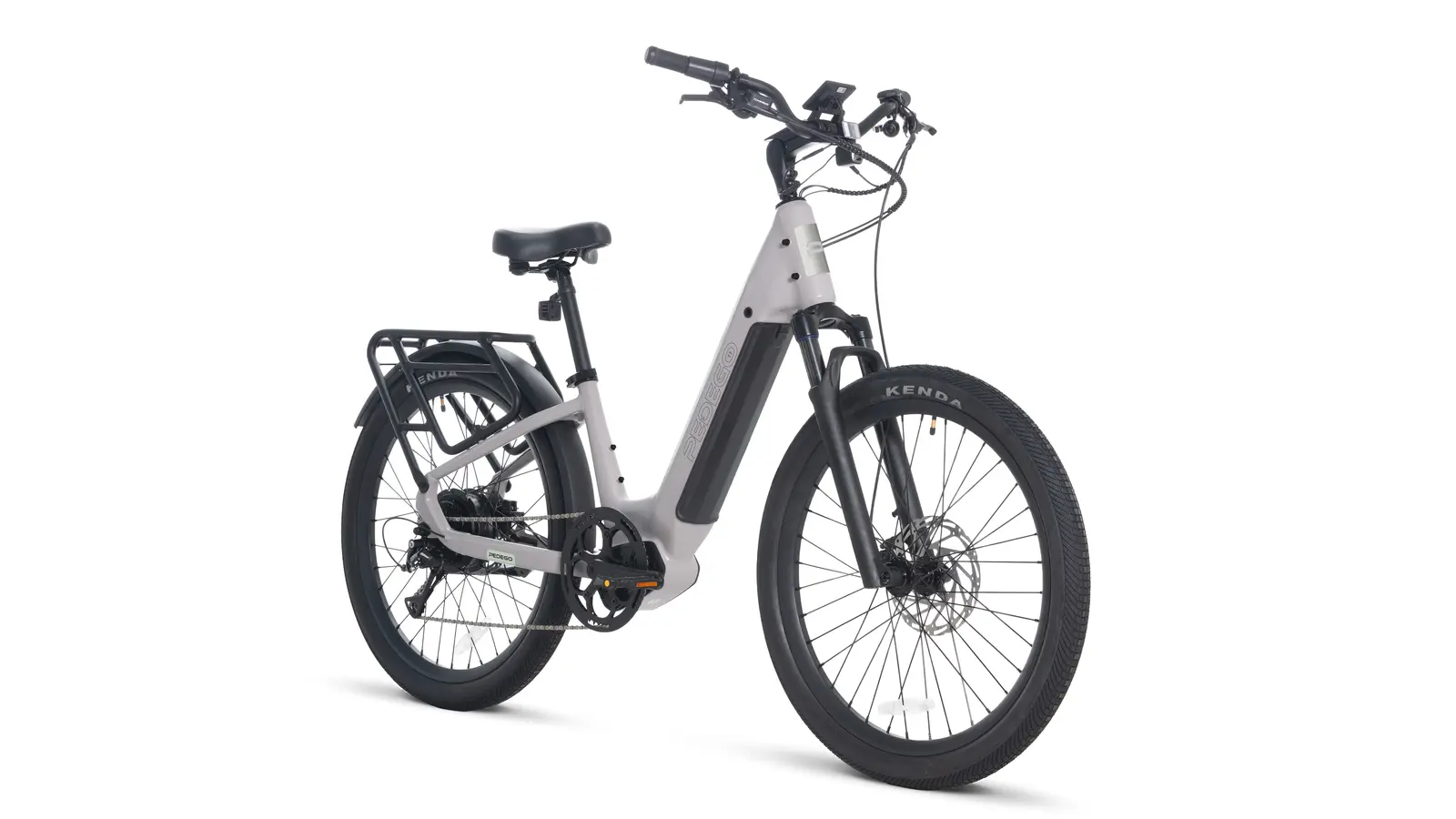
Pedego launched two bikes on July 21, 2026, and the pitch is easy to read: premium features, honest prices. The Ridge Rider 2 is an all-terrain step-through with an introductory price of $1,999 through August 16, and the Latch 2 is a folding model that Pedego calls its most affordable premium bike ever at $1,695. Both are the first of what the company describes as its Pedego 2.0 line.
For a brand that built its name on higher price tags and a store-plus-dealer network, this is a real shift in positioning. The interesting question for a buyer is not whether Pedego sounds excited. It is whether the combination of dealer support, a five-year warranty, and lower pricing actually earns your money once you compare it against the things a spec sheet does not settle: how heavy the bike really is, how far it goes in your conditions, whether it fits you, and whether the Class 3 speed you might want is even legal where you ride.
Everything below about specifications, range, prices, availability, certifications, and future models comes from Pedego’s own announcement and product pages. RoostMode has not ridden or tested either bike, and none of these claims should be read as verified performance.
What Pedego Actually Announced
Both bikes share a platform, which makes the lineup easier to reason about. Pedego lists a 750W motor rated at 90 Nm of torque, a 48V 17.4Ah battery it describes as 835Wh with LG cells, and PedalSense control with Cruise and Torque assist modes. Both ship as Class 2, and Pedego says they support Class 1 and Class 2 use with a dealer Class 3 upgrade available where local law allows it.
On the safety and support side, Pedego claims UL 2271 certification for the battery and UL 2849 for the electrical system, along with compliance to the CPSC’s 16 CFR 1512 bicycle regulation. Both carry integrated front lighting and rear turn and brake signals, and both come with a five-year limited warranty that Pedego calls the best coverage it has offered. The bikes are sold through Pedego stores and authorized dealers and can be ordered online for assembly and pickup at a local dealer, which is the part of the value story that does not show up in a price comparison but matters a lot after the sale.
Pedego’s CEO also said four more Pedego 2.0 models are planned before the end of the year. That is a product plan, not a promise you can buy today, so it is worth knowing if you are the kind of buyer who would rather wait to see the full range.
The Ridge Rider 2 on Paper
The Ridge Rider 2 is the do-everything one. Pedego positions it for city streets, bike paths, gravel, and campground loops, and the claimed hardware fits that brief: 27.5 by 2.4 inch tires, an 80mm suspension fork, a Shimano 8-speed drivetrain, and Tektro hydraulic brakes with a 203mm front rotor and a 180mm rear. The larger front rotor is a sensible touch on a bike this size, since the front brake does most of the stopping work.
Pedego claims up to 90 miles of range on a charge, a 330 lb rider capacity, and a MIK HD-compatible rear rack it rates at 100 lb. The bike weighs a claimed 62.4 lb with an 8.7 lb battery, which is normal for a full-size step-through with a rack and suspension, and not something you will want to carry upstairs. The step-through frame is the practical highlight here. It makes mounting easier for shorter riders, riders with limited mobility, and anyone loading the rear rack.
The introductory price is $1,999 through August 16, after which Pedego lists it at $2,195. If you are cross-shopping, that puts it in the same conversation as a lot of well-equipped hub-drive bikes, and the dealer assembly and five-year warranty are the differentiators to weigh, not the raw component list alone.
The Latch 2 and the Folding-Weight Reality
The Latch 2 is the more distinctive bike, and also the one that needs the most careful reading. It runs the same 750W platform but on 20 by 3.0 inch tires with a 60mm fork, a Shimano 7-speed drivetrain, and Tektro hydraulic brakes with 180mm rotors front and rear. Pedego claims up to 84 miles of range and a 400 lb rider capacity, which is high for a folding bike, plus a height-adjustable stem it lists at 230 to 310mm to fit a range of rider heights.
Here is the caveat that matters most. Pedego lists the Latch 2 at 66 lb for the bike plus a 9 lb battery. A folding bike is supposed to solve a storage or transport problem, and folding does shrink the footprint for an RV bay, a closet, or a car trunk. But a 66 lb bike does not become easy to lift just because it folds. Getting it into a trunk or up a flight of stairs is a two-hand, bent-knees job, and for some riders it is a two-person job. If your reason for buying a folder is that you will regularly hoist it, weigh that number honestly before you commit.
Pedego has not published folded dimensions in the material we have, so we are not going to guess at them. If trunk or storage fit is the whole point of the bike for you, ask the dealer for the exact folded measurements and, ideally, fold it yourself in the store.
Ridge Rider 2 vs Latch 2 (all figures are Pedego manufacturer claims)
data| Spec | Ridge Rider 2 | Latch 2 |
|---|---|---|
| Type | All-terrain step-through | Folding step-through |
| Motor / torque | 750W, 90 Nm claimed | 750W, 90 Nm claimed |
| Battery | 48V 17.4Ah, 835Wh, LG cells | 48V 17.4Ah, 835Wh, LG cells |
| Claimed max range | Up to 90 miles | Up to 84 miles |
| Tires | 27.5 x 2.4 in | 20 x 3.0 in |
| Suspension fork | 80mm | 60mm |
| Drivetrain | Shimano 8-speed | Shimano 7-speed |
| Brakes | Tektro hydraulic, 203mm front / 180mm rear | Tektro hydraulic, 180mm rotors |
| Weight (bike + battery) | 62.4 lb + 8.7 lb | 66 lb + 9 lb |
| Rider capacity | 330 lb | 400 lb |
| Warranty | 5-year limited | 5-year limited |
| Price | $1,999 intro through Aug 16 ($2,195 MSRP) | $1,695 MSRP |
Where the Value Case Is Strong, and Where You Still Have Work to Do
The genuine strengths in this launch are the parts that are hard to fake. Dealer assembly means the bike arrives built and safety-checked by a shop rather than half-assembled in a box on your porch, and a local dealer gives you somewhere to take it for warranty work and service. The five-year limited warranty is longer than many direct-to-consumer brands offer. If you value hands-on support and do not want to torque your own brakes and derailleur out of a carton, that combination is worth real money and is the clearest reason to consider Pedego over a cheaper online-only bike.
That said, a warranty is only as good as its written terms. “Five-year limited” is a headline, not the fine print. Before you buy, read what is actually covered, for how long each part is covered, whether the battery has its own shorter term, what voids coverage, and who pays for labor and shipping on a claim. Ask the dealer to show you the warranty document, not just the marketing line.
The other piece of homework is legality. Both bikes ship as Class 2 and can be dealer-upgraded to Class 3 where local law allows, but Class 3 is exactly where rules get strict. Many jurisdictions cap bike-path and trail access to Class 1 and Class 2, set minimum ages for Class 3, and require a helmet at Class 3 speeds. Do not assume the upgrade is legal for you just because a dealer can perform it. Check your state and city rules first. Our guide to e-bike classes explains the differences, and our e-bike laws by state roundup covers where the lines fall.
Who Each Bike Is For
The Ridge Rider 2 makes the most sense for a rider who wants one comfortable, upright bike for mixed pavement and light trail, values the easy step-through mount, and would use the rated rack for errands or camping. The Latch 2 is aimed at RV owners, apartment dwellers, and anyone tight on storage, with the important asterisk that its folding convenience comes attached to a claimed 66 lb frame you still have to lift.
Both bikes lean on the same real advantages, dealer setup and support and a long warranty, and both leave you the same open questions to answer in person: does it fit, does the range hold up for your commute, and is the class you want legal where you ride. Those are test-ride and dealer-conversation questions, not spec-sheet questions.
FAQ
FAQ
+Has RoostMode tested the Ridge Rider 2 or Latch 2?
+How much do the Ridge Rider 2 and Latch 2 cost?
+Is the claimed 90-mile range realistic?
+Can I ride these as Class 3 e-bikes?
+Is the folding Latch 2 easy to carry?
Sources
- Pedego Introduces the All-New Ridge Rider 2 and Latch 2 E-Bikes (PR Newswire, July 21, 2026): the primary company release and the source of prices, the introductory offer, shared-platform specs, certification claims, warranty, and the four-more-models plan. This is a company announcement, not independent testing.
- Pedego Ridge Rider 2 product page: manufacturer specs for the Ridge Rider 2, including claimed weights, tires, brakes, drivetrain, and rack rating.
- Pedego Latch 2 product page: manufacturer specs for the Latch 2, including claimed weights, folding frame, stem range, and rider capacity.
All three sources are controlled or published by Pedego, so every figure in this article is a manufacturer claim. RoostMode has not verified any of it through hands-on testing.