
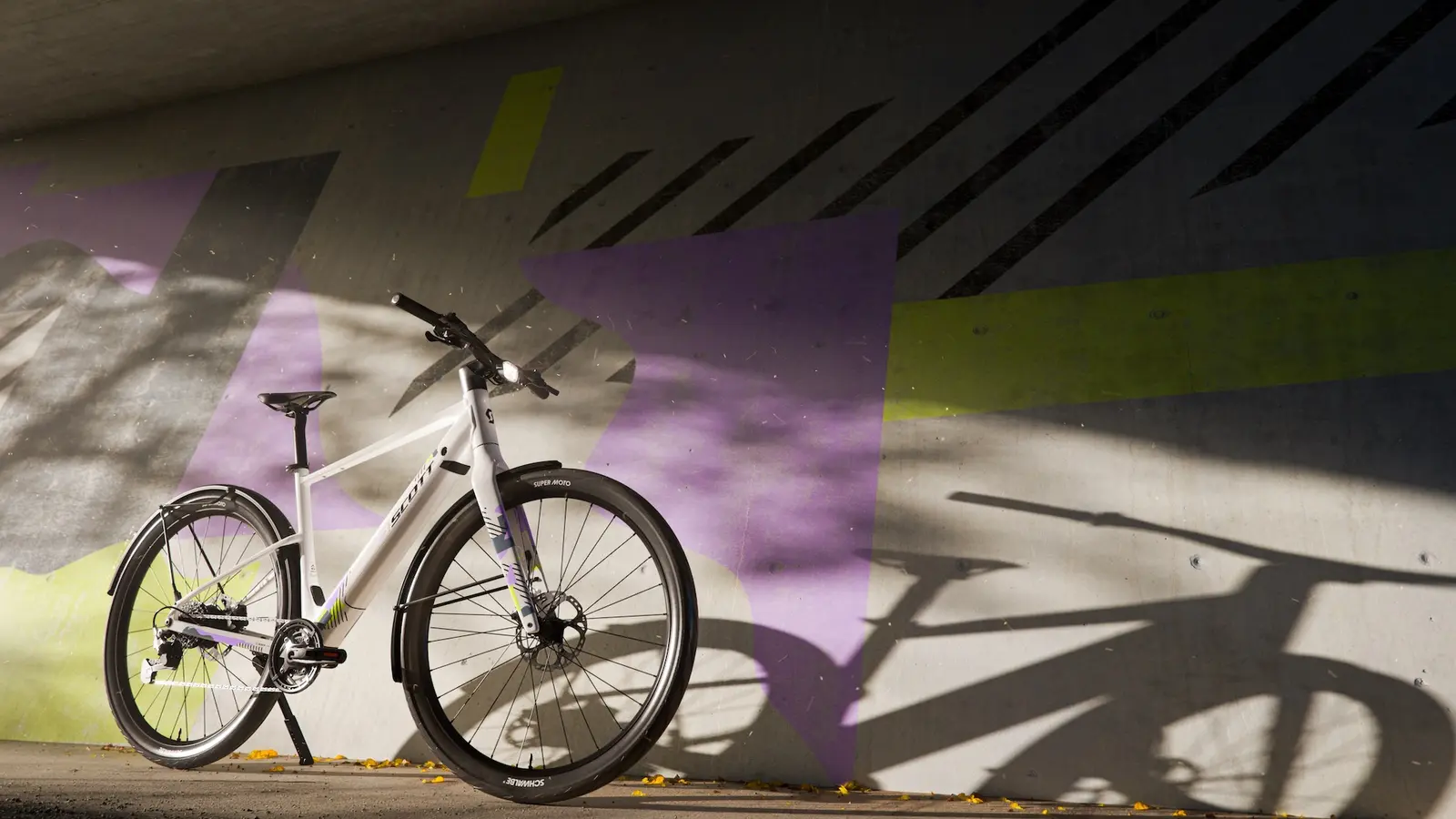
On July 30, 2026, BikeRumor reported the launch of Scott’s Sweep line under the headline that Scott is entering the urban and commuter market: three city bikes, all built around Bosch’s new Hub Line rear hub motor, all aimed, in the report’s words, squarely at commuters and urban riders.
Before anything else, a note on how we verified this. We tried Scott’s own product landing page at scott-sports.com/sweep first, and it returned only an access-block response during our verification, so we could not read Scott’s spec sheet directly. Every detail in this article comes from BikeRumor’s July 30 report, which states that its photos are from Scott Sports. RoostMode has not ridden any Sweep model, and nothing here describes how these bikes feel.
That sourcing gap matters more than usual, because BikeRumor states plainly that Scott did not provide pricing or availability information, and points readers to the Scott website to check availability by region. So this is a launch you can understand in terms of hardware, but not yet in terms of value. Only one of those questions has an answer today.
The Three Models, and the One Difference That Actually Splits Them
Per BikeRumor, the Sweep 10 is the sporty end of the line: a traditional frame shape with a rigid fork. The Sweep 20 keeps the traditional step-over frame but swaps in a 75mm suspension fork, which the report frames as a comfort move for bumps and imperfect pavement. The Sweep 20 Wave keeps that suspension fork and drops the top tube for a step-through frame, and adds a more swept-back, comfort-oriented handlebar.
All three share a slim, minimalist frame built from what the report describes as lightweight alloy. Scott is quoted saying the frame “was engineered to combine stable riding characteristics, predictable handling, and stiffness, while maintaining the slim proportions that define the Sweep family.” Scott also says the bikes handle up to 130kg while staying light and responsive.
Read that 130kg figure carefully. BikeRumor does not say whether it refers to rider weight, rider plus cargo, or total system weight including the bike. On a commuter loaded with panniers and groceries, that difference is the whole point.
The carrying hardware is where the split gets practical. The Sweep 10 gets rear side hangers for panniers rated to 8kg. Both Sweep 20 models get a Racktime carrier rated to 25kg and compatible with SNAP IT 2.0 accessories. That is not a trim-level nicety. It is roughly three times the rated load, and it decides whether the bike can do a grocery run or a daycare drop.
The Sweep 10 comes in Signal White in five frame sizes, S through XXL. Both Sweep 20 models come in Chrome Silver. The report says those two come in four or five sizes depending on the model, without specifying which gets which, so if you are at the edge of a size range, that is a dealer question rather than something you can settle from the coverage.
What the Bosch Hub Line Spec Sheet Confirms
Every Sweep uses Bosch’s new Hub Line motor, built into the rear hub. Per BikeRumor, it produces up to 45 Nm of torque and 400 watts of peak power, weighs roughly 2.3 kg, runs on a cadence sensor system, and provides assistance up to 25 km/h. Bosch describes the motors as delivering “intuitive support that enhances the ride without dominating it.”
Three of those details are worth slowing down on, mostly because of what the report does not attach to them.
The 45 Nm and 400 watts figures are given with no supporting claim about gradients, loaded weight, or comparison to any other drive system. So the number alone will not tell you whether the motor suits your route. The question to bring to a test ride is a specific one: does this motor hold your pace on the steepest sustained climb of your actual commute, with the rack loaded the way you would load it?
The cadence sensor is stated and nothing more. BikeRumor does not describe how assist ramps in, how it behaves pulling away from a stop, or how it compares with any other sensing arrangement. Ask a shop to demonstrate exactly that, because assist feel is the part of a commuter e-bike you notice on every block and the part no spec sheet reports.
The 25 km/h assistance cutoff is what the source states, full stop. BikeRumor does not assign these bikes a US class designation, and neither will we. If you need a class number for a local path rule, that is a question for Scott or a dealer in your market.
Power comes from a downtube-integrated 360 Wh Bosch PowerTube battery that is removable for charging off the bike at home or at work. The Sweep is also compatible with Bosch’s PowerMore 250 Wh range extender. Notably, the report gives no claimed range figure for any model, which is unusual for a commuter launch and leaves the most-asked buyer question unanswered.
Controls run through Bosch’s Purion 200, a handlebar-mounted all-in-one display, compatible with the Bosch Flow app for over-the-air updates and pedal assist customization.
The Equipment List, and Where It Stops
Scott says the Sweep was designed to be practical, uncomplicated, and easy to use, and describes the bikes as easy to maneuver, carry, and charge, with everything a rider needs for everyday use. Per the report, all models ship with what it calls reliable components, plus fenders, lights, a kickstand, and either a rear rack or side hangers depending on model.
The list is where the coverage stops, and the gaps are the buying questions. BikeRumor does not say how the lights are powered, what output they produce, or who makes them, and it does not name the component brands behind the fenders, kickstand, drivetrain, or brakes. On a bike sold on everyday practicality, those are the parts you live with, so get the spec sheet before you get attached to the concept. If you are building out any commuter, our commuter setup checklist covers what actually earns its place on the bike.
The Sweep 20 and Sweep 20 Wave also get adjustable stems, per the report. It does not state the adjustment range or whether the same stem is used across every frame size, so if bar height is part of why you are looking at these two models, ask what the stem actually moves through.
The Questions You Have to Answer Before You Buy
With no MSRP announced, there is no way to place the Sweep against anything, including the bikes in our roundup of the best commuter e-bikes under $1,500, which is where many first-time buyers start. No MSRP means no positioning, and we are not going to read a price out of the component list.
Five things to settle before you put money down:
- Price, and what the range extender costs on top. Neither figure has been published.
- Whether the bikes are sold in your region at all. BikeRumor says to check availability by region on Scott’s site, which is the same site that would not load for us.
- Actual weight. Scott calls the frames lightweight, but no complete-bike weight was given, and weight decides whether you can carry it up stairs or lift it onto a rack.
- What the 130kg figure counts. Rider only, rider plus cargo, or everything including the bike.
- Which model’s rack you need. 8kg of side hangers and a 25kg Racktime carrier are different bikes for different lives.
A local shop is the fastest way to close all five. Our dealer directory is a starting point for finding one that carries Scott and can put you on a size before the sizing chart matters.
Sources
- Scott Enters the Urban/Commuter Market with New Sweep e-Bikes (BikeRumor, July 30, 2026), the source for every factual claim in this article: the three-model Sweep lineup and its commuter and urban positioning; the Sweep 10’s traditional frame, rigid fork, 8kg side hangers, Signal White color, and five sizes from S to XXL; the Sweep 20 and Sweep 20 Wave’s 75mm suspension forks, adjustable stems, 25kg Racktime carrier with SNAP IT 2.0 compatibility, Chrome Silver color, and four or five sizes depending on model; the Sweep 20 Wave’s step-through frame and swept-back handlebar; the lightweight alloy frames, the quoted Scott statement on frame engineering, and the 130kg figure; the reliable components, fenders, lights, kickstand, and rack or side hanger equipment; the Bosch Hub Line rear hub motor at up to 45 Nm, 400 watts peak, approximately 2.3 kg, cadence sensor, and assistance to 25 km/h, plus the quoted Bosch description; the downtube-integrated removable 360 Wh Bosch PowerTube battery and PowerMore 250 Wh range extender compatibility; the Bosch Purion 200 display and Bosch Flow app compatibility; and the statement that Scott did not provide pricing or availability information. The report states that all photos are from Scott Sports.
- Scott Sports Sweep landing page, the manufacturer page BikeRumor directs readers to for regional availability. We attempted to load this URL during verification and it returned only an access-block response, so we were not able to read Scott’s own specifications, pricing, or availability information. Nothing in this article is sourced from Scott directly, only from Scott statements quoted by BikeRumor.
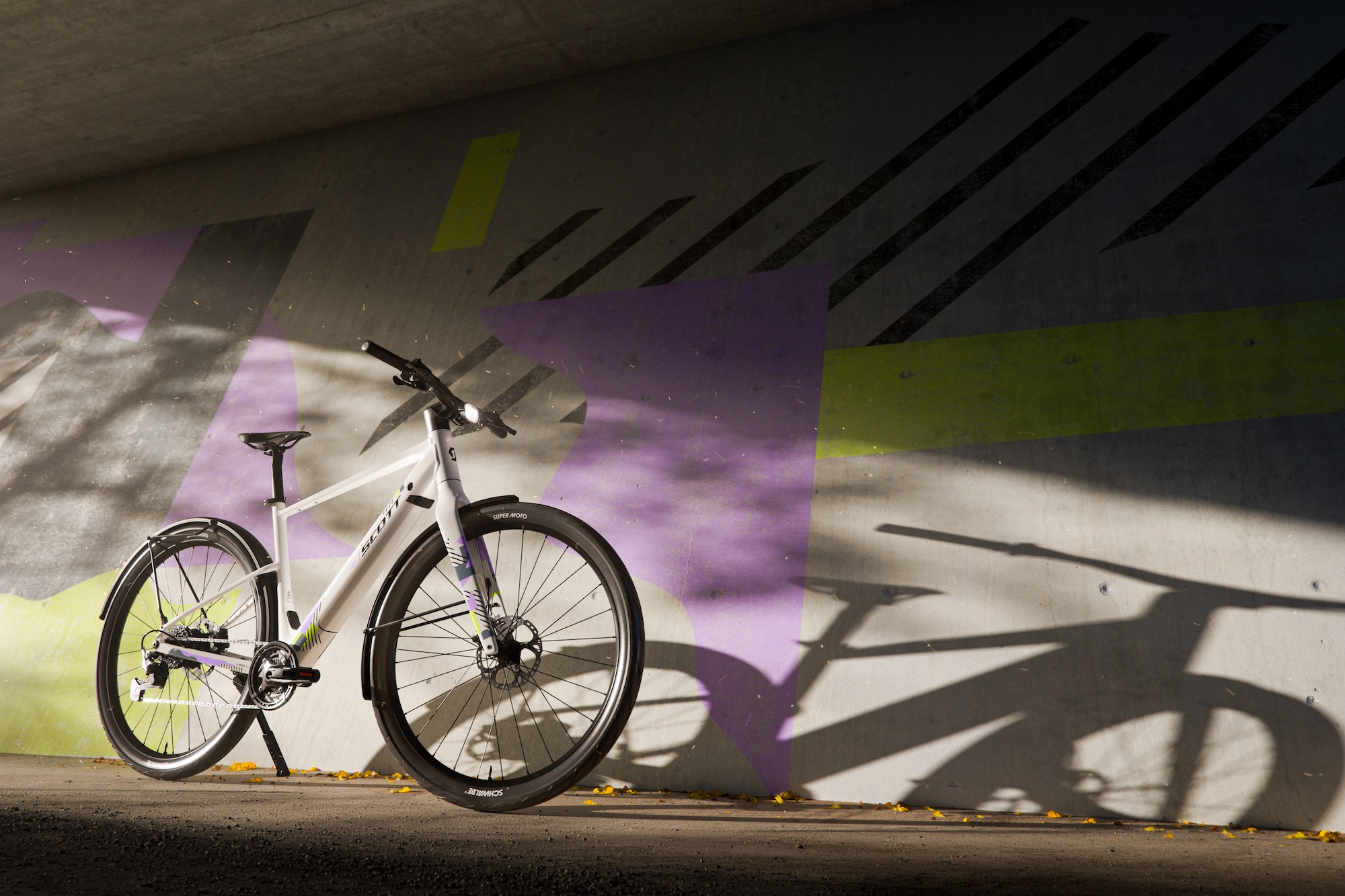
- Hero image: Scott-Sweep-hero.jpeg, published by BikeRumor with the July 30, 2026 report and credited in that report to Scott Sports. The image shows a Sweep 10 in an urban setting and is manufacturer-supplied launch photography, not an image of a bike RoostMode has seen or ridden. Modifications by RoostMode: center-cropped to a 16:9 aspect ratio and optimized for web delivery as WebP.
Read next
The Commuter E-Bike Setup Checklist
Fenders, lights, racks, and locks: what a city bike actually needs before day one.
Best Commuter E-Bikes Under $1,500 (2026)
Where the value sits at the entry end, for context on any unpriced launch.
Find an E-Bike Dealer Near You
Confirm sizing, regional availability, and pricing with a shop that carries the brand.