
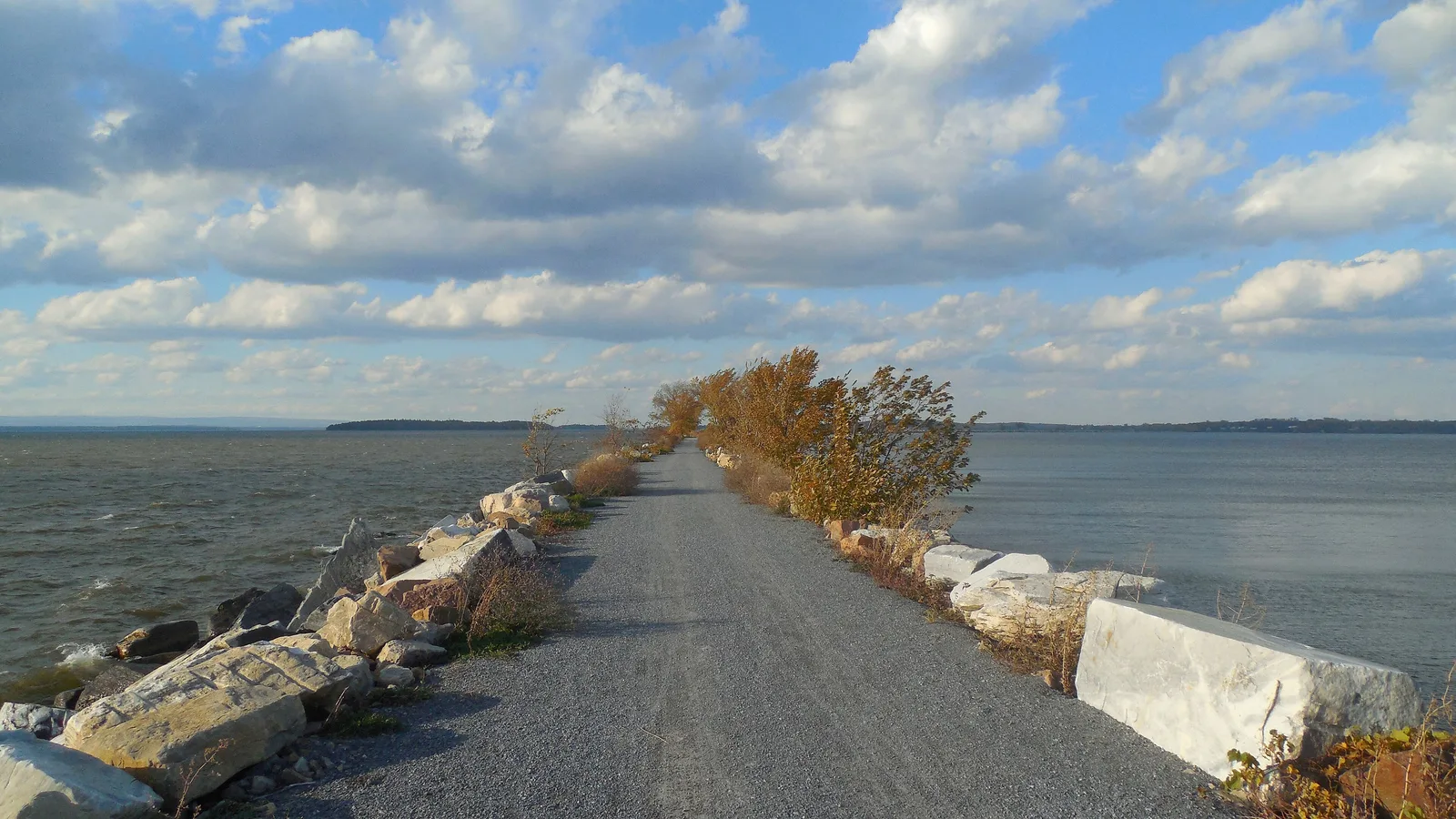
Vermont’s state parks and state forests have never had a written e-bike rule. The policy that governs mountain biking on those lands, FPR Policy #4, simply does not cover electric bikes. That gap is closing. The Department of Forests, Parks and Recreation (FPR) has drafted a revision that would let every class of e-bike use park roads, forest highways and multi-use trails, and would open designated mountain bike trails to Class 1 e-bikes only.
The draft was laid out for the House Committee on Transportation on February 25, 2026, by FPR recreation program manager Claire Polfus. At that point it had drawn 278 public comments, and the remaining steps were to fold in that feedback, get final approval and roll the policy out. We could not find a published final version as of this writing, so treat everything below about park trails as a proposal, not a rule.
What the Draft Park Policy Would Do
According to FPR’s presentation, the revised Policy #4 would:
- Allow bicycles, including all classes of e-bike, on gravel-surfaced or paved forest highways, designated natural-surface forest highways, park roads and multi-use trails.
- Allow only Class 1 e-bikes on mountain bike trails. Class 2 (throttle) and Class 3 (28 mph pedal assist) would stay off them.
- Set a proposed 20 mph speed limit, lower in specific places such as state park campgrounds.
- Keep the option of short-term closures where FPR decides they are needed.
The comment numbers show this is not settled. FPR’s slide reported that 48 percent of commenters supported part of the policy and had concerns about part, 28 percent were concerned with most or all of it, and 24 percent supported it as written. Themes ran both ways: accessibility and matching other land managers on one side, speed, trail damage, enforcement and modified e-bikes on the other.
FPR also told lawmakers that many mountain bike trail managers in Vermont already allow Class 1 e-bikes, so the Class 1 line on singletrack would bring state land closer to what riders see on many local networks.
What Vermont Law Already Says
The statewide rules did not change in 2026. Vermont’s e-bike statute, 23 V.S.A. § 1136a, dates to 2021, and the Legislature’s online statutes, which include the 2026 session, show no newer amendment. The 2026 transportation bill (Act 168) touched e-bikes only to add a cross-reference to the existing definition.
Definition and classes. Under 23 V.S.A. § 4(46), an e-bike has fully operable pedals, a seat and a motor under 750 watts, and fits one of three classes: Class 1 (pedal assist to 20 mph), Class 2 (throttle, no assistance above 20 mph) and Class 3 (pedal assist to 28 mph). See our e-bike classes guide for how to read those numbers on a spec sheet.
Treated as a bicycle. An e-bike is not a motor vehicle. It needs no registration, inspection, title, driver’s license or insurance, and riders have the same rights and duties as other cyclists.
Equipment. Every e-bike must carry a permanent label showing its class, top assisted speed and motor wattage. Class 3 bikes need a speedometer. Changing a bike’s speed or motor engagement is not allowed unless the label is replaced to match.
Age and Helmets
The only age rule in the statute is for Class 3: nobody under 16 may operate one, though a younger child may ride as a passenger on a Class 3 bike built for passengers. There is no minimum age for Class 1 or Class 2.
We found no helmet requirement for bicycle or e-bike riders in Vermont’s bicycle statutes, for any age. That is a gap in the law, not a safety endorsement. A properly fitted helmet still makes sense for anyone, and especially for kids.
Where You Can Ride Now
Outside the parks question, the statute is broad. An e-bike may go anywhere a bicycle can, including highways, bike lanes and bicycle or multi-use paths. The exceptions:
- A town or state agency may ban Class 1 or Class 2 e-bikes from a path only after notice and a public hearing, and only for safety or legal-compliance reasons.
- The same bodies may ban Class 3 e-bikes from a path without those steps.
- On natural-surface trails designated as nonmotorized, the land manager may set whatever e-bike rule it chooses.
That last point is why the FPR policy matters: until it is final, state park singletrack is up to FPR, not the statewide default.
Bikes That Are Not E-Bikes
A bike with a motor of 750 watts or more, or one that goes beyond the class speeds, does not meet the e-bike definition. Vermont sorts some of those machines into other categories. A “motor-assisted bicycle” has pedals and a motor capable of no more than 20 mph, with an electric motor up to 1,000 watts. A “motor-driven cycle” is a motor vehicle. The Office of Legislative Counsel’s January 2026 briefing to the House Transportation Committee notes that motor-driven cycles require an operator’s license and registration. Many machines in our electric dirt bikes hub fit none of the e-bike classes, and they should not be ridden on paths or trails as if they did.
What Riders and Parents Should Check
- Read the label. If a Vermont-sold e-bike lacks a class label, ask why before you buy.
- Check the trail, not the trailhead sign from last year. Town paths, trail networks and state parks can all set different rules.
- Watch for Class 3 and kids. Under 16 is a hard no on Class 3.
- Follow FPR’s final policy. When it is published, it will decide what you can ride at places like Groton State Forest’s Wells River railbed and the Perry Hill trails in Waterbury, both cited in FPR’s presentation as current bike routes.
For other states, see our state-by-state e-bike law guide. Shopping locally? Start with our Vermont dealer page.
Sources
- Vermont Department of Forests, Parks and Recreation, “E-Biking on FPR-Managed Lands,” presentation to House Transportation, Feb. 25, 2026
- 23 V.S.A. § 1136a, Electric bicycles
- 23 V.S.A. § 4, Definitions
- Office of Legislative Counsel, “Electric Bicycles in Vermont Law,” Jan. 14, 2026
- H.944 (Act 168 of 2026), bill status