Virginia lawmakers decided this year that they needed more information before rewriting the rules for e-bikes and the faster machines sold beside them. House Bill 1120, sponsored by Del. JJ Singh and approved by the governor as Chapter 737 of the 2026 Acts of Assembly, told the Department of Motor Vehicles to pull together a work group on the safety of electric power-assisted bicycles, motorized scooters and skateboards, self-balancing devices and mopeds. Its report was due to the chairs of the House and Senate transportation committees by November 1, 2026.
That report is the thing to watch heading into the 2027 session, because a second bill is waiting on it. House Bill 269, which would create a new licensed and titled vehicle class aimed at high-powered machines, was continued to 2027 rather than voted down.
What Chapter 737 Requires
The act is short. The DMV must convene stakeholders, which may include law enforcement, the Virginia Association of Counties, the Virginia Municipal League, manufacturers, common interest community associations and bicycle riding groups. The group must recommend whether Virginia should adopt new regulations or legislation to make these devices safer for riders and for everyone else, plus any other recommendations it thinks fit.
The bill passed the House 97-0 and the Senate 39-0. It was approved on April 13, 2026, and took effect July 1. It does not change any riding rule by itself.
We could not find the work group’s report posted publicly as of November 18. When it is published, we will summarize it.
HB 269: The Bill Waiting for 2027
HB 269, from Del. David A. Reid, would establish a “motorized mobility vehicle” as a new class of vehicle, with requirements for sale, operation, registration and titling, DMV-approved safety training courses and a public education program. Most of it would not take effect until July 1, 2027. A House Transportation subcommittee recommended continuing it to 2027, and the full committee agreed by voice vote on February 5, 2026.
In plain terms, Virginia is weighing whether machines that look like e-bikes but go well past e-bike limits should be handled more like motor vehicles. Those are the machines covered in our electric dirt bikes hub.
What Virginia Law Says Now
Definition and classes. Under Section 46.2-100, an electric power-assisted bicycle has no more than three wheels on the ground, pedals, a seat and a motor with an input of no more than 750 watts. Virginia uses three classes: Class 1 and Class 2 stop assisting at 20 mph (Class 2 may use a throttle), and Class 3 is pedal-assist to 28 mph. The definition of a moped expressly excludes an e-bike. Our e-bike classes guide explains the labels.
Treated like a bicycle. Section 46.2-904.1 gives e-bike riders the same rights and duties as bicyclists and exempts them from driver’s licenses, registration, titling, insurance and license plates. Manufacturers must label each bike with its class, top assisted speed and wattage, and tampering with speed settings without replacing the label is prohibited. Class 3 bikes need a speedometer.
Age. No one under 14 may operate a Class 3 unless supervised by someone at least 18 (Section 46.2-908.1). The state sets no minimum age for Class 1 or 2.
Helmets. Every operator and passenger on a Class 3 must wear a fitted, fastened bicycle helmet meeting CPSC or ASTM standards. Cities, counties and towns may also require helmets for riders 14 and younger on any e-bike (Section 46.2-906.1); the fine is $25 and is suspended for first offenses or for anyone who buys a helmet before it is imposed.
Where You Can Ride
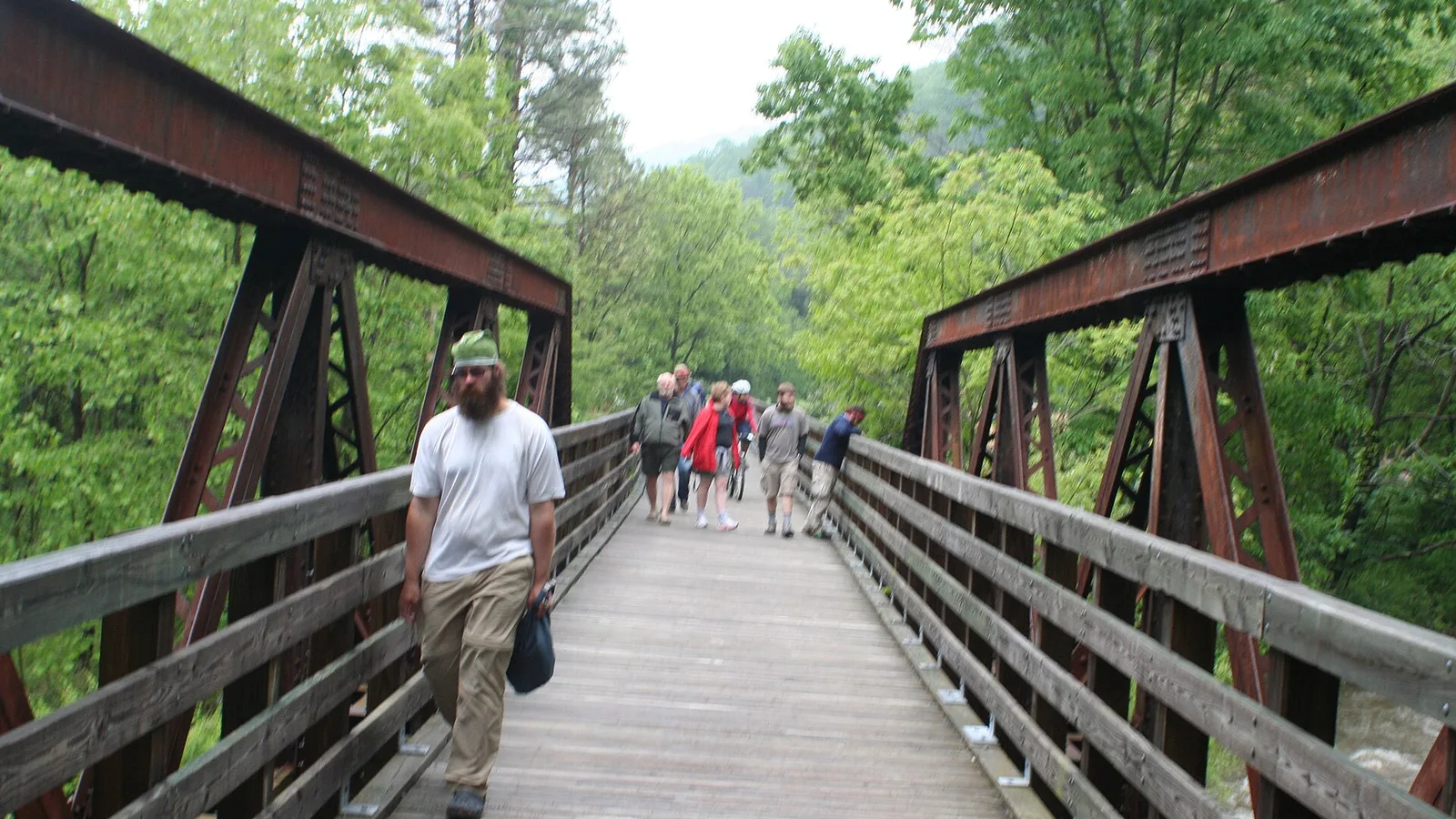
E-bikes may go wherever bicycles may go: streets, highways, shoulders, bike lanes and bicycle or shared-use paths. Section 46.2-903 also allows e-bikes on sidewalks, but under Section 46.2-904 a locality may ban them from designated sidewalks and crosswalks with posted signs, and riders on sidewalks and shared-use paths must yield to pedestrians and give an audible signal before passing. Interstates are off-limits.
The exceptions are local. After notice and a public hearing, a locality or state agency may ban Class 1 or 2 from a bike or shared-use path for safety; it can ban Class 3 from such a path outright; and it may regulate e-bikes on natural-surface trails designated nonmotorized.
Virginia State Parks allows Class 1 and Class 2 e-bikes on any bicycle path or trail designated for that use, according to the Department of Conservation and Recreation. Class 3 is not on that list.
What Riders and Parents Should Check
- Under 14 on a Class 3? Only with an adult 18 or older supervising.
- Check your town code for helmets. State law only requires them on Class 3, but your locality may require them for riders 14 and younger on any e-bike.
- Before buying a high-powered “e-bike,” look at the motor rating and top speed. If it exceeds 750 watts or the class speeds, Virginia’s e-bike rules do not cover it, and HB 269 shows lawmakers are thinking about how to regulate it.
- State park visit? Bring a Class 1 or 2 if you want trail access.
Our state-by-state e-bike law guide compares Virginia with its neighbors, and the Virginia dealer page lists shops that can show you a bike’s class label.
What’s Next
The General Assembly returns in January 2027. Expect the DMV work group’s findings to shape any e-bike or e-moto bill that session, starting with whether HB 269 comes back as filed or in a new form.
Sources
- 2026 Acts of Assembly, Chapter 737 (HB 1120), enacted text
- HB 1120 (2026) bill history, Virginia LIS
- HB 269 (2026) bill history and summary, Virginia LIS
- Code of Virginia § 46.2-100 (definitions)
- Code of Virginia § 46.2-904.1 (electric power-assisted bicycles)
- Code of Virginia § 46.2-906.1 (local helmet ordinances)
- Code of Virginia § 46.2-908.1 (age rule for Class 3)
- Code of Virginia § 46.2-903 (sidewalks)
- Code of Virginia § 46.2-904 (local sidewalk bans)
- Virginia State Parks e-bike guidance (DCR)