
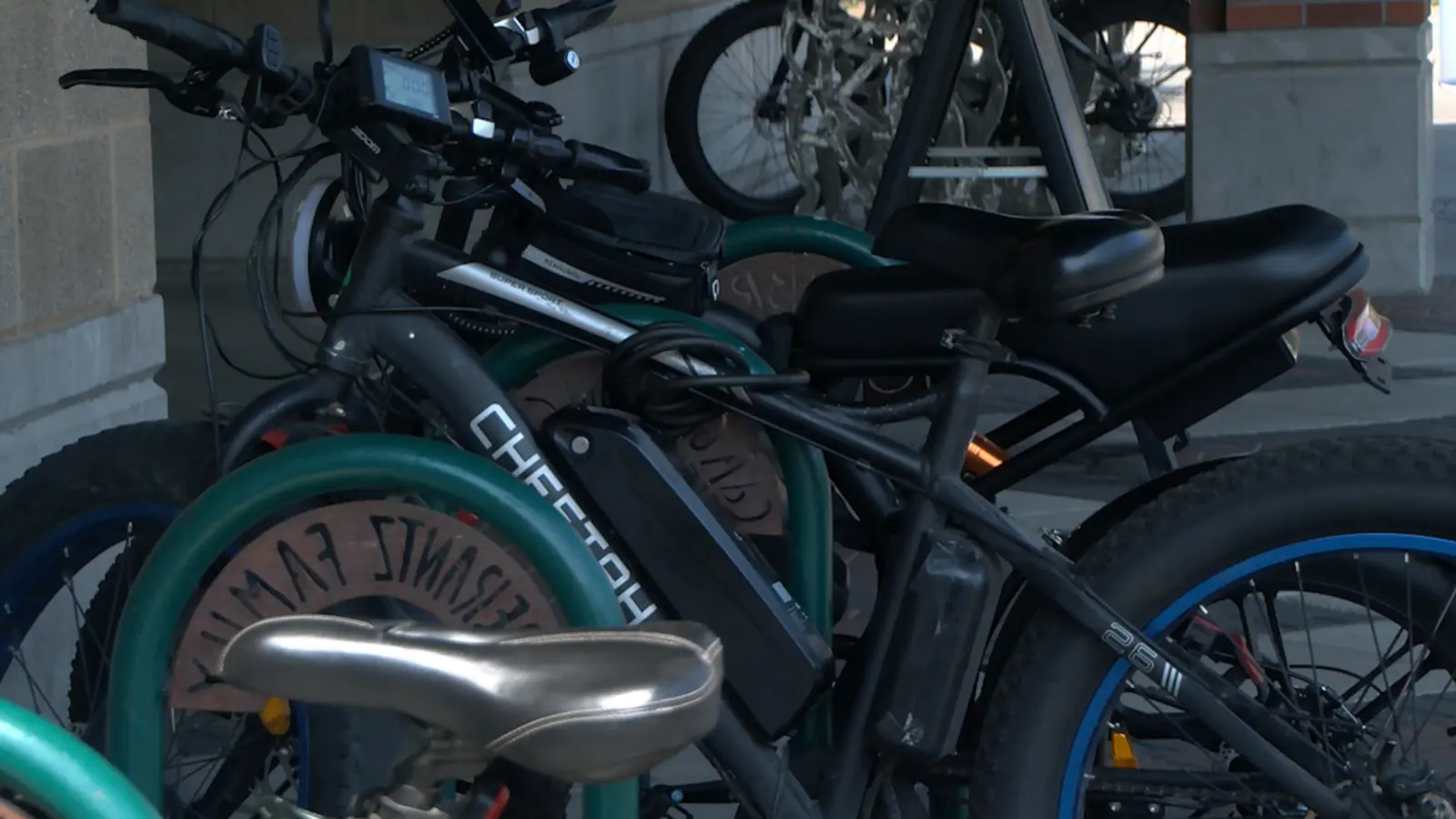
Coeur d’Alene, Idaho is issuing warnings and tickets to riders of electric bikes without pedals on city trails and waterfront areas, according to a July 29, 2026 report by Angela Jara for KXLY. Pedal-assisted e-bikes are still allowed in those places. The machines without pedals are not.
The reason that line falls where it does is worth understanding, because it is not a wattage argument or a speed argument. Idaho’s statutory definition of an electric-assisted bicycle starts with the pedals. A machine that has no functioning pedals never enters the definition in the first place, no matter what the listing called it or how the motor is rated.
That is the part with value outside Kootenai County. A seller’s product page does not decide trail legality. The statute and the land manager do.
What KXLY Reported
Per the KXLY report, Coeur d’Alene permits pedal-assisted e-bikes on city trails and waterfront areas but prohibits electric bicycles without pedals in those areas. Posted signs say no electric motorcycles, and the report says that phrase includes electric bicycles that have no pedals. If you have looked at one of those signs and read it as aimed only at Sur-Ron-style dirt bikes, the report says that reading is too narrow.
Shane O’Shea, community trails coordinator for Coeur d’Alene Parks and Recreation, told KXLY that police and code enforcement can issue tickets, and that the approach starts with education, with fines following for riders who do not comply. KXLY reports warnings and tickets ranging from $100 to $150 for violations.
Treat that dollar figure as a snapshot rather than a permanent schedule: it is what KXLY reported on July 29, 2026, and amounts and enforcement practice can change without a news story announcing it.
City staff have seen older teens and younger children on non-compliant bikes, according to the report. That detail points at how these purchases usually happen: a parent buys something marketed as an electric bike, hands it to a kid, and the kid rides it where kids ride bikes. Nobody in that chain set out to break a rule.
KXLY also reports that the city is looking at future ordinance updates as the technology changes, and the report flags a grey area around Class 3 pedal-assist bikes. We are not going to resolve that grey area, because the available evidence does not resolve it.
What Idaho Code 49-106 Says
Idaho’s definition is the anchor, and it reads in an order that is easy to skim past.
Idaho Code 49-106 defines an electric-assisted bicycle as a bicycle with fully operable pedals and an electric motor of less than 750 watts, which also meets one of three class requirements. Be precise on that wattage: the statute says less than 750 watts, not 750 watts or less. The three classes it then describes are Class 1, assist only while the rider is pedaling, ceasing when pedaling stops or at 20 mph; Class 2, where the motor may exclusively propel the bicycle, with assistance ceasing at 20 mph; and Class 3, assist only while pedaling, ceasing when pedaling stops or at 28 mph.
So there are two tests, not one, and they stack. The parent definition comes first. The class requirement is an additional condition on top of it.
The Class 2 detail almost everyone gets backwards
Class 2 is where riders talk themselves into trouble. Because Class 2 allows the motor to propel the bicycle on its own, throttle-only riding is fine within that class, and it is easy to read that as pedals being optional.
It does not work that way. The class definition sits inside the parent definition, which requires fully operable pedals. A machine can be ridden entirely on the throttle and still qualify, because the pedals must be there and must work whether or not the rider uses them. A machine with no pedals fails the definition before the class question is ever reached.
That single point explains the sign. Once a device falls outside the electric-assisted bicycle definition, the trail access that comes with being an e-bike does not attach to it.
Why the Seller’s Label Does Not Control Access
“E-bike” is a marketing term before it is a legal one. Sellers apply it to pedal-assist commuters, throttle cruisers, and pedal-less electric motorcycles with a bicycle-shaped frame alike, because the word costs them nothing. What actually decides where you can ride is your state’s statutory definition plus the rule set of whoever manages that specific path, park, or waterfront, and neither of those consults the product page. The e-moto category is where the gap is widest, and why an e-moto may not be an e-bike covers it in more detail.
One thing we will not tell you is what a pedal-less machine legally is instead in Idaho, or what it takes to operate one on a public road. The reporting and the statutory section we read do not establish that alternate classification, so any claim from us about required licensing, titling, or registration would be invention. Ask the city and the state for the answer on your specific machine.
A Checklist Before You Buy or Ride
Ordinary diligence, not a legal opinion. Work through these in order:
- Functional pedals. Confirm the machine has pedals, that they are attached to a working drivetrain, and that you can actually pedal it. This is the first gate in Idaho’s definition, and a device that fails it is not an electric-assisted bicycle regardless of anything else on the spec sheet.
- Rated motor power. Get the rated output in watts, in writing, for your exact model and model year. Idaho’s threshold is less than 750 watts, which means a machine rated at exactly 750 watts deserves a direct question rather than an assumption.
- Assisted speed. Find the speed at which assistance ceases, and check whether a display menu, app, or dealer setting can raise it. The number you can reach matters as much as the number it shipped with.
- Class label. Ask which class the manufacturer claims and on what basis. Our e-bike classes explainer covers what each label does and does not promise.
- The local trail or land-manager rule. City trails, waterfront paths, county greenbelts, and state land can each have different answers. Coeur d’Alene’s posted signage is the rule for Coeur d’Alene, not for everywhere in Idaho.
- Written seller confirmation. Email the seller and ask them to confirm pedal operability, rated wattage, top assisted speed, and claimed class for the unit being shipped. A vague answer is itself information, and a listing that later gets edited is worth less than a reply you can keep.
Coeur d’Alene Is Part of a Pattern
North Idaho is not alone in this. Down in the Treasure Valley, Garden City’s Greenbelt rules draw their line at what a machine is capable of doing rather than at its wattage sticker. Coeur d’Alene draws its line at whether the thing has pedals. Different tests, same underlying problem: shared-use paths built for bicycles are now hosting a category of machine that did not exist when the paths were designed.
For riders, trail access comes down to two documents you did not write. One is your state’s definition, which in Idaho means the pedals-first language in 49-106. The other belongs to whoever owns the path. State frameworks vary widely, so our e-bike laws by state guide is a starting point rather than an answer for your address, and a local shop can usually tell you in one sentence whether a model’s pedals satisfy a rule like this. Our dealer directory is a place to start.
KXLY reports the city is considering ordinance updates as the technology changes, and the Class 3 question that report flags is genuinely open. Checking once is not the same as knowing. This year’s answer may not be next year’s.
Sources
- “Coeur d’Alene cracks down on e-bikes without pedals with warnings and fines” (KXLY, Angela Jara, published July 29, 2026; page metadata 2026-07-30T00:00:00Z): primary source for the pedal-assist versus pedal-less distinction on city trails and waterfront areas, the posted no electric motorcycles signage and its reported scope, the $100 to $150 warning and ticket range, the comments from Shane O’Shea of Coeur d’Alene Parks and Recreation on enforcement authority and education first, the observation of older teens and younger children on non-compliant bikes, the city’s stated interest in future ordinance updates, and the flagged grey area around Class 3 pedal-assist bikes. Loaded directly on July 30, 2026. We did not reproduce extended quotations from this report.
- Idaho Code 49-106, Idaho Legislature: read directly on July 30, 2026. Source for the definition of an electric-assisted bicycle as a bicycle with fully operable pedals and an electric motor of less than 750 watts meeting one of the class requirements, and for the Class 1, Class 2, and Class 3 descriptions summarized above. We did not read the Coeur d’Alene municipal code, and no local ordinance language is quoted or paraphrased here beyond what KXLY reported.
- Hero image: KXLY source-report image accompanying the article above, cropped and optimized by RoostMode. Source image URL. RoostMode did not shoot this photograph and does not claim ownership of it.
- The citation range and enforcement practice described here were reported on a single date and are not evergreen. Confirm current figures and rules with the City of Coeur d’Alene.
