
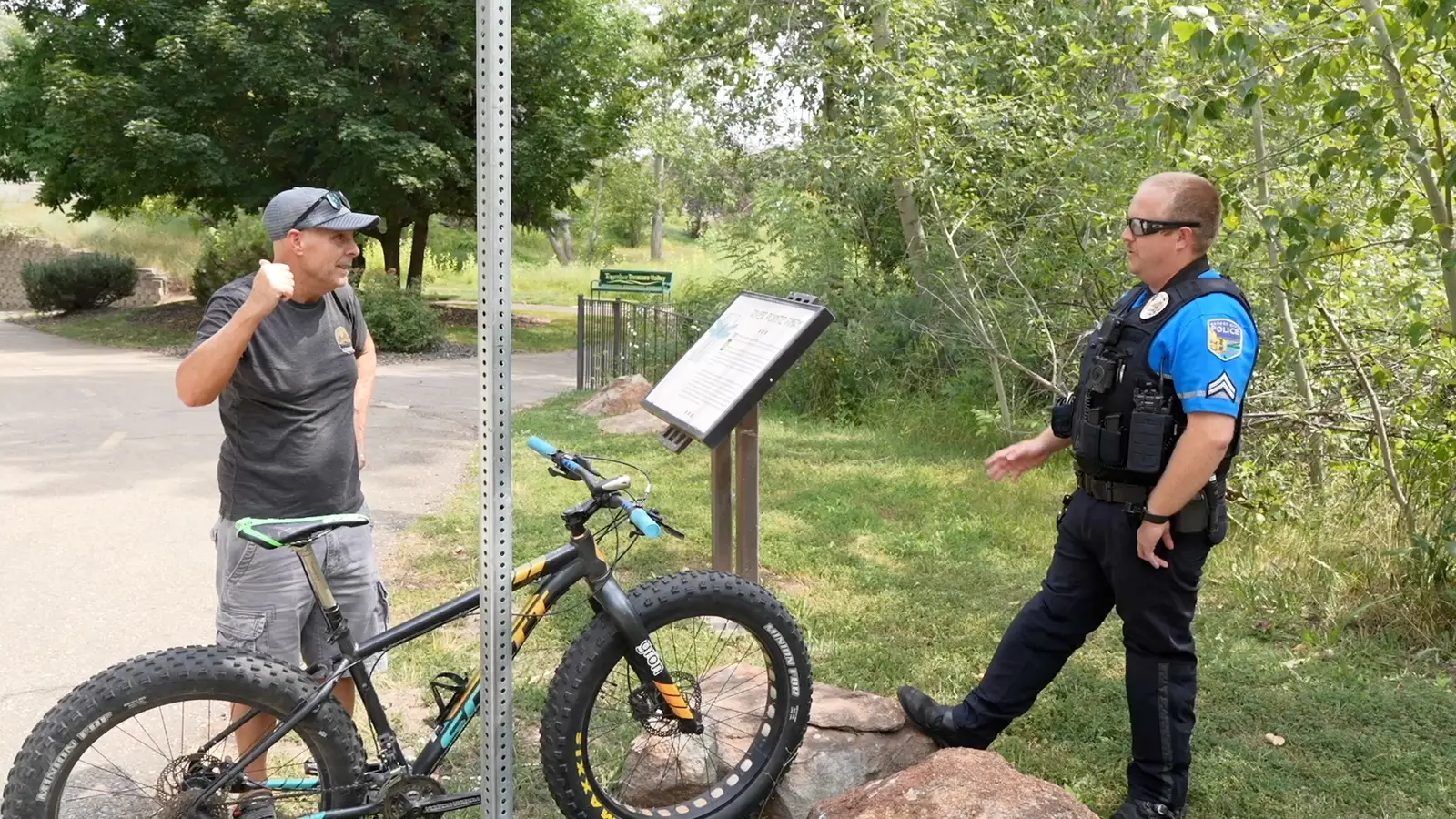
Garden City, Idaho has new rules restricting high-speed electric vehicles on the Boise River Greenbelt, in city parks, and on sidewalks and bike paths, according to a July 24, 2026 report by Allie Triepke for Idaho News 6 (KIVI).
The detail worth reading twice is the test. Per that report, Garden City Police say enforcement focuses on how fast a machine is capable of going rather than solely on motor wattage. Police told KIVI that e-bikes or e-motorbikes capable of more than 28 mph are considered high-speed, and that the threshold for electric scooters is more than 15 mph.
That is a different question from the one most riders are used to answering. Wattage is a number on a sticker. Capability is a number your bike may only reveal in a settings menu.
What Garden City Changed, According to KIVI
Per Idaho News 6, the new ordinance restricts high-speed electric vehicles on the Boise River Greenbelt, city parks, sidewalks, and bike paths. Garden City Police are working to educate riders and answer questions from neighbors before enforcement begins, and KIVI reports education is the department’s stated focus as residents get familiar with the rules.
The report frames the change around a familiar friction: faster electric machines sharing narrow shared-use path space with people walking, kids on bikes, and traditional cyclists. Chris Phillips, a Greenbelt user quoted by KIVI, described a fast pass while riding with his son that left the boy wobbling. One rider’s account is one rider’s account, and it is not the basis of the rule, but it is the specific behavior the city says it is reacting to.
KIVI did not report an enforcement start date, a citation schedule, or a fine amount, and we are not going to guess at any of them.
Capability Is a Harder Test Than Speed
A speed limit asks what you were doing. A capability standard asks what the machine can do, which means a rider going 12 mph on a crowded path can still be riding a machine that does not qualify.
“If it’s capable of going over those speeds, we don’t want them in the city because they’re dangerous,” a Garden City police officer told Idaho News 6.
This matters because of how modern e-bikes ship. Plenty of them arrive with a conservative assist cap and a display menu, app toggle, or dealer setting that raises it. Some are sold as a Class 2 bike with a Class 3 setting one submenu away. Under a capability standard, the setting you are currently using is not obviously the number that counts, and the honest answer is that we cannot tell you how Garden City resolves that, because we could not read the ordinance.
Class 3 riders sit right on the reported boundary. The three-class system defines Class 3 as pedal assist up to 28 mph, and the number police gave KIVI is more than 28 mph. Whether a bike that assists to exactly 28 mph reads as compliant, and how a machine that overshoots slightly on a downhill is treated, are precisely the questions to put to the city rather than to a forum thread. Our e-bike classes explainer covers what the class labels actually mean before you make that call.
Reported thresholds and what the reporting does not settle
data| Machine or rule | What KIVI and Garden City Police reported | What is still unresolved in the reporting |
|---|---|---|
| E-bikes and e-motorbikes | Capable of more than 28 mph counts as high-speed under the ordinance. | How capability is measured, whether a limited-but-unlockable bike counts, and how exactly-28-mph machines are treated. |
| Electric scooters | Capable of more than 15 mph counts as high-speed and is banned from the Greenbelt and other restricted areas. | Whether shared or rental scooters are handled separately. |
| Motor wattage | Police say the focus is capability rather than wattage alone. | Whether wattage still appears anywhere in the ordinance as a secondary factor. |
| Greenbelt speed | No posted speed limit. Police ask riders to travel at 15 mph or less, and slower in congested areas. | The reporting presents this as a request, not a posted enforceable limit. |
| E-motorbikes | Not allowed on the Greenbelt, in city parks, on sidewalks, or on bike paths. Street use only if properly titled, insured, and licensed. | No definition of e-motorbike was published in the report. |
Where Each Machine Type Can Go
The clearest part of KIVI’s reporting is the e-motorbike line. Those machines are not allowed on the Greenbelt, in city parks, on sidewalks, or on bike paths. Per the report, they may be operated on city streets only if they are properly titled, insured, and licensed.
That is a meaningful practical barrier. Titling and insuring a Sur-Ron-style machine is not a formality you complete at the trailhead, and many of these bikes were never built to be street legal in the first place. If you are unsure which side of that line your machine falls on, start with why an e-moto may not be an e-bike and our breakdown of whether electric dirt bikes are street legal.
E-scooter riders get the lowest ceiling. A capability of more than 15 mph is enough to make a scooter high-speed under the rules as police described them, and a lot of mainstream commuter scooters advertise top speeds well above that.
Where does your machine likely land under the reported thresholds?
quick pick| If you… | Pick | Why |
|---|---|---|
| you ride a Class 1 or Class 2 e-bike capped at 20 mph | Most likely fine on capability | 20 mph sits well under the reported 28 mph line. Ride the requested 15 mph or slower on the Greenbelt anyway. |
| you ride a Class 3 e-bike that assists to 28 mph | Confirm with the city before you ride | Police described the line as more than 28 mph, which puts a stock Class 3 right at the edge. Get the city's answer, not a guess. |
| your bike is unlocked, derestricted, or has a settings menu that raises the cap | Treat capability as your real number | The reported test is what the machine can do. Know what your top setting is before someone else asks. |
| you ride an electric scooter | Check the advertised top speed first | More than 15 mph capability is high-speed under the rules as reported, and many commuter scooters exceed that. |
| you ride an e-motorbike or a Sur-Ron-style machine | Streets only, and only if titled, insured, and licensed | KIVI reports these are barred from the Greenbelt, parks, sidewalks, and bike paths outright. |
The 15 MPH Request on the Greenbelt
The Greenbelt has no posted speed limit, per KIVI. Garden City Police are asking riders to keep it to 15 mph or less, and to slow down further in congested stretches, including near the Riverside Hotel and the Boardwalk.
Read that as a courtesy standard with teeth behind it rather than a number on a sign. A path with no posted limit still has a passing etiquette that most conflict comes down to: announce yourself early, leave real width, and drop your speed before you reach a family rather than after. The capability rule addresses which machines belong on the path. The 15 mph ask addresses how the legal ones behave once they are there.
A Checklist Before You Ride or Buy
Ordinary diligence, not a legal opinion:
- Find your bike’s published top assisted speed for the exact model and model year, and save the page. Listings get edited. Spec sheets you have already saved do not.
- Open every speed-related setting on the display and in the app, and note the highest available value. That is the number a capability standard cares about.
- Ask a used seller in writing whether the controller, display, or firmware was ever changed, and whether any speed unlock was applied. Vague answers are the answer.
- Confirm the machine’s category before purchase, especially for anything marketed as an e-moto, dirt bike, or off-road model. Path access, not top speed, is usually the thing buyers regret.
- Ask a shop what a bike can do, not just what class it is sold as. A local dealer can usually tell you in one sentence whether a model has an unlock path. Our dealer search is a starting point for finding one near you.
- Verify the rules with Garden City directly before you rely on any of this. The ordinance text was not available to us, and a summary of a summary is not where you want your compliance to come from.
Garden City Is Not an Outlier
Local governments have spent 2026 rewriting shared-path rules, and the pattern is consistent: the regulated object is shifting from the label on the bike to what the machine actually does. Police in Folsom, California have taken the same line on machines sold as e-bikes that function as motorcycles. Panama City Beach and Colorado have worked through versions of the same problem, and London’s roadside enforcement checks assisted speed directly on a rolling road.
For riders, the transferable lesson is not Garden City’s specific numbers. It is that “it was sold to me as an e-bike” is becoming a weaker answer every year, and that knowing your machine’s real capability is now part of owning it. State frameworks still vary widely, so our e-bike laws by state guide is a starting point rather than a substitute for your own city’s code.
FAQ
FAQ
+What speed makes an e-bike high-speed in Garden City?
+Does the rule look at how fast I actually ride, or how fast my bike can go?
+Is there a speed limit on the Boise River Greenbelt?
+Can I ride an e-motorbike on the Greenbelt or in Garden City parks?
+Is a Class 3 e-bike still allowed on the Greenbelt?
+When does enforcement start, and what is the penalty?
Sources
- New Garden City Greenbelt rules: What e-bike and e-scooter riders need to know (Idaho News 6 / KIVI, July 24, 2026, by Allie Triepke): primary source for the ordinance summary, the 28 mph and 15 mph capability thresholds, the capability-over-wattage enforcement focus, the Greenbelt speed request, e-motorbike restrictions, and the quoted police and rider comments.
- Garden City bans high-speed electric motorbikes and scooters from Greenbelt, parks and bike paths (Idaho News 6 / KIVI): earlier KIVI coverage of the same ordinance.
- Hero image: Idaho News 6 / KIVI source-report image, cropped and optimized by RoostMode. RoostMode did not shoot this photograph and does not claim ownership of it.