
If you ride an e-bike in Jacksonville, the most important thing to know about the city’s proposed 10 mph sidewalk speed limit is that it is not a speed limit. Not yet. It is a line in a bill that a council committee has not voted on.
Councilman Michael Boylan introduced the measure on July 28, 2026. As of our check of the city’s Legistar record on August 3, 2026, its status reads In Committee, it sits on the August 3 agenda, and a public hearing is scheduled for August 11, 2026 under Chapter 166, Florida Statutes and Council Rule 3.601. Its history tab lists two rows, and only one carries a result: the July 28 introduction and committee assignment, marked Pass. The August 3 Rules Committee row shows no result yet. Nothing has passed.
That gap between “proposed” and “in force” is doing real work here, because several items in the coverage of this bill are things you are already required to do under Florida law, and the bill text contains a few provisions that the coverage rounded off.
What already binds you in Jacksonville today
Section 316.20655, Florida Statutes, governs e-bikes statewide right now, and it is more demanding than most riders realize.
Two provisions in it match items in the Jacksonville bill. Since January 1, 2021, manufacturers and distributors have been required to apply a permanently affixed label in a prominent location showing the classification number, top assisted speed, and motor wattage. Separately, the statute already says no person may tamper with or modify an e-bike so as to change its motor-powered speed capability or engagement unless the classification label is replaced after the modification. So the label and anti-modification items are not new obligations in substance. What the ordinance would add is a local enforcement path.
The bill text does change who the label duty runs against. State law tells manufacturers and distributors to affix the label. Proposed section 804.901(f) instead reads that electric bicycles “shall display a label which contains its classification number, top assisted speed, and motor wattage.” That attaches the requirement to the bicycle rather than to whoever built it, which in practice points enforcement at the bike in front of the officer and at the person riding it. A missing or peeled-off label becomes the rider’s problem.
The statute also settles what Jacksonville is allowed to do, and the bill’s own findings cite it. Section 316.20655 expressly preserves local power to adopt an ordinance governing e-bike operation on streets, highways, sidewalks, and sidewalk areas, and subsection (8) lets a local government adopt one or more minimum age requirements to operate an e-bike. The bill’s whereas clauses name sections 316.008 and 316.20655 as its authority. So the sidewalk cap and the under-11 floor sit on ground the city has identified in the text. State law also confirms e-bikes are exempt from driver licensing, registration, title, and financial responsibility requirements, requires the motor to cut out when you stop pedaling or brake, and requires compliance with the federal bicycle standard at 16 CFR part 1512.
One more current-state item, from the Jacksonville Sheriff’s Office social post relayed by both outlets: JSO says e-bikes are limited to 28 mph, that riders under 15 must wear a helmet or receive a citation, and that “e-motorcycles” are not legal, can go much faster than 28 mph, and that parents can be cited if a child is caught riding one. Note the age: JSO’s stated threshold is under 15, while the bill is written at under 16. We did not review Florida’s bicycle helmet statute, so treat the current requirement as JSO’s stated position and confirm it with the agency.
What Ordinance 2026-570 would add
The bill does two things. Section 1 amends section 804.102 (Definitions) of the Jacksonville Traffic Code. Section 2 fills sections 804.901 and 804.902 in Part 9, both of which currently read Reserved, so the city is writing into empty slots rather than rewriting existing e-bike rules. Part 9 itself would be retitled Bicycle and Electric Bicycle Regulations.
The definitions matter more than they look. The bill would define an electric bicycle as a bicycle or tricycle equipped with fully operable pedals, a seat or saddle for the operator, and an electric motor of 750 watts or less, then split that into Class 1 (pedal assist, cuts out at 20 mph), Class 2 (motor may propel the bike on its own, cuts out at 20 mph), and Class 3 (pedal assist, cuts out at 28 mph). It would also define operator as a person riding, driving, or otherwise operating an electric bicycle. Read the pedal clause carefully if you own something fast: a machine without fully operable pedals is not an electric bicycle under this definition, which means Part 9 would not reach it, and that is not the same as it being legal to ride.
Ordinance 2026-570 as introduced: provisions taken from the official bill text
data| Provision | What the bill text says | Status today |
|---|---|---|
| Sidewalk speed | On sidewalks, operators shall not exceed a speed of 10 miles per hour | Proposed only |
| Sidewalk passing | Provide an audible signal before passing a pedestrian, and pass in a safe manner at a safe distance from the pedestrian | Proposed only |
| Pedestrian duties | Comply with all pedestrian traffic signs and intersection signalization, and yield the right-of-way to pedestrians at all times | Proposed only |
| Roadway duties | On bicycle lanes, paths, bikeways, rights-of-way and roadways, comply with all traffic regulations including posted speed limits | Proposed only |
| Careless operation | Careless, unsafe, and/or reckless operation is unlawful, including but not limited to weaving through traffic, failing to yield to pedestrians where required, operating at an unreasonable speed for existing conditions, and leaving the roadway to avoid traffic signals | Proposed only |
| Minimum age | No person under 11 years of age may operate an e-bike on any bicycle lane, bicycle path, bikeway, right-of-way, roadway, sidewalk, or other City-owned property | Proposed only |
| Passengers | Passengers are prohibited unless the e-bike is specifically equipped with a designated passenger seat and meets all applicable safety standards | Proposed only |
| Helmets | An operator or passenger under 16 must wear a properly fitted, securely fastened bicycle helmet on the head | Proposed. JSO states an under-15 helmet rule applies now |
| Label | E-bikes shall display a label containing classification number, top assisted speed, and motor wattage | State law already requires the label, applied by makers and distributors |
| Modification | Motors shall not be modified to allow a higher speed than the manufacturer designed the bicycle to attain | State law already restricts this unless the label is replaced |
| Lighting | Front lamp showing a white light visible at least 500 feet to the front, plus a lamp and a reflector on the rear, each showing a red light visible 600 feet to the rear, all on and operational between sunset and sunrise | Proposed only |
| Penalty | Any violation of the Part is a civil infraction and constitutes a Class C offense | Proposed only |
| Guardians | No parent or guardian of a minor child shall authorize or knowingly permit the minor child to violate a provision of the Part | Proposed only |
| Effective date | Effective upon signature by the Mayor, or upon becoming effective without the Mayor's signature | Applies only if the council passes it |
Three items in that table are worth pulling out, because the news summaries compressed them.
The sidewalk passing rule is two requirements, not one. The bell is the part that got reported. The text also requires passing “in a safe manner at a safe distance from the pedestrian,” which is a judgment standard an officer applies at the scene, not a measurable one you can check yourself before you ride.
The lighting rule is a lamp and a reflector on the rear, not a lamp or a reflector. The front lamp has to show white light visible from at least 500 feet. The rear needs a lamp and a reflector, each showing red visible from 600 feet, and the text adds that all safety lights shall be on and operational between sunset and sunrise. Most bikes ship with a rear lamp or a rear reflector, not both, and a rack or a pannier is the usual reason the reflector goes missing.
The penalty clause is written twice. Section 804.902(a) says any violation of the Part is a civil infraction. Section 804.902(c) says any violation shall constitute a Class C offense. The bill text does not state a dollar figure for a Class C offense, and neither does the legislative summary, so we are not reporting one. The schedule that gives Class C offenses their penalty sits elsewhere in the Ordinance Code, which we did not read for this article.
Section 804.902(b) is the guardian clause: no parent or guardian of a minor child shall authorize or knowingly permit the minor child to violate a provision of the Part. It is written as a freestanding duty on the adult, so it does not depend on the child being cited first, and every rule in Part 9 sits inside its reach.
On timing, section 5 of the bill is short and it removes any grace period. The ordinance would become effective upon signature by the Mayor, or upon becoming effective without the Mayor’s signature. There is no delayed compliance date and no phase-in window in the text. If it passes and gets signed, the lights and the helmets are required that day.
The bill also provides codification instructions and severability, and it carries three committee assignments: NCSPHS, Rules, and TEU. The Research Division summary lists the fiscal impact as no cost to the City. A measure with three committees has three places it can be amended before any final vote, which is a reason to read everything above as the version that was introduced rather than a finished rule.
Boylan has been candid about the hard part. “Enforcement’s not going to be easy,” he told News4JAX. “I get that. But that still doesn’t mean you can’t put it in place.”
The 97 injuries figure, and what it does and does not say
Both outlets report that Wolfson Children’s Hospital said in a recent Facebook post that its trauma center treated 97 children for traumatic e-bike and e-scooter injuries in the first six months of 2026, close to the number treated in all of 2025, and that the trauma center projects it could reach 194 by year end if the trend continues. The hospital wrote: “These aren’t just scrapes and bruises. We’re seeing concussions, facial fractures and traumatic brain injuries.”
That is Wolfson’s reported figure, relayed by News4JAX and Jacksonville Today. It does not appear in the bill or in the legislative summary. RoostMode has not independently verified it, and we have not seen the underlying post or any methodology.
Three things it does not tell you. It combines e-bike and e-scooter injuries, so it does not isolate e-bikes. It counts trauma center presentations at one hospital, not injuries across Duval County. And a raw count says nothing about the number of riders, so it cannot by itself distinguish riding getting more dangerous from more kids riding. The 194 figure is explicitly a straight-line projection, not an outcome.
None of that makes it unimportant. A trauma team seeing concussions and brain injuries in children is a real signal. The bill’s own findings are stated more plainly: a noticeable increase in e-bike operation on city sidewalks and roadways, and enhanced opportunities for crashes with motorists and pedestrians. That is a narrower claim than “e-bike injuries doubled in Jacksonville.”
What to do now
Nothing in the proposal obligates you today. These are the moves that pay off either way.
Buy the helmet now if you have a rider under 16. It is the one item with a plausible near-term requirement from two directions: JSO already states an under-15 rule, and the bill covers operators and passengers under 16, requiring a properly fitted, securely fastened bicycle helmet. A properly fitted helmet is also the only item on the list that changes an injury outcome.
Fix the rear light gap. The bill would require a front lamp visible from 500 feet and both a lamp and a reflector on the rear, each visible from 600 feet, on and operational sunset to sunrise. Check the back of your bike tonight. If a rack, a bag, or a child seat is covering the reflector, that is the cheapest thing on this page to put right, and it is the change most likely to matter on a Jacksonville evening commute regardless of what council does.
Check whether your bike is built to carry a passenger. The bill would prohibit passengers unless the e-bike is specifically equipped with a designated passenger seat and meets all applicable safety standards. Two riders sharing one saddle is the pattern that language is written against. If you are shopping for a bike meant to carry a second person, a purpose-built passenger seat is the feature to look for. The bill does not name which safety standards it means, which is a fair thing to ask the council office about before the hearing.
Check the label before you shop, not after. The classification number, top assisted speed, and motor wattage are already supposed to be permanently affixed, and the ordinance would make displaying that label a duty attached to the bicycle. If a bike you are considering has no label, treat that as a real strike. Our guide to e-bike classes 1, 2, and 3 explains what the class actually means and where labeling tends to be unreliable.
Do not derestrict, and be careful buying used. Changing a bike’s assist speed without replacing the classification label is already restricted under state law, and the ordinance would separately bar modifying the motor for a higher speed than the manufacturer designed. A used bike sold as “unlocked” carries both problems to you.
If you are buying locally, a shop can confirm the class label, check the rear lamp and reflector, and fit a helmet properly. Our Jacksonville dealer listings are a place to start.
How to track the bill
Watch the Legistar page for File 2026-0570 rather than news coverage. The status field, the history tab, and the attached documents update there first, and the attachments are where the actual text lives. Both attachments are linked in our Sources below.
One search snag: the file number is 2026-0570, but the bill document and the news coverage both use 2026-570. Try both. The next dated milestone on the record is the public hearing set for August 11, 2026, and the committee notes list second readings and re-referral at Rules and NCSPHS on August 3. The thing to watch in any amended version is whether section 5 still reads the way it does now, because as introduced the ordinance takes effect on the Mayor’s signature with no grace period.
Boylan told both outlets that local lawmakers went back to the drawing board after Governor Ron DeSantis vetoed e-bike legislation that had passed the Florida Legislature unanimously, citing concerns about government overreach and law enforcement surveillance. That account does not appear in the bill or the legislative summary, we could not connect the veto to a specific bill from the sources we read, and the statute we did read records an amendment in 2025, so treat the veto account as Boylan’s characterization rather than an established chronology.
For the wider picture, our e-bike laws by state guide covers the state framework underneath city rules, and Kansas City’s ordinance shows what one of these looks like after it passes.
FAQ
+Is the 10 mph sidewalk limit in effect in Jacksonville right now?
+When would the new rules actually start if the council passes them?
+What exactly would the lighting rule require?
+Could I still carry my kid on the back of my e-bike?
+What counts as careless or reckless operation?
+Does my kid need a helmet in Jacksonville today?
+Is the label requirement actually new?
+Can Jacksonville legally set an age limit and a sidewalk speed limit for e-bikes?
+How reliable is the 97 child injuries number?
+What happens to parents if a kid breaks the proposed rules?
+Should I hold off on buying an e-bike until this is settled?
Sources
- Ordinance 2026-570, original bill text (City of Jacksonville Legistar attachment), the official bill as introduced and our primary source for every provision described above: the amended definitions in section 804.102 including electric bicycle, the three classes, and operator; the proposed section 804.901 covering permitted riding surfaces, the 10 mph sidewalk cap, pedestrian signs and signalization, yielding to pedestrians at all times, the audible signal plus passing in a safe manner at a safe distance, careless, unsafe, and/or reckless operation with its four listed examples, the under-11 operating ban, the passenger prohibition absent a designated passenger seat meeting applicable safety standards, the under-16 helmet requirement for operators and passengers, the label display requirement, the motor modification prohibition, and the lighting requirement of a front white lamp visible 500 feet with a rear lamp and reflector each visible 600 feet, all operational sunset to sunrise; the proposed section 804.902 covering the civil infraction, the parent and guardian prohibition, and the Class C offense designation; the whereas clauses citing sections 316.008 and 316.20655, Florida Statutes; severability; codification instructions; and the effective date on signature by the Mayor or on becoming effective without the Mayor’s signature. The bill text states no dollar amount for a Class C offense, so we report none.
- Ordinance 2026-570 legislative summary (City Council Research Division, via Legistar attachment), the official staff summary and our source for the bill type and number, the sponsor, the July 28, 2026 introduction date, the committees of reference NCSPHS, R, and TEU, the type of action as an Ordinance Code amendment, the background statement on increased e-bike operation and local authority under Florida law, the policy impact area, and the fiscal impact recorded as no cost to the City.
- Legislation detail for File 2026-0570 (City of Jacksonville Legistar), the official record and our source for the file number, the type Ordinance, the status In Committee, the August 3, 2026 agenda placement, the August 11, 2026 public hearing scheduled under Chapter 166, Florida Statutes and Council Rule 3.601, the introducer Michael Boylan, and the history rows showing the July 28 introduction and committee assignment marked Pass with no result recorded for the August 3 Rules Committee row.
- Section 316.20655, Florida Statutes, Electric bicycle regulations (The Florida Senate, 2025 Florida Statutes), the official statute text and our source for what already applies statewide: the rights and duties of a bicycle operator, the exemption from financial responsibility, licensing, registration, and title requirements, the manufacturer and distributor label requirement effective January 1, 2021, the anti-tampering provision, the 16 CFR part 1512 compliance requirement, the motor disengagement requirement, and the preserved local authority over sidewalk operation and minimum age requirements. History notes list amendments in 2020, 2021, and 2025.
- Jacksonville to consider tighter e-bike rules as injuries rise and back-to-school nears (News4JAX, published July 30, 2026, updated July 31, 2026), the originating report and our source for material not found in the official documents: the Boylan quotes, the Wolfson Children’s Hospital figures and quote, the Jacksonville Sheriff’s Office statements on the 28 mph limit, the under-15 helmet citation, and e-motorcycles, and Boylan’s account of the vetoed state legislation.
- Jacksonville considers tighter e-bike rules as injuries rise and school nears (Jacksonville Today, July 31, 2026), the same story republished by Jacksonville Today, which identifies News4JAX as a news partner and credits it as the producer. We used it to confirm that the provision list, the Wolfson figures, and the quotes appear identically in both outlets. It is a republication rather than independent corroboration, so it does not add a second reporting source for those facts.
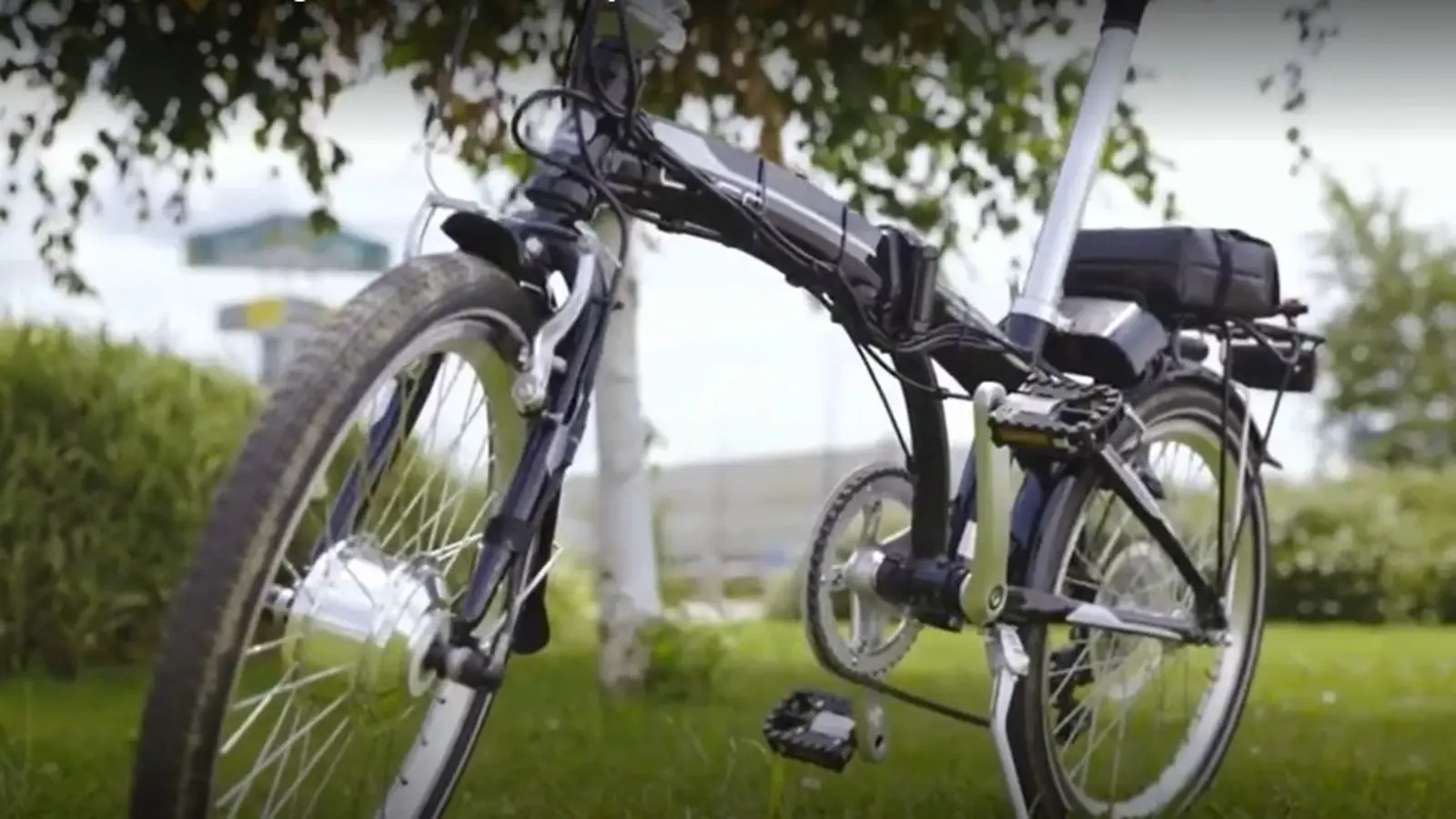
- Hero image: the e-bike photograph accompanying the source reports, credited in the Jacksonville Today caption to News4JAX. RoostMode modifications: cropped and optimized. It shows a folding-style electric bicycle with a front hub motor and a rear rack mounted battery parked on grass. The caption presents it as an example of the kind of bike the proposal would cover, not as a photograph of Jacksonville, of any location named in this article, or of any person or enforcement action described here. We are not identifying the photographer, the bike’s brand, or the location, because none is established by the image or the accompanying text.
Read next
E-Bike Classes 1, 2, and 3 Explained
What the class label on your bike means, and why both Florida law and this ordinance key off it.
The E-Moto Problem: When an Electric Bike Is Not an E-Bike
Why the machine in your garage may fall outside every e-bike category a city writes rules around.
E-Bike Laws by State (2026)
The state-level framework that sits underneath city ordinances like Jacksonville's.
Kansas City's New E-Bike and Micro-Mobility Rules
What a comparable ordinance looks like after it passes, including the enforcement ladder.